In a world where connection often happens through a screen, reaching your community requires more than just a welcoming sign on the lawn. For small churches, the challenge is often balancing limited resources like time, budget, and volunteers with a big heart for outreach. The good news? Your size is your superpower. Small churches can be nimble, authentic, and deeply personal in their outreach efforts in ways that larger congregations often struggle to replicate. This list isn't about expensive, complex programs that drain your volunteers. It's about leveraging what you already have: powerful sermons, passionate members, and a genuine desire to serve.
We will explore 7 actionable church outreach ideas for small churches, showing you how to turn everyday ministry into a powerful engine for community connection and growth. To truly connect and expand your church's reach, exploring top community engagement strategies for nonprofits can also provide a wealth of actionable insights. From transforming your pastor's weekly message into compelling social media content to partnering with local organizations for tangible community impact, these strategies are designed for maximum effect with minimal strain on your team.
Furthermore, we'll reveal how simple, AI-powered tools can amplify your efforts. With a platform like ChurchSocial.ai, you can generate social posts and video reels directly from your sermon transcripts, use professional graphic templates, and manage your entire content calendar with a simple drag-and-drop interface. This makes social media management nearly effortless, freeing you to focus on what matters most: people. Let's dive into the practical ideas that will help your church connect with your community in meaningful, modern ways.
1. Community Service Day Partnerships
Organizing regular community service days is one of the most powerful church outreach ideas for small churches. This strategy involves partnering with local nonprofits to address tangible needs, moving faith from the pews into the streets. By volunteering at food banks, helping with park cleanups, or participating in a Habitat for Humanity build, your church becomes a visible force for good, creating authentic connections with people who might never step inside a sanctuary.
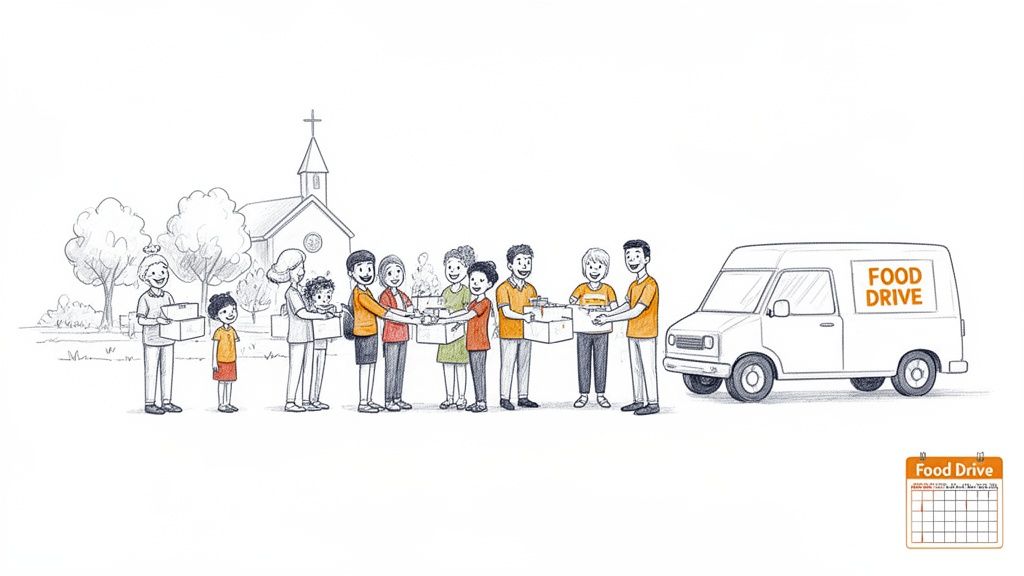
Small churches excel at this because their tight-knit communities can mobilize quickly and effectively. What they may lack in budget, they make up for with passion and a shared sense of mission, allowing them to make a significant, visible impact in their immediate surroundings.
Implementation Steps
- Identify Local Needs: Reach out to your city council, local schools, or established nonprofits like the United Way to ask about pressing community needs. Partnering with a known organization adds credibility and simplifies logistics.
- Schedule Consistently: Choose a recurring schedule, such as the first Saturday of every month. Consistency builds momentum and makes it easy for both members and the community to remember and participate.
- Promote and Recruit: Announce the service day well in advance from the pulpit, in your bulletin, and across social media. For practical guidance on setting up and running your Community Service Day, explore insights on how to organize a community event effectively.
- Capture and Share the Story: Designate a volunteer to take photos and short videos during the event. Focus on capturing the action, the impact, and the spirit of service. Use ChurchSocial.ai to schedule these posts and create compelling graphics that tell your story.
Key Insight: A Community Service Day is not just an event; it's a sermon in action. It demonstrates your church's values more powerfully than words alone and builds goodwill that opens doors for future conversations.
Resources & Success Metrics
Resources Needed:
- Time: 4-6 hours per event, plus planning.
- Volunteers: 5-15+ members.
- Budget: Low to moderate, depending on the project (e.g., buying supplies for a cleanup vs. volunteering time at a food bank).
Measuring Success:
- Participation: Track the number of church members and new community volunteers who participate.
- Social Engagement: Monitor likes, comments, and shares on posts related to the service day. Note any new local followers.
- Partnership Strength: Positive feedback from your nonprofit partner and invitations to collaborate again are strong indicators of success.
Sample Social Media Post
Platform: Facebook / Instagram
Content Idea: Create an engaging carousel post. Use ChurchSocial.ai's graphic templates and editor to create eye-catching slides featuring before-and-after photos from your park cleanup. Then, easily schedule it on the drag-and-drop calendar.
Caption:"What a difference a day makes! 🙌 We are so grateful for everyone who came out to our Community Cleanup Day at City Park. We believe our faith calls us to serve our neighbors, and we loved putting that into action. Swipe to see the amazing transformation! 👉 #ServeTheCity #[YourCity] #[YourChurchName]"
2. Sermon-Based Social Media Series & Clips
Repurposing your pastor's weekly sermon into a social media series is one of the most efficient and impactful church outreach ideas for small churches. This strategy transforms one core piece of content, the Sunday message, into multiple bite-sized, shareable assets like video clips, quote graphics, and discussion prompts. It extends the reach of your teaching far beyond your sanctuary walls, engaging both your congregation and a new online audience throughout the week.
Small churches can excel at this because it leverages a resource they already produce consistently: the sermon. Instead of creating new content from scratch, they can amplify their pastor's most powerful moments, maintaining a consistent message and fostering spiritual growth on platforms where people spend their time. Managing this is simple with ChurchSocial.ai, where you can create AI-generated reels, social posts, and blogs directly from your sermon.
Implementation Steps
- Record and Transcribe the Sermon: Ensure you have a quality audio or video recording of each Sunday sermon. A simple smartphone on a tripod can work well. Getting a transcript is crucial for pulling quotes and creating written content.
- Identify Key Moments: Review the sermon and pull out 3-5 of the most impactful quotes, powerful stories, or key teaching points. These will be the foundation for your social media content for the week.
- Create and Schedule Content: Use a tool like ChurchSocial.ai to streamline this process. You can upload your sermon transcript to generate AI-powered social media posts, blog ideas, and even viral-style reel scripts. Use their graphic templates to design quote cards and carousels, then schedule everything for the week using the simple drag-and-drop calendar. For more details on this process, explore this guide on putting your sermon on video.
- Engage with Your Audience: Don't just post and forget. When people comment with questions or thoughts, respond to them. Use discussion questions in your captions to encourage interaction and build a digital community.
Key Insight: Your sermon is not a one-time event; it's a content goldmine. Repurposing it for social media allows your church's message to resonate all week long, reaching people who need to hear it at the exact moment they're scrolling.
Resources & Success Metrics
Resources Needed:
- Time: 2-3 hours per week to edit clips, design posts, and schedule.
- Volunteers: 1-2 tech-savvy volunteers.
- Budget: Low. A basic smartphone and a subscription to a social media tool like ChurchSocial.ai are the primary costs.
Measuring Success:
- Engagement Rate: Track likes, comments, shares, and saves on your sermon-related posts. A high engagement rate shows the content is resonating.
- Video Views & Watch Time: Monitor how many people are watching your clips and for how long.
- Website Clicks: If you link to the full sermon on your website, track how many clicks you get from social media.
Sample Social Media Post
Platform: Instagram / TikTok
Content Idea: Create a 30-second AI-generated reel using ChurchSocial.ai, featuring an impactful clip from the sermon with dynamic, animated captions. The platform makes it easy to turn your sermon into compelling video content.
Caption:"It’s not about having it all together; it's about coming to the One who does. Pastor John reminded us this weekend that grace meets us right where we are. What’s one area you’re trusting God with this week? Let us know in the comments! 👇 #SermonClip #MidweekMotivation #[YourChurchName]"
3. Online Bible Studies & Discipleship Groups
Hosting virtual Bible studies or discipleship groups is a modern and highly effective church outreach idea for small churches. Using platforms like Zoom or Facebook Live, you can create a welcoming space for spiritual exploration that transcends geographical boundaries. This approach removes barriers like busy schedules or distance, offering a low-pressure entry point for community members and seekers who may not be ready to attend an in-person service.

Small churches can leverage this strategy to build a vibrant, engaged community that extends far beyond their local zip code. The intimate, focused nature of these online groups allows for deep connections and meaningful discipleship, proving that powerful ministry isn't limited by physical walls. Promoting these groups is easy with tools like ChurchSocial.ai, which integrates with church calendars like Planning Center to create content for events.
Implementation Steps
- Choose a Topic & Format: Select a compelling, accessible topic for a 6-8 week study. This shorter commitment encourages first-time participation. Decide on your platform (e.g., Zoom for interactivity, Facebook Live for reach).
- Schedule for Consistency: Pick a recurring day and time, such as every Wednesday at 7 PM. Consistency makes it easy for people to build the study into their routine.
- Promote Strategically: Use the Facebook Events feature to create a shareable sign-up page. Promote the study across all your social channels with simple, inviting graphics created in ChurchSocial.ai.
- Foster Engagement: Plan to use interactive tools like polls, Q&A sessions, and breakout rooms to keep participants engaged. Keep sessions to 45-60 minutes to respect everyone's time.
Key Insight: An online Bible study is more than a digital meeting; it's a new front door to your church. It creates a safe, accessible environment for people to ask questions, build relationships, and encounter faith in a way that fits their modern lives.
Resources & Success Metrics
Resources Needed:
- Time: 1-2 hours of prep per week, plus a 60-minute session.
- Volunteers: 1-2 facilitators or hosts.
- Budget: Low. A free or basic Zoom account is often sufficient to start.
Measuring Success:
- Attendance: Track the number of unique participants each week and over the course of the study.
- Engagement: Note the level of interaction in the chat, breakout rooms, and Q&A. Are people actively participating?
- New Connections: Keep track of how many participants are new to your church community and if they engage in other church activities.
Sample Social Media Post
Platform: Instagram / Facebook
Content Idea: Create a simple, clean graphic announcing the upcoming week's topic. Use a template from ChurchSocial.ai's graphic editor to ensure a professional look that matches your church's branding, then schedule it to post automatically.
Caption:"Got questions about faith? We've got a space for them. Join our online Bible study tomorrow night at 7 PM as we explore [This Week's Topic]. It’s a casual, welcoming environment for everyone, no matter where you are on your spiritual journey. DM us for the Zoom link! #OnlineBibleStudy #Community #SpiritualGrowth #[YourChurchName]"
4. Local Partnership & Interfaith Collaboration Posts
Building visible partnerships with local nonprofits, schools, other faith groups, and community organizations is a powerful outreach strategy. This approach moves beyond one-off events to create a web of interconnected relationships, showcasing your church as an active and integral part of the community fabric. By collaborating and then co-promoting these efforts on social media, you amplify your reach and build significant goodwill.
Small churches often have deep local roots, making them natural hubs for these kinds of partnerships. A collaboration with a local school's reading program or an interfaith Thanksgiving service with a nearby synagogue demonstrates a commitment to the well-being of the entire community, not just your own congregation.
Implementation Steps
- Identify Aligned Partners: Brainstorm 3-5 local organizations, schools, or other faith communities whose missions overlap with your church’s values. Think about food banks, youth mentorship programs like the Boys & Girls Clubs, or public school initiatives.
- Initiate a Conversation: Reach out to the organization's leadership. Propose a specific, manageable joint project, like co-hosting a community health fair or supporting their annual holiday drive.
- Plan Your Joint Promotion: Before the event or initiative, agree on a social media plan. Decide on a shared hashtag, tag each other in all posts, and plan for cross-promotion to both audiences. Manage this effortlessly with ChurchSocial.ai's drag-and-drop calendar.
- Create Collaborative Content: During the partnership, capture photos and videos featuring both organizations. Interview partner leaders for a "Community Spotlight" segment on your church's social media channels.
Key Insight: A partnership post is more than an announcement; it’s a public declaration of shared values. When another respected local organization co-signs your work, it lends your church immense credibility and introduces you to an entirely new audience.
Resources & Success Metrics
Resources Needed:
- Time: 2-4 hours per month for outreach and planning meetings.
- Volunteers: 1-2 designated liaisons to manage relationships.
- Budget: Low. The primary investment is time and relational equity.
Measuring Success:
- Cross-Promotion: Track how many times your partner organization shares or engages with your content.
- Audience Growth: Monitor for new followers who also follow your partner organizations.
- Community Feedback: Note positive comments from community members who are not part of either organization but appreciate the collaboration.
Sample Social Media Post
Platform: Facebook / Instagram
Content Idea: Use ChurchSocial.ai’s graphic templates and editor to create a co-branded announcement graphic featuring both your church’s logo and your partner’s logo.
Caption:"We are thrilled to announce our new partnership with the [Partner Organization Name]! 🙌 Together, we'll be [briefly describe the joint initiative, e.g., launching a mentorship program for local teens]. We believe we're better together and can't wait to serve our city alongside this incredible organization. Follow them at @[Partner's Handle] to see the great work they do! #CommunityPartnership #[YourCity] #[YourChurchName] #[PartnerOrganizationName]"
5. Transparent Storytelling & Member Testimonies
Regularly featuring authentic stories from church members is one of the most powerful and personal church outreach ideas for small churches. This approach humanizes the church beyond pastoral messaging by sharing real-life accounts of faith, transformation, and answered prayers. It creates relatable content that resonates deeply with seekers, doubters, and those looking for a community that understands their struggles.
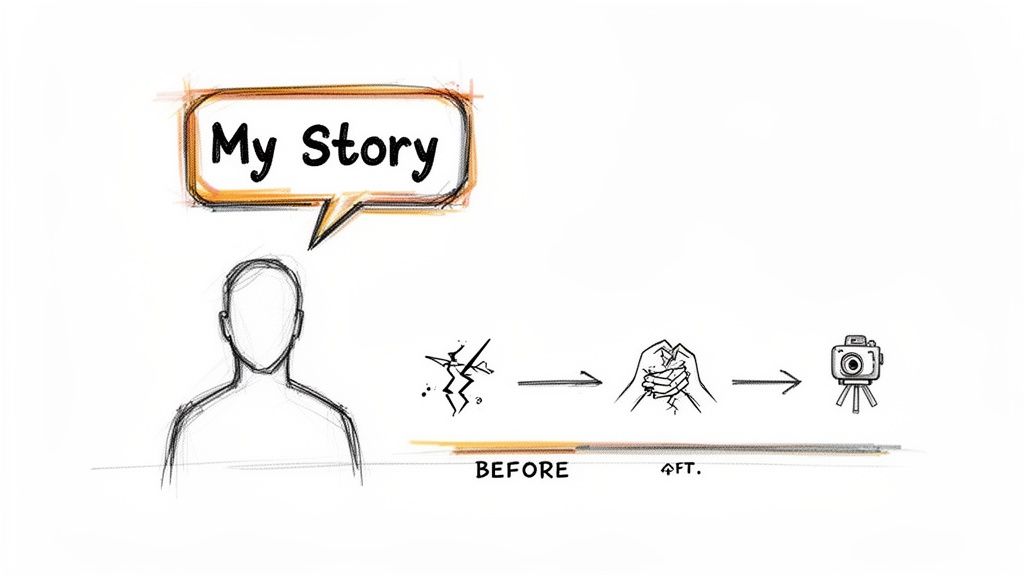
Small churches are uniquely positioned for this because their intimate communities foster deep relationships and an awareness of members' personal journeys. By leveraging these genuine connections, you can share powerful narratives that showcase the real impact of your ministry on individual lives, turning personal experiences into public declarations of hope.
Implementation Steps
- Identify and Invite Storytellers: Start by prayerfully considering members whose stories of transformation, healing, or answered prayer are well-known and impactful. Invite them personally to share, explaining the vision behind the initiative.
- Provide a Simple Framework: Guide participants to structure their story in a simple "Before / Journey / After" format. This helps them stay focused and ensures the testimony is clear and compelling, usually within a 3-5 minute timeframe.
- Record Simply but Effectively: A modern smartphone is all you need. Ensure good lighting (facing a window is best), clear audio, and a steady shot. The goal is authenticity, not a high-budget production.
- Edit and Share Strategically: Edit the full testimony for your website or YouTube. For social media, create 45-60 second highlight clips. To see great examples of effective church testimonials, you can explore various formats and styles. ChurchSocial.ai can help you create these clips with engaging captions.
Key Insight: A personal testimony is living proof of your church's mission. It moves the message from a concept discussed on Sunday to a reality lived out Monday through Saturday, offering tangible hope to your online audience.
Resources & Success Metrics
Resources Needed:
- Time: 1-2 hours per testimony for recording and editing.
- Volunteers: 1-2 people (the storyteller and a person to record).
- Budget: Low. Primarily uses existing resources like a smartphone and free editing apps.
Measuring Success:
- Engagement: Track views, comments, and shares on testimony videos. Look for comments from people outside your immediate congregation.
- Direct Messages: Note any private messages from individuals who were moved by a story and are seeking connection or prayer.
- New Inquiries: Monitor whether new visitors or online followers mention that a specific testimony was what prompted them to reach out.
Sample Social Media Post
Platform: Instagram / Facebook
Content Idea: Use ChurchSocial.ai to easily create a short, compelling video reel from a longer testimony. Add captions and an engaging headline to grab attention, then schedule it on the content calendar.
Caption:"From brokenness to restoration. Sarah's story is a powerful reminder that no one is too far gone for a new beginning. We are so honored to be a part of her journey. Watch her full story at the link in our bio. 🙏 #TestimonyTuesday #Hope #[YourChurchName] #[YourCity]"
6. Facebook Community Group for Ongoing Engagement
Creating a dedicated Facebook Group offers a powerful digital gathering space that extends your church's community beyond the Sunday service. Unlike a public Facebook Page, which is primarily for one-way announcements, a Group fosters multi-directional conversation and peer-to-peer connection. This strategy builds a true online neighborhood where members and interested locals can share prayer requests, discuss sermon topics, and celebrate life's moments together.
Small churches can leverage this tool exceptionally well because it mirrors their naturally close-knit dynamic. A well-managed Group becomes a digital hub for fellowship, making it one of the most effective church outreach ideas for small churches aiming to maintain engagement throughout the week and connect with people who are curious but not yet ready to visit in person.
Implementation Steps
- Set Up and Define Your Group: Decide if your group will be Public (visible to all) or Private (requires approval to join). A private group often encourages more authentic sharing. Establish clear community guidelines and pin them to the top of the page.
- Assign Moderators: Designate 2-3 trusted volunteers as moderators. Their role is to approve new members, facilitate conversation, and ensure the space remains positive and supportive.
- Create Consistent Content Pillars: Plan daily or weekly posts around specific themes like "Testimony Tuesday," "Prayer Request Thursday," or "Sermon Rewind." This creates a predictable rhythm that encourages habitual participation. You can use ChurchSocial.ai to generate discussion questions and devotionals directly from your sermon transcript, saving valuable time.
- Promote the Group: Announce the group from the pulpit, link to it in your email newsletter, and share posts from your main Facebook Page inviting people to join the deeper conversation.
Key Insight: A Facebook Group transforms your social media presence from a broadcast channel into a community living room. It’s where relationships are built, care is demonstrated, and faith is lived out daily, not just on Sundays.
Resources & Success Metrics
Resources Needed:
- Time: 1-2 hours per week for content creation and moderation.
- Volunteers: 2-3 dedicated moderators.
- Budget: Low (free to create a group).
Measuring Success:
- Membership Growth: Track the number of new members joining each month.
- Engagement Rate: Monitor the number of posts, comments, and reactions per day or week. High engagement is a key sign of a healthy community.
- Qualitative Feedback: Note the number of prayer requests shared and answered, as well as the positive, supportive interactions between members.
Sample Social Media Post
Platform: Facebook / Instagram (Main Church Page)
Content Idea: Create a simple, inviting graphic using a template from ChurchSocial.ai's graphic editor. Feature a photo of your church building or a warm, generic community-focused image.
Caption:"Want to go deeper than just the Sunday sermon? Join our official church Facebook Group! It's a private space for prayer, discussion, and connecting with your church family all week long. We’d love to see you there! Link in bio. #ChurchCommunity #DigitalDiscipleship #[YourChurchName]"
7. New Member Welcome & Integration Social Campaign
In today's digital world, a visitor's experience with your church often begins long before they walk through the doors and continues long after they leave. A New Member Welcome & Integration Social Campaign is a powerful digital outreach strategy that creates a structured, warm, and informative onboarding process for first-time visitors and new members. This approach leverages social media to lower social barriers and accelerate a sense of belonging.
For small churches, this is one of the most effective church outreach ideas because it systematizes the follow-up process, ensuring no one falls through the cracks. It turns a one-time visit into an ongoing conversation, making newcomers feel seen, valued, and connected right from the start.
Implementation Steps
- Create a Welcome Content Kit: Prepare key pieces of digital content in advance. This should include a short "Meet the Pastor" video, graphics explaining service times and what to expect, and a digital visitor card or QR code to capture contact information.
- Design a Follow-Up Sequence: Map out a 4-week communication plan. This could involve an automated welcome message, an invitation to a newcomers' social group, a post series on church beliefs and values, and a showcase of small groups or volunteer teams.
- Automate and Schedule: Use a tool like ChurchSocial.ai to schedule your welcome posts and create a simple workflow. Its drag-and-drop calendar makes it easy to plan your campaign, and its integration with church calendars like Planning Center helps you seamlessly promote next-step events.
- Engage Personally and Promptly: While automation is key, personal touches matter. Designate a volunteer or staff member to monitor comments and messages, responding to questions and personally welcoming new followers within 24 hours.
Key Insight: A digital welcome campaign is the modern-day handshake and follow-up call combined. It communicates that you care enough to be intentional about connection, turning a passive visitor into an engaged member of the community.
Resources & Success Metrics
Resources Needed:
- Time: 4-5 hours for initial setup, then 1-2 hours per week for management and engagement.
- Volunteers: 1-2 people (one for content, one for engagement).
- Budget: Low. Primarily involves time and a social media management tool.
Measuring Success:
- Connection Form Submissions: Track how many visitors fill out your digital connection card.
- Social Group Growth: Monitor the number of new people who join your dedicated Facebook or WhatsApp group for newcomers.
- Next-Step Event Attendance: Measure how many people who engaged with your campaign sign up for a newcomers' coffee, brunch, or small group.
Sample Social Media Post
Platform: Instagram / Facebook
Content Idea: Create a welcoming carousel post using ChurchSocial.ai's graphic templates and editor. The first slide could say "New Here? Welcome Home!" followed by slides introducing the pastoral team, explaining how to get connected, and sharing a recent testimony.
Caption:"So glad you joined us today! 👋 Whether you visited in person or online, we count it a privilege to have you. We're a family passionate about loving God and loving our city. Swipe left to learn a little more about us and find your next step. We can't wait to connect! #WelcomeHome #[YourChurchName] #[YourCity]Community"
Small Church Outreach: 7-Point Comparison
Start Small, Dream Big: Your Next Step in Outreach
The journey of expanding your church's reach can often feel daunting, especially when resources are limited. We've explored a range of powerful church outreach ideas for small churches, from partnering on a Community Service Day to launching a New Member Welcome Campaign. Each strategy is designed not as a complex, resource-draining project, but as a scalable, authentic way to connect with the people right outside your doors and across digital screens.
The common thread weaving through all these ideas is the power of genuine connection. Whether you're sharing member testimonies, creating a sermon-based social media series, or fostering dialogue in a Facebook Community Group, the goal is the same: to show your community who you are and what you believe in a way that is relatable, transparent, and welcoming. Effective outreach isn't about having the biggest budget or the most elaborate events; it's about consistently showing up and serving with a heart for your neighbors.
The Power of One: Choosing Your First Step
Looking at this list of seven distinct strategies might feel overwhelming. The key takeaway is not to implement all of them at once. Instead, the most impactful approach is to choose one idea that aligns with your church's unique strengths and passions.
- If your church has a heart for service: Start with a Community Service Day Partnership.
- If your pastor delivers powerful sermons: Focus on creating a Sermon-Based Social Media Series.
- If you excel at fostering deep relationships: An Online Bible Study or a Facebook Community Group might be the perfect fit.
By selecting a single initiative and dedicating your energy to executing it well, you build momentum and create a foundation for future growth. Success in one area will inspire your volunteers and congregation, making it easier to tackle the next idea on your list. Remember, consistency in one well-chosen outreach effort is far more effective than sporadic attempts across multiple fronts. This focused approach allows you to measure what works, learn from the experience, and build confidence in your church's ability to make a meaningful impact.
Overcoming the Time Barrier with Smart Tools
One of the biggest hurdles for small church outreach is the sheer amount of time required, particularly when it comes to managing a consistent and engaging social media presence. Your volunteers are passionate, but they also have jobs, families, and other commitments. This is where leveraging technology becomes a game-changer, turning a potential burden into a sustainable ministry tool.
Imagine taking your pastor's Sunday sermon and, with just a few clicks, generating a week's worth of insightful social media posts, blog content, and even short video reels. This isn't a futuristic dream; it's a practical solution that empowers small churches to amplify their message without burning out their teams. Platforms designed specifically for churches can automate the most time-consuming parts of content creation.
With a tool like ChurchSocial.ai, you can transform your sermon transcript into engaging content, use professionally designed graphic templates, and schedule everything on a simple drag-and-drop calendar. It can even integrate with your existing church calendars, like Planning Center, to automatically create promotional posts for upcoming events. This frees up your volunteers from tedious tasks and allows them to focus on what truly matters: building relationships, engaging in conversations online, and personally inviting people to connect with your church. By embracing these tools, you're not replacing the human element; you're creating more space for it.
The path to impactful outreach for your small church is paved with intentional, consistent steps. You have the message, the passion, and the people. Now, armed with these practical ideas and the right tools, you are fully equipped to not just reach your community but to truly connect with it. Start small, be consistent, and watch how God uses your faithful efforts to achieve big things.
Ready to simplify your social media and supercharge your outreach efforts? Let ChurchSocial.ai handle the heavy lifting of content creation and scheduling, so you can focus on building your community. Discover how our AI-powered tools can transform your sermons into a full week of content by visiting ChurchSocial.ai today.