Is your youth bulletin board helping students follow Jesus during the week, or is it just holding old sign-up sheets and leftover announcements?
A strong board can do more than fill wall space. It can reinforce the sermon, point students toward the next event, keep parents informed, and give your team a steady bank of content for Instagram, Stories, reels, and midweek follow-up.
Ministry resources have been moving in that direction for a while. A ChurchLeaders roundup of church bulletin board ideas organized boards around recurring ministry needs like Easter, VBS, camp, Promotion Sunday, and daycare communication. Mad in Crafts collected 18 Christian bulletin board designs with an emphasis on simple, low-cost materials. The common thread is practical: churches get more value from boards they can update and reuse, not just admire for a week.
Youth ministry especially benefits from that approach. One board can carry sermon follow-up, event registration, student stories, prayer prompts, and service opportunities in a format students see in person and families can revisit later on a phone.
That two-part use changes how you should build the board. Short headlines work better than long explanations. Clear sections photograph better than crowded layouts. Reusable categories save volunteer time. If the wording on the board can become a caption, story slide, or short video prompt without a rewrite, your team avoids doing the same communication job twice.
ChurchSocial.ai fits naturally into that workflow. A photo of the board, the weekly theme, and a few ministry notes can become social captions, parent updates, event promos, and follow-up posts with much less manual rewriting.
Here are 8 church youth bulletin board ideas that work on the wall and online.
1. Weekly Sermon Highlights and Discussion Board
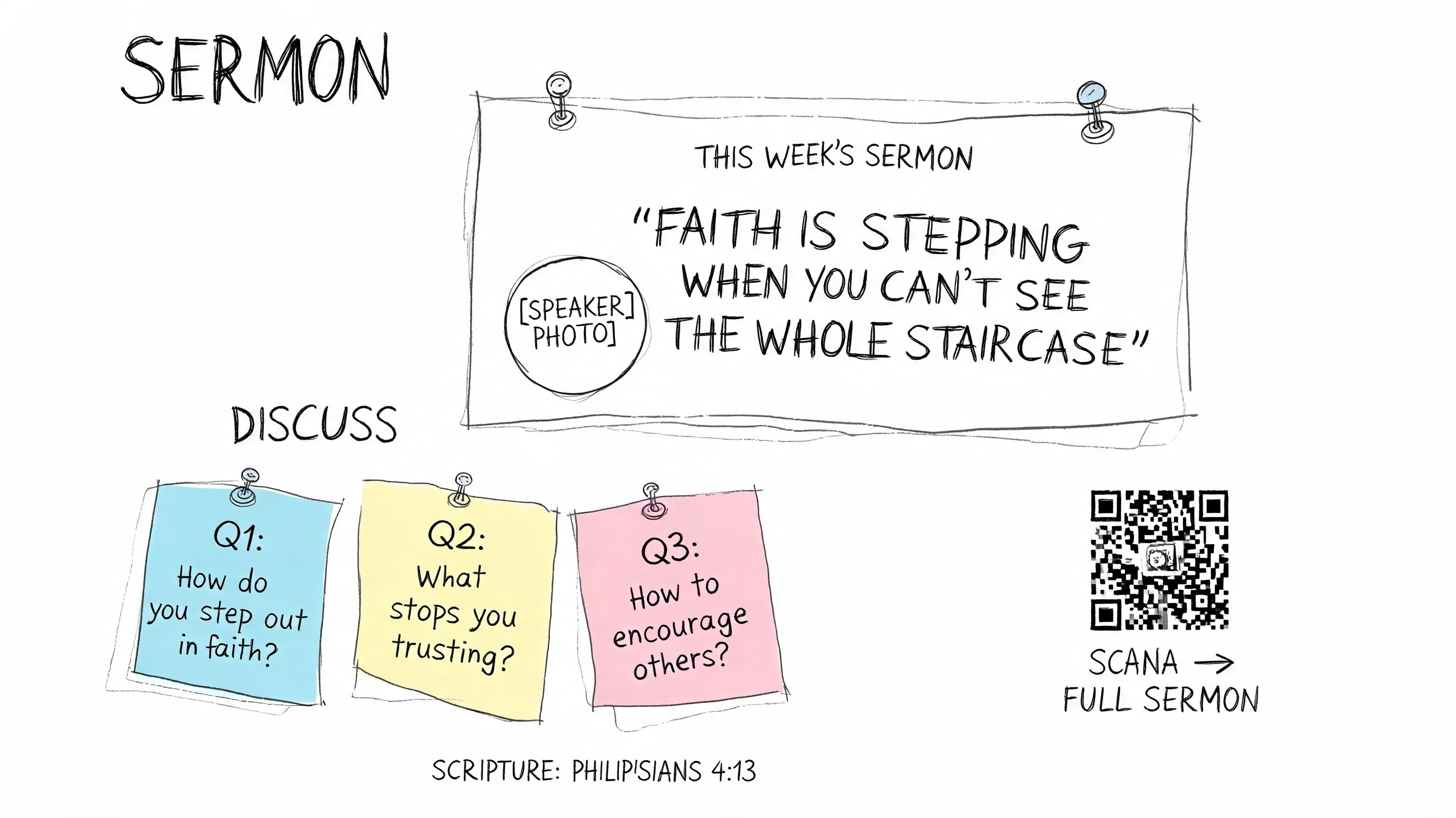
A sermon board works best when it answers one question fast. What should a student remember from Sunday by Wednesday?
Use one central phrase from the message, one Scripture reference, and a small set of discussion prompts. Keep it tight. If you post a wall of text, students won't stop long enough to read it. A board like this should feel like a visual recap, not a transcript.
I've seen this work well when youth pastors build the board around the same framework they use in small groups. If the sermon covered faith, the board might include a short main idea, a verse, a question for students, and a practical action for the week. That creates continuity between the platform, the room, and the phone.
What to include each week
- Main takeaway: Use a short sentence that can fit in a social graphic without rewriting it later.
- Scripture reference: Post the passage clearly so students can revisit it during the week.
- Discussion prompt: Add two or three questions that youth leaders can reuse in small groups.
- Action step: Give students one simple response, such as prayer, journaling, inviting a friend, or serving at home.
The digital side is where this board starts pulling extra weight. Take a photo of the finished display, then use that same structure for Instagram stories, a parent email graphic, and a short recap post. If your church records sermons, ChurchSocial.ai can help turn the sermon transcript into social captions, blog drafts, and short video clips so your physical board and social plan stay aligned instead of becoming two separate jobs.
Practical rule: Build the sermon board from your sermon outline, not from scratch after service. That cuts volunteer effort and keeps the wording consistent.
A simple archive helps too. Save each week's board photo in a shared folder by sermon series title. Over time, you'll build a library of youth discipleship content that can be reused for devotionals, reels, and discussion prompts.
2. Youth Event Calendar and Registration Board
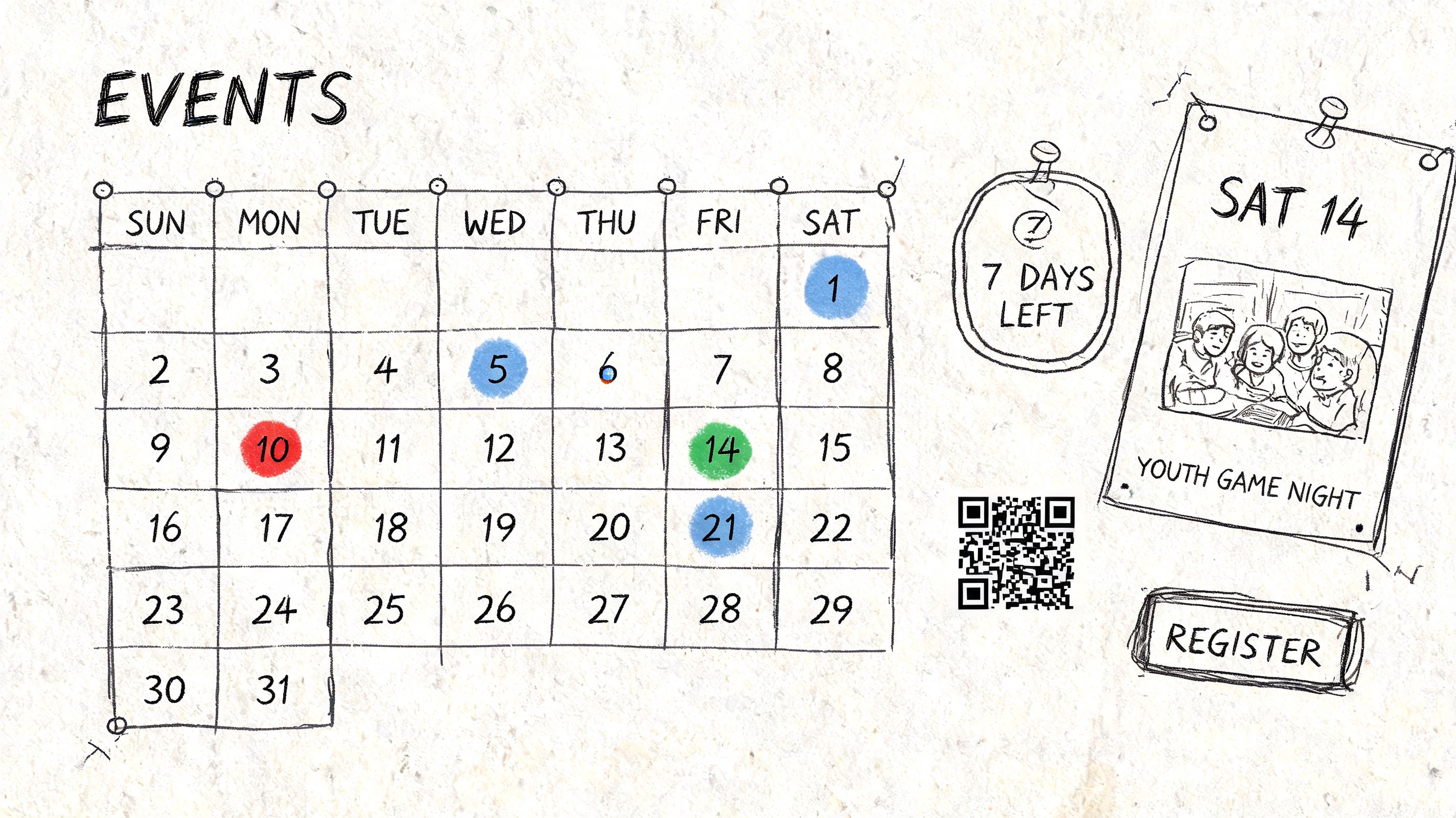
Some church youth bulletin board ideas are inspiring. This one has to be clear.
An event calendar board should answer the practical questions students and parents ask every week. What's next, when is it, who is it for, and how do we sign up? If any of those pieces are missing, the board creates confusion instead of momentum.
A monthly format usually works better than a long list of random flyers. Group events by month or by ministry season. Color-code retreats, weekly gatherings, service days, and deadline-based items so people can scan the board quickly in a crowded hallway.
What works and what doesn't
What works is one clean board with a consistent layout. What doesn't work is pinning every event handout you've made over the last two months in the same spot.
Use:
- Large date markers: Parents should be able to spot deadlines without walking up close.
- Simple QR codes: Link directly to registration, not to a homepage where they have to search again.
- One contact point: List one ministry email or staff contact instead of multiple names and numbers.
- Short event descriptors: “Middle school game night” is better than a paragraph.
A practical pattern from ministry resources is the emphasis on season-based communication. Earlier church bulletin board roundups already tied boards to recurring seasons like summer, Easter, VBS, and camps, which is one reason they've become reliable planning tools in children's and youth spaces rather than one-off decorations, as noted in the earlier ChurchLeaders resource.
If a registration deadline changes, update the board the same day you update the form. Mismatch kills trust fast.
Digitally, this board should mirror your church calendar. ChurchSocial.ai fits well here because its drag-and-drop calendar and event planning workflow can help teams turn youth events into scheduled posts across platforms. If your church uses Planning Center or another calendar system, syncing those events into your content plan keeps your hallway signage and social channels from drifting apart.
3. Student Spotlight and Faith Stories Board
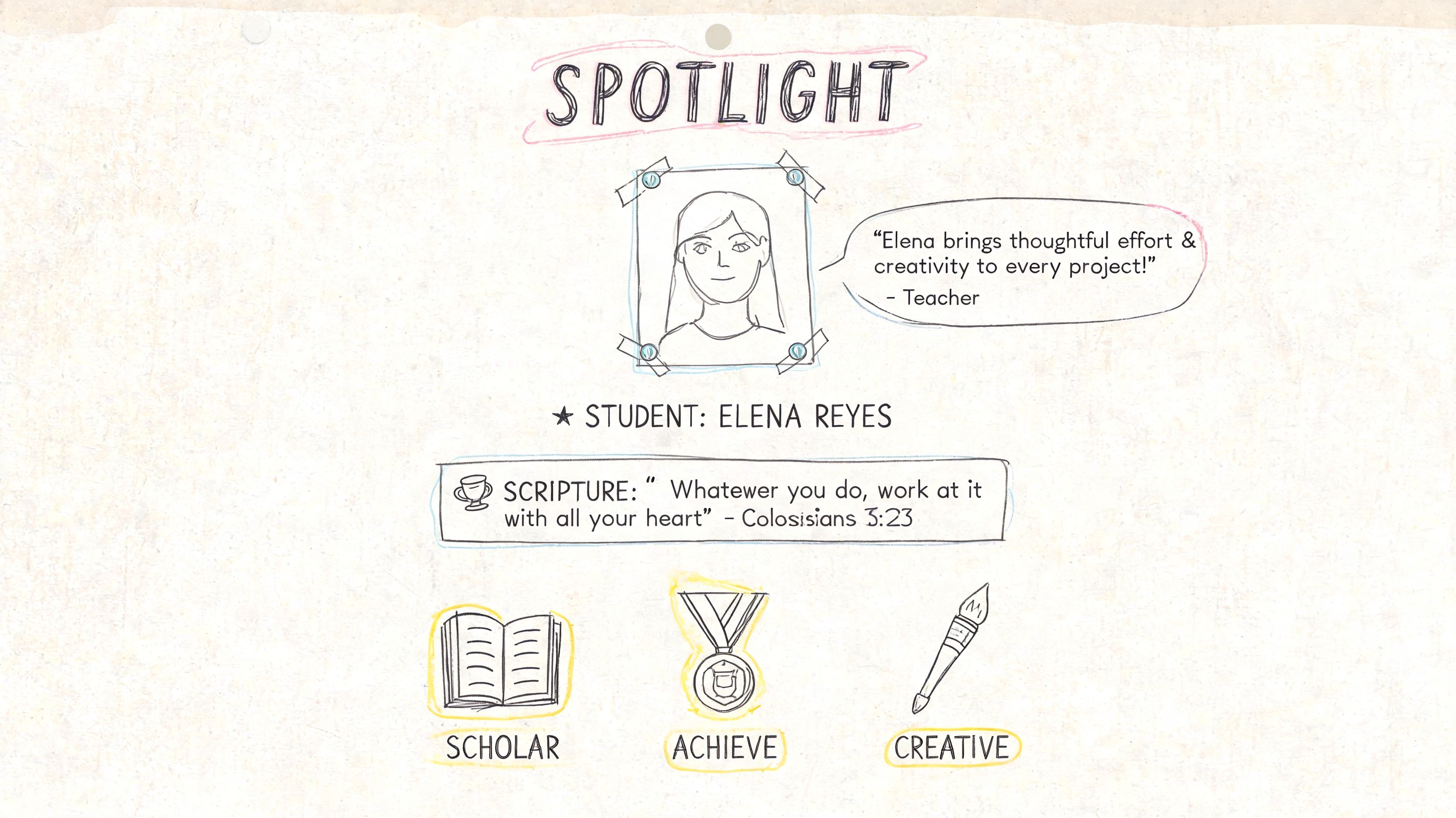
This board builds belonging faster than almost anything else, but it needs care. Students want to be known, not displayed.
A strong spotlight board highlights faith stories, service moments, answered prayer, growth in character, and meaningful wins outside church too. That can include a student leading worship, helping with younger kids, showing resilience during a hard season, or serving faithfully week after week. The point isn't creating a popularity wall. The point is helping students see what faithfulness looks like in real life.
Keep the process safe and simple
Before you feature anyone, get clear parental permission and set an internal standard for what you will and won't share publicly. Avoid personal details that should stay private. Keep testimony excerpts short and specific.
A simple feature card can include:
- Student first name
- A brief story
- A favorite verse
- One ministry role or recent step of faith
- A prayer prompt for peers
This board also works well as a bridge to digital testimony content. Take the printed feature and expand it into a short reel, a carousel post, or a captioned photo. ChurchSocial.ai's graphics tools can help volunteers turn those stories into branded social posts without needing a designer, which matters when your youth ministry communication team is one staff member and two tired helpers.
One caution. Don't feature only the most visible students. Rotate intentionally across grades, personalities, and ministry involvement levels.
Students notice fairness immediately. If the same type of student gets celebrated every time, the board stops building community and starts ranking people.
If you want the board to stay fresh, create an intake form with a few prompts for parents, leaders, and students. That gives you a pipeline of stories without scrambling for ideas at the last minute.
4. Upcoming Challenges and Growth Initiatives Board
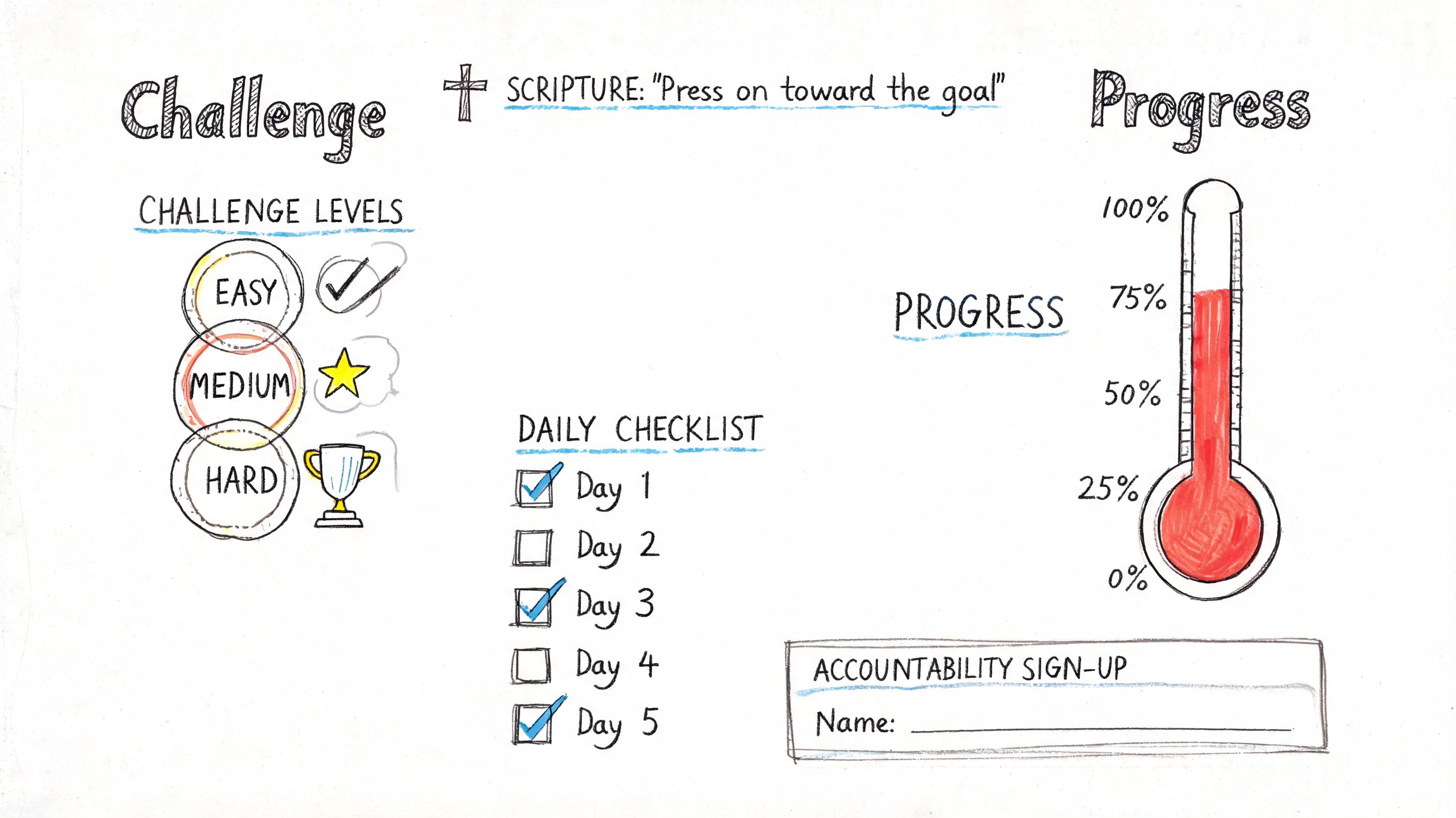
Interactive boards usually outperform passive ones. Students engage more when they can add something, mark progress, or see movement over time.
That's why challenge boards work well for Bible reading plans, prayer prompts, service habits, Scripture memory, or character themes. Ministry resources have shown that participatory displays can be updated regularly. One Christian bulletin-board guide highlighted a Fruit of the Spirit display where children add apples to a tree as they demonstrate each virtue, which is a useful model for youth spaces too.
Build a challenge board students can actually finish
Don't make the challenge so big that only your core group participates. The board should invite action, not guilt.
Try these formats:
- Scripture memory path: Students add a marker each time they memorize a verse.
- Prayer wall: Students post first names or initials for people they're praying for.
- Service tracker: Students log acts of service done at home, school, or church.
- Reading plan board: Use weekly checkpoints instead of daily public tracking.
The best challenge boards have multiple levels. Some students will complete every prompt. Others are taking a first step. Make room for both.
ChurchSocial.ai becomes useful when you turn each weekly checkpoint into social content. A challenge prompt can become an Instagram story, a recap graphic, or a short video from a youth leader. If you already have sermon transcripts or devotional notes, you can generate supporting posts without building every caption manually.
A trade-off is visibility. Public boards create accountability, but they can also embarrass students who fall behind. For that reason, I'd keep public tracking communal and hopeful. Avoid posting individual completion charts unless your group culture is strong enough to handle that well.
5. Mission and Service Opportunity Board
A service board should make ministry feel concrete. “Serve your community” is too vague to move teenagers. “Pack meals Wednesday night” or “help with church setup this Sunday” gives them a next step.
This board works best when it shows both local and broader opportunities. Include church-based serving roles, city outreach projects, supply drives, and mission-focused partnerships your students already hear about from the platform. Students need to see that service isn't a separate ministry lane. It's part of discipleship.
Design for action, not awareness only
Many mission boards fail because they stop at inspiration. The photos look good, the wording sounds important, and nobody signs up.
Build your board around action points:
- This month's opportunity: Feature the easiest entry point first.
- Why it matters: Use a sentence about who the project helps.
- How to join: QR code, clipboard, or text option.
- What to expect: Give a short note about time, clothing, and any preparation.
You can strengthen the board by adding impact stories after each project. Use photos of supplies, work sites, hands serving, and project materials instead of relying on face-heavy imagery every time. That keeps the visual focus on the mission while respecting privacy and avoiding overuse of student photos.
Social media should extend this board before and after the event. Before the project, post invitations and simple reminders. After it, post reflections, photos of the work, and a short caption about what students learned. ChurchSocial.ai can help schedule those event posts ahead of time so your communications don't disappear once the calendar gets crowded.
A practical mistake to avoid is stacking too many service options at once. If students see six opportunities with equal visual weight, they often choose none. Lead with one primary action, then place additional options in a smaller secondary section.
6. Mental Health and Wellness Awareness Board
This board needs more pastoral care than graphic creativity. If you handle it lightly, it can help students feel seen. If you handle it poorly, it can sound shallow or unsafe.
Keep the tone calm, practical, and grounded. Focus on support, not performance. Students dealing with anxiety, family stress, loneliness, burnout, or identity confusion don't need cheerful slogans pasted over serious pain. They need clear pathways to help and language that doesn't shame them.
What belongs on the board
Start with resources your church is ready to stand behind. If possible, review the content with a licensed counselor or qualified care professional before posting it.
Include:
- Prayer and support pathways: Show students how to reach a pastor, leader, or care team member.
- Healthy coping reminders: Sleep, Scripture, prayer, rest, conversation, journaling, and asking for help all belong here when presented clearly and straightforwardly.
- Trusted resources: List church counseling options or referral pathways your leaders already use.
- Crisis support: Include the 988 Suicide & Crisis Lifeline clearly and visibly.
That last point matters enough to state plainly. If you create a youth wellness board, include 988.
Some students won't ask for help out loud. They will read a board privately and decide whether your church feels safe enough to approach.
The digital strategy here should be careful. Public social content can normalize conversation around stress, grief, and emotional wellness, but it shouldn't replace pastoral response. Use social posts for general encouragement, practical resources, and reminders that support is available. Use direct messages, email, and in-person follow-up for anything personal.
ChurchSocial.ai can help schedule recurring resource posts so wellness communication doesn't appear only during a crisis or at finals week. Consistency matters more than volume here.
7. Baptism and Milestone Celebration Board
Some boards inform. This one witnesses.
A baptism and milestone board lets the church see visible markers of growth in student ministry. Baptisms, salvation decisions, Scripture milestones, leadership steps, mission participation, and answered prayers all belong here if your church can share them appropriately.
Celebrate without making it sentimental clutter
Use one strong photo, one brief testimony excerpt, and one clear date or milestone label per feature. Keep the design clean enough that the moment still feels honored months later.
A practical structure looks like this:
- Milestone moment: Baptism, commitment, prayer answered, or ministry step.
- Short story: A few sentences about what God has been doing.
- Scripture or theme verse: Only if it connects.
- Family or small group note: Optional, but often meaningful.
This board does something social media can't do on its own. It places spiritual milestones in the path of the whole church body. Parents see it. Other students see it. Volunteers see it. That public memory matters.
Later, you can extend those moments digitally with care. A baptism photo can become a celebration post. A testimony can become a short captioned reel. A set of milestone graphics can become a monthly recap on Instagram or Facebook. ChurchSocial.ai is useful here because its graphics and sermon-content tools make it easier to create follow-up content from ministry moments without rebuilding every asset manually.
One caution. Don't let the board become outdated. A celebration wall with old content starts to feel abandoned, which weakens the impact of the milestones you wanted to honor.
8. Leadership Development and Volunteer Opportunities Board
If you want students to lead, show them where leadership begins. Don't assume they already know.
A leadership board turns vague encouragement into visible pathways. It can highlight student leadership roles in worship, tech, hospitality, setup, prayer, welcome teams, peer mentoring, media help, and service coordination. When students can see open roles and next steps, more of them can imagine themselves serving.
Make the pathway visible
The strongest version of this board doesn't only list openings. It shows progression.
Try a layout with:
- Start here roles: Entry-level opportunities with low pressure and clear support.
- Growing roles: Areas where students take more responsibility over time.
- Training moments: Meeting dates, mentoring opportunities, or leadership huddles.
- Current student leaders: Feature a few names or roles so students can picture the culture.
This is one of the most practical church youth bulletin board ideas because it helps spread ownership. Youth ministry gets healthier when students don't just attend. They serve, welcome, pray, and help shape the environment.
You can carry this board onto social media by featuring student leaders in short posts or volunteer appreciation graphics. ChurchSocial.ai can help schedule those spotlights, create graphics from templates, and keep leadership-related posts visible on the calendar instead of getting buried under event promotion.
A trade-off here is clarity versus aspiration. If the board only celebrates your strongest leaders, younger students may admire it but never step in. If it only lists tasks, it can feel transactional. The right balance is visible opportunity plus visible people. Show the role, the support, and the kind of student who can grow into it.
8 Youth Bulletin Board Ideas Compared
| Item | Implementation Complexity 🔄 | Resource Requirements ⚡ | Expected Outcomes 📊 | Ideal Use Cases 💡 | Key Advantages ⭐ |
|---|---|---|---|---|---|
| Weekly Sermon Highlights & Discussion Board | Medium, weekly content cadence; coordination with preaching team | Moderate, design templates, social integration, weekly staffing | Greater sermon retention; increased video/podcast traffic | Reinforcing weekend messages; small group discussion prep | ⭐ Extends sermon engagement; ⭐ Social-shareable content |
| Youth Event Calendar & Registration Board | Low–Medium, periodic updates and calendar management | Moderate, photo assets, registration links, update schedule | Higher event sign-ups; reduced scheduling confusion | Promoting events, trips, and registrations | ⭐ Centralizes event info; ⭐ Drives registrations |
| Student Spotlight & Faith Stories Board | Medium, ongoing story collection and consent processes | Moderate, photography, parental permissions, interview time | Stronger community bonds; authentic UGC for socials | Building community and peer encouragement | ⭐ Makes students feel seen; ⭐ Produces relatable content |
| Upcoming Challenges & Growth Initiatives Board | High, planning, tracking, and ongoing promotion | High, challenge materials, tracking tools, consistent promotion | Increased daily engagement; measurable progress | Discipleship campaigns, sermon-aligned growth plans | ⭐ Gamifies spiritual growth; ⭐ Encourages accountability |
| Mission & Service Opportunity Board | Medium, coordination with partners and logistics | Moderate–High, partner coordination, documentation, safety planning | More volunteer engagement; visible community impact | Mobilizing service teams; mission trip recruitment | ⭐ Connects faith to action; ⭐ Generates emotional storytelling |
| Mental Health & Wellness Awareness Board | Medium, requires sensitive curation and protocols | Moderate, partnerships with counselors, crisis contacts, training | Increased help-seeking; destigmatized conversations | Pastoral care, wellness months, crisis-awareness efforts | ⭐ Provides vital resources; ⭐ Builds trusted support environment |
| Baptism & Milestone Celebration Board | Low–Medium, timing and permission-driven updates | Low–Moderate, photography, testimonies, scheduling | Visible testimony culture; inspires commitments | Celebrating baptisms and spiritual milestones | ⭐ Publicly affirms decisions; ⭐ Powerful testimonial content |
| Leadership Development & Volunteer Opportunities Board | Medium, role definitions and mentor matching | Moderate, training materials, mentor time, application process | More trained youth leaders; reduced volunteer burnout | Recruiting and developing student leaders | ⭐ Cultivates next-gen leaders; ⭐ Clear leadership pathways |
Turn Your Bulletin Board into a Content Engine with ChurchSocial.ai
What if your youth bulletin board did more than fill wall space?
The strongest church youth bulletin board ideas give your team one message path for the hallway, Instagram, parent communication, and follow-up during the week. A sermon board can feed a recap post and small group prompt. A challenge tracker can become a weekly Story sequence. A student spotlight can turn into a testimonial graphic or short Reel. A baptism wall can supply photos, quotes, and celebration posts without asking the team to start from scratch every time.
Church staff and volunteers rarely have margin for duplicate work. They are planning services, answering parent questions, organizing rides, confirming volunteers, and keeping events on schedule. If the physical board and digital plan are disconnected, someone has to rewrite, redesign, and repost the same idea in three different formats. A shared workflow cuts that extra step.
ChurchSocial.ai fits naturally into that process. Teams can turn sermon transcripts into social captions, blog drafts, discussion prompts, and short video clips. They can build graphics from templates, schedule posts on a visual calendar, and pull event details into a more consistent publishing rhythm. That makes a bulletin board update easier to repurpose for students, parents, and the wider church without creating a separate communications project for each audience.
The trade-off is planning upfront or scrambling later.
A better workflow starts with one question: what belongs on the wall and online this week? From there, gather the core assets once. Use the sermon takeaway, event details, student quote, signup link, or milestone photo as the source material. Then format each piece for the board, a social post, a Story, and a parent reminder. One idea. Several placements. Less waste.
If your team wants one place to turn sermon content, event planning, graphics, and scheduling into a workable church social media system, take a look at ChurchSocial.ai. It can help you repurpose what is already happening in your youth ministry so strong content does not stay stuck on the bulletin board.