Every great sermon starts long before you type "Point 1." It begins in the quiet moments of study and prayer, where you dig into Scripture to unearth the one core truth God wants to communicate. This "big idea" is everything—it's the anchor that keeps your message from drifting.
Once you have that central idea, you can start building a structure around it with main points, stories, and real-world application. It’s a process of moving from divine discovery to human delivery.
Laying the Groundwork for a Powerful Message
Before you even think about an introduction or conclusion, you have to lay a solid foundation. This isn't just about picking a topic; it's about discerning what God is saying through a specific passage to your specific people.
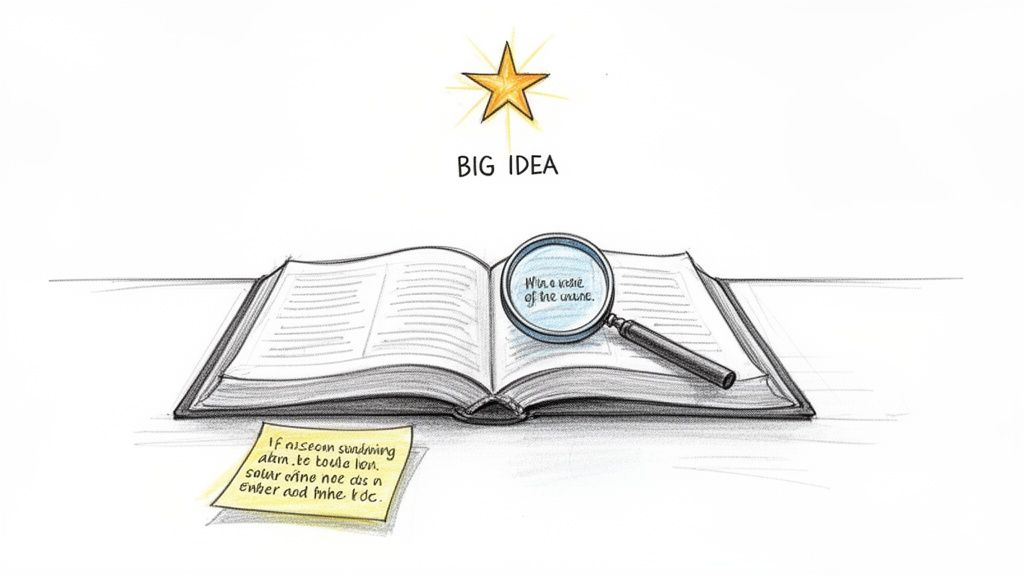
The very first task is to nail down a single, compelling purpose for your message. A sermon without one feels like a collection of interesting but disconnected thoughts. The goal is to boil everything down to one declarative sentence. Think of it as your thesis statement. This sentence becomes your North Star, guiding every single word you write and every story you tell.
Defining Your Sermon's Big Idea
So, how do you find this central theme? It starts with intentional exegesis. You can’t just skim a passage; you have to do the hard work of uncovering its original meaning, context, and timeless truth. As you study, ask yourself a few critical questions:
- What's the primary subject here? Pinpoint the main character, event, or theological concept.
- What is the author's main point about that subject? What were they trying to get across to their first readers?
- What is the timeless principle God is revealing? How does this ancient truth speak to us today?
Wrestling with these questions keeps you faithful to the text instead of just imposing your own ideas onto it. We actually walk through this entire process step-by-step in our comprehensive guide on how to prepare a sermon.
To help organize these foundational elements, a simple table can be incredibly useful. It ensures you’ve touched on all the essential building blocks before you start writing.
Core Components of a Sermon Outline
This table isn't just a checklist; it's a roadmap to ensure your message is both theologically sound and practically helpful.
The Importance of a Prayerful Foundation
An outline gives your message structure, but prayer gives it life. Before diving into commentaries and word studies, spend dedicated time in prayer. Ask God for wisdom, clarity, and a deep understanding of what your congregation is walking through. This spiritual prep work is what turns a well-organized speech into a Spirit-led encounter.
A sermon outline is the skeleton that gives your message structure, but prayer is the breath that gives it life. Without a solid framework, the message collapses; without prayer, it never truly lives.
This need for clear, biblical teaching is massive. The global Christian population has surpassed 2.6 billion and grows by over 70,000 people daily. According to Beacon Partnerships, pastors in high-growth areas often dedicate 40% of their prep time just to exposition, relying on solid outlines to deliver sound doctrine that connects cross-culturally.
Ultimately, this foundational stage gives you a clear, one-sentence summary that will keep your message focused and ready to make an impact. With that in place, you’re finally ready to build the rest of the outline.
Building a Sermon Structure That Connects
Once you’ve nailed down your core message, it’s time to build the framework that will deliver it to your congregation. Think of this structure as the skeleton of your sermon. It provides the support and logical flow your message needs to be understood, remembered, and—most importantly—applied.
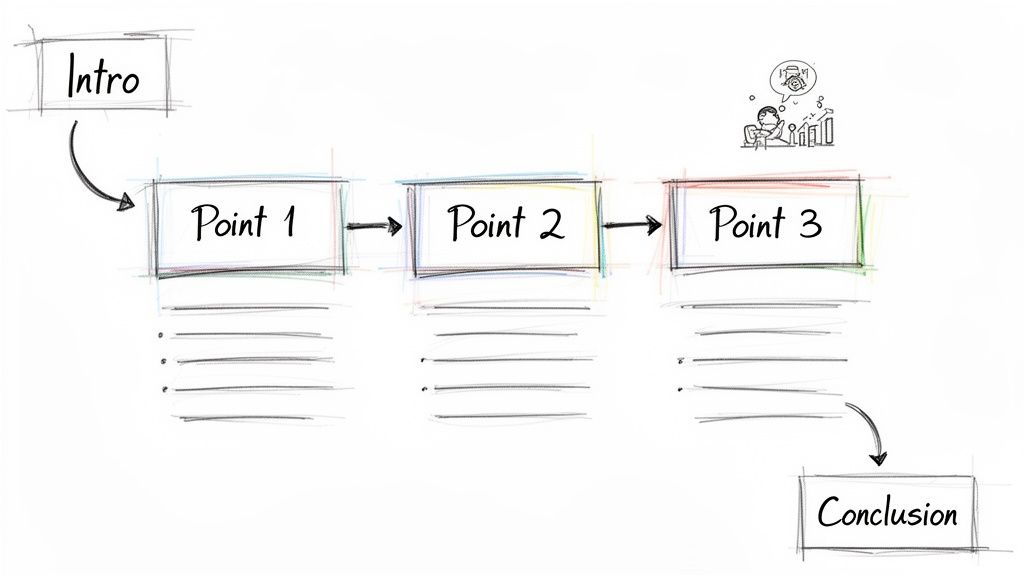
A solid outline isn't about being rigid; it's about being clear. It’s the map that guides your congregation from the introduction to the conclusion, making the journey both engaging and transformative. For anyone looking to get better at crafting compelling messages, mastering the art of structure in writing is a game-changer.
Choosing the Right Sermon Model
There’s no single "perfect" sermon structure. The best model really depends on the biblical text you're working with, your personal preaching style, and what your specific audience needs to hear that day. Trying out different approaches lets you find the right fit for each unique message.
One of the most timeless frameworks is the three-point expository outline. This classic model is built directly from the biblical text, with each main point flowing naturally from the passage itself. It's so effective because it keeps the sermon deeply rooted in Scripture and gives listeners a clear, predictable rhythm to follow.
Another powerful approach is the problem-solution narrative. This structure hooks listeners by identifying a relatable problem or tension they face—what some call a "fallen condition"—and then reveals how the gospel provides the ultimate solution. This model is fantastic for connecting with the felt needs of your audience and showing the immediate relevance of God's Word.
The Highly Practical 4 Ps Model
A particularly effective modern structure is the '4 Ps' model, which really prioritizes clarity and application. This framework breaks the sermon down into distinct, actionable segments, making it incredibly easy for people to follow along and grab the key takeaways.
An effective way to think about this is by allocating your time:
- Passage: Select and explain the text (20% of your time).
- Purpose: State your one-sentence goal (15%).
- Points: Unpack 3-5 key ideas (30%).
- Proof: Use Scripture and examples to support them (20%).
- Punchline: Land on a clear application (15%).
This structured approach helps create practical sermons that really resonate. In fact, Barna reports that 39% of Millennials who attend church weekly are drawn by practical, well-structured messages. It just goes to show how much clarity matters.
A sermon outline isn't just for you—it's for your listener. It's the map you provide to help them navigate the truth of the text and arrive at a place of life change.
This commitment to structure makes a huge difference in how a message is received.
Crafting a Compelling Introduction and Conclusion
No matter which model you choose, your introduction and conclusion are absolutely critical. The intro has to hook your audience, grabbing their attention and clearly stating where the sermon is headed. You can do this with a compelling story, a surprising statistic, or a question that makes them think.
The conclusion is your final chance to drive the message home. It should summarize your main points and, most importantly, call for a specific response. A weak conclusion can make an otherwise powerful sermon just fizzle out. You want to aim for a clear, concise, and compelling call to action that leaves your congregation inspired.
Think of your sermon outline as a content engine. Each point and sub-point is a potential social media post, blog topic, or discussion question. When you start with a strong structure, you're not just preparing for Sunday—you're creating a week's worth of ministry content.
This is where a tool like ChurchSocial.ai can make a massive difference. Imagine taking your finished outline and effortlessly generating content from it.
- AI Generated Reels: Turn a sermon point into an engaging, shareable video clip without needing any editing skills.
- AI Generated Content: Create social media posts, blog articles, and small group questions directly from your sermon transcript.
- Graphic Templates: Use our simple editor to create and post beautiful photos and carousels that visualize your key takeaways for platforms like Instagram and Facebook.
By building your outline with this end goal in mind, you multiply the impact of your message. You can manage and schedule all this content using our simple drag-and-drop calendar, ensuring your church’s social media is always active with biblically rich encouragement. Your sermon structure becomes the blueprint for your entire week of digital discipleship.
Engaging Your Hybrid Audience in a Digital World
Let's be honest: your church isn't just what happens inside your building anymore. Every single Sunday, you're preaching to people in the pews, people on their couches watching the live stream, and even people who will catch a clip on Instagram a few days later. Preaching in this hybrid world requires a whole new level of intention when you sit down to write your sermon outline.
The big shift is thinking beyond the stage and remembering the screen. Your message has to land with the same power for someone watching on their phone as it does for the person in the front row. This means building your sermon outline with digital engagement baked in from the very start.
Preaching to the Camera and the Room
The online viewing experience is just different. Anyone watching from home is a click away from a million other distractions, and their attention span is naturally shorter. Your outline needs to consciously bridge that gap.
So, how do you do it? Start by building in moments specifically for your online audience. A simple phrase like, "For those of you joining us online, I really want you to hear this," can make a world of difference. Your outline should also have cues for your own delivery—things like planned pauses for reflection or reminders to use visual aids that will show up clearly on camera. If you're looking to really dial in that online experience, our guide on the best church live stream software is a great place to start.
This dual focus is more than just a good idea; it's essential. The data shows a massive shift in how people attend church. Only 33% of U.S. adults now attend weekly services, while the number of infrequent attendees has jumped to 56%. For a huge portion of your community, digital is their primary connection. A great outlining framework for this reality is the 'WEAPONS' acronym (What, Explanation, Application, Points, Objectives, Illustrations, Summary), which helps you build a message that hits home for both audiences. You can dig into more of these trends in this detailed report on church attendance.
Designing for Shareable Moments
A modern sermon outline should be a content goldmine. As you map out your main points and stories, you need to be actively hunting for "shareable moments." These are the potent one-liners, the clear summaries, or the sticky illustrations that can stand perfectly on their own.
When you find one, mark it in your outline with a star or a quick note. These are your future social media clips, quote graphics, and post captions. This simple, proactive step turns your sermon from a one-time event into a week-long source of ministry.
Here’s what to look for:
- Powerful Quotes: That one sentence that perfectly captures your core message.
- Concise Summaries: A quick, memorable way to explain a big idea.
- Impactful Illustrations: A short story or analogy that connects on an emotional level.
When you outline with shareable moments in mind, you're not just preparing a sermon; you're pre-planning your entire week of digital discipleship.
This changes everything. Your outline is no longer just for Sunday morning; it’s the blueprint for your social media strategy. And that’s where a tool like ChurchSocial.ai becomes such a game-changer.
With ChurchSocial.ai, you can take those moments you've already identified and get them out to your community without adding hours to your workload. Our platform helps create AI-generated reels from your sermon, turning your most powerful points into short, engaging videos perfect for Instagram and TikTok. You can also pull social posts, blog content, and graphics straight from your sermon, all organized on a simple drag-and-drop calendar. By planning for this in the outline phase, you make sure your message keeps reaching people long after the Sunday service is over.
Turning Your Sermon Outline into Social Media Content
Your sermon outline is so much more than a guide for Sunday morning; it's a content goldmine for your church's entire week. The moment you finalize that outline, you’re holding a playbook packed with powerful, engaging material for your digital ministry.
The key is a simple shift in perspective. Stop seeing the outline as just a preaching tool. Start seeing it as the strategic foundation for your social media.
This approach means your message keeps ministering to your community long after the last "amen." Instead of scrambling for content ideas on Monday, you have a plan that flows directly from the biblical truth you just shared. It builds a consistent and deep voice for your church online.
This diagram really captures the modern flow of a sermon—it starts with private prep but moves into public, digital engagement.
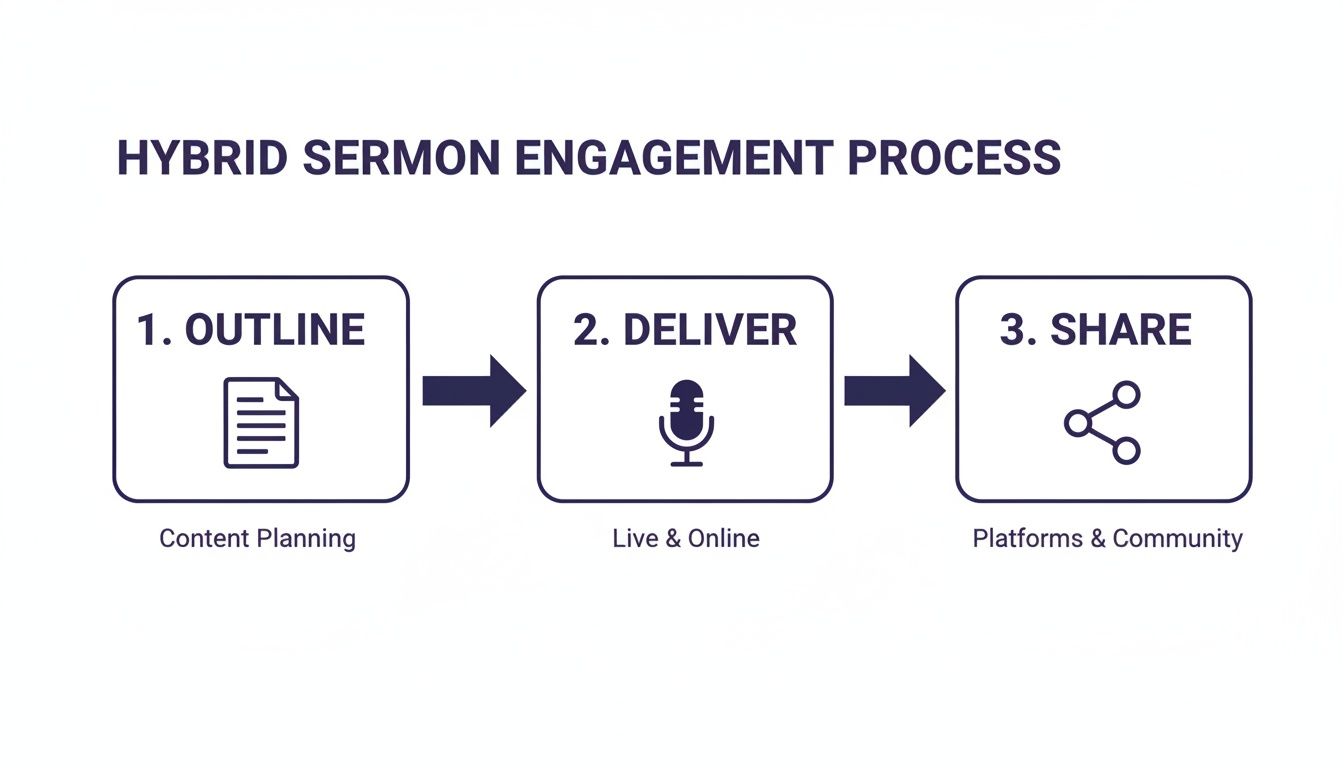
The journey of a sermon doesn't end at the pulpit anymore. Its digital life is just beginning, creating touchpoints for your congregation all week long.
Identifying Content Gold Within Your Outline
You can actually spot your most shareable moments before you even step on stage. While you're writing, keep an eye out for the sentences and stories that really land. These are the golden nuggets that can stand on their own and still carry the weight of your message.
As you go, try to tag these specific types of content:
- Key Quotes: That one powerful, declarative sentence that perfectly sums up a main point.
- Sticky Illustrations: Short, relatable stories or analogies that make a heavy theological concept click for everyone.
- Actionable Takeaways: Clear, practical steps your congregation can actually apply to their lives this week.
Mark them right there in your manuscript. A quick highlight or a star in the margin is all it takes. This tiny habit turns your sermon prep into content curation, setting your team (or you!) up for a huge win.
Revolutionizing Your Workflow with AI
Of course, even after you've identified these moments, turning them into quality social media posts still takes time. A lot of time. This is where the right tools can completely change the game, bridging the gap between a great sermon and a great online presence.
We built ChurchSocial.ai specifically for this. Instead of treating content creation like a separate, dreaded task, our platform bakes it right into your ministry rhythm. You can feed your sermon transcript or video into our system and watch it become a week of ministry posts.
Our AI-powered reel creator is a perfect example. It intelligently finds those powerful moments you spotted and automatically generates viral, engaging reels from your sermons for Instagram and TikTok. No video editing skills needed. The AI handles the cuts, captions, and formatting for you.
A sermon shouldn’t be a one-time event. It should be the beginning of a week-long conversation with your community, and your outline is the script for that entire conversation.
This simple shift in mindset, backed by the right technology, is what allows your Sunday message to have a Monday-through-Saturday impact. We dive deeper into this in our guide on how to repurpose your content with AI.
Repurposing Your Sermon Outline with ChurchSocial.ai
Let's be honest: creating all this content by hand is a massive time sink. The table below shows just how much easier it can be when you have the right tools in your corner.
It's clear that automating the busywork frees you up to focus on what really matters: connecting with your community.
From a Single Point to Dozens of Posts
Beyond video, your sermon outline is overflowing with text-based content. A single main point can be unpacked into multiple social media posts, each exploring a different facet of the same truth.
Imagine taking one of your key takeaways and letting our AI-powered content generator spin up a variety of unique posts from it. In seconds, you could have a thoughtful question for Facebook, a punchy tweet, and a longer, reflective caption for an Instagram carousel or blog post.
This multiplies your efforts without diluting your message.
From there, you can use our library of professionally designed graphic templates and editor to bring these ideas to life visually. Pull a powerful quote from your outline, drop it into a beautiful, branded template, and you have a scroll-stopping photo or carousel ready in minutes.
With all of this content ready to go, you can schedule everything on our simple drag-and-drop calendar. This gives you a bird's-eye view of your week's digital ministry, all driven by the engine of your Sunday sermon.
Streamlining Your Sermon Content Workflow
An impactful sermon outline is too valuable to be a one-and-done Sunday morning event. When you build an efficient workflow around it, that one message becomes the engine for your church's communication all week long. The goal is to create a rhythm that fuels your ministry, not drains your team.
A great process helps you spend less time on tedious tasks and more time on what actually matters—prayer, study, and crafting a message that connects. To get there, you have to master your content creation workflow by applying proven strategies that help you sidestep the common holdups.
Planning Your Week with a Visual Calendar
One of the simplest ways to build a sustainable process is to actually see it. When you can look at your entire week of content in one place, the last-minute scramble to post something disappears. A simple calendar can quickly become your communications command center.
This is exactly why we built the visual calendar inside ChurchSocial.ai. It's designed for this specific purpose. You can plan and schedule every piece of content that comes from your sermon—the AI-generated video clips, the quote graphics, the discussion prompts—all in a single, intuitive view. This gives you a bird's-eye view of your church's online voice, making sure everything feels cohesive.
A sermon outline gives you the what for your weekly content; an intentional workflow gives you the how. Without a system, even the best content can get lost in the busyness of ministry.
This approach keeps everyone on the same page, whether you're a solo pastor wearing all the hats or coordinating with a larger staff.
Integrating Your Church Calendar for a Unified Message
Your sermon doesn’t exist in a vacuum. It often connects to other things happening in the life of your church, like a new small group launch, a community outreach, or a special service. When your communications are disconnected, those important events can easily get lost in the noise.
That’s why seamless integration is so powerful. ChurchSocial.ai connects directly with tools you’re probably already using, like Planning Center and other church calendars. This means when you mention an upcoming event in your sermon, our system can automatically create social media posts to promote it.
- Mention a food drive? A post with all the details gets generated automatically.
- Announce sign-ups for a new Bible study? A graphic and link are ready to be scheduled.
- Promote a guest speaker? Their info is pulled and formatted for a great-looking announcement.
This creates a real sense of unity between what’s said on Sunday and what your church does every other day of the week. It reinforces what's important and gives your congregation clear next steps.
Creating a Sustainable Rhythm for Your Team
The number one threat to consistent church communications is burnout. A solid workflow isn't about doing more work; it’s about making your efforts more effective and a lot less stressful. The key is finding a rhythm that actually lasts.
For some, that means blocking off a couple of hours on a Monday to schedule out all the sermon content for the week. For others, it might be a team member pulling key quotes during the service itself. With tools like ChurchSocial.ai, much of this can be automated.
For instance, you can upload your sermon video right after the service, and our AI will get to work generating clips and posts for you to simply review and schedule. The heavy lifting is done before your week even really begins. When you optimize your process, you build a system that supports your ministry without overwhelming your people.
Your Top Questions About Sermon Outlining, Answered
Even the most seasoned preachers run into questions when building out a sermon. It's just part of the process. Over the years, we've heard a few common ones pop up again and again from pastors trying to craft outlines that truly connect.
Let's tackle them head-on.
How Long Should a Sermon Outline Take?
Honestly, there's no magic number. A pastor might spend anywhere from 8 to 15 hours on sermon prep each week, but that time shifts based on the passage's complexity and their familiarity with it.
The real goal of an outline isn’t to be fast; it’s to be faithful to the text and bring clarity to the message. A good, structured process actually makes your study time more efficient, freeing you up to focus on the heart of the message, not just the mechanics.
This is where having the right tools can give you a huge chunk of your week back. Imagine if you didn't have to spend hours after the service creating social media content. By letting a platform like ChurchSocial.ai handle all the post-sermon clips and graphics, you reclaim that time for the crucial study and prayer that goes into the message itself.
What's the Biggest Mistake to Avoid When Outlining?
Without a doubt, the most common mistake is trying to cram too much information into one sermon. It’s so easy to fall into the trap of turning a message into a theological lecture, packed with fascinating details that, unfortunately, end up overwhelming your listeners.
The purpose of a sermon isn't to exhaust a topic; it's to transform a life. A great outline forces you to be disciplined, ensuring every point, story, and application serves one central 'big idea.'
This laser focus is your best defense against chasing interesting but irrelevant rabbits. It makes sure your message is a sharp, memorable arrow that hits its target, not a spray of information that misses everything.
How Can I Make My Sermons More Practical for Daily Life?
Making your sermons practical starts in the outlining phase, specifically when you get to the "Application" section. To do this well, you have to spend real time thinking about the actual challenges, joys, and questions your congregation is wrestling with Monday through Saturday.
Don't just offer vague encouragement like "be more loving." Instead, paint a picture of a concrete scenario where that command gets tested. A powerful application answers the "So what?" question for every person in the room.
Try this simple framework for your application points:
- The Situation: Describe a common, relatable life scenario (e.g., a frustrating conversation with a coworker).
- The Biblical Principle: Clearly connect the scriptural truth to that situation.
- The Practical Step: Offer a tangible, actionable step someone can take this week.
This small shift moves people from simply knowing the truth to actually living it out.
Can We Really Create Quality Social Media Without a Designer?
Absolutely. In fact, this is precisely why platforms like ChurchSocial.ai exist. Most churches don't have a graphic designer or video editor on staff, and they shouldn't need one to have an effective online ministry.
Our AI-powered reel creator, for example, uses AI to find the most powerful moments in your message and automatically edits them into shareable clips, complete with captions. The graphics studio comes loaded with professional templates you can customize with your church's branding in just a few minutes.
You don't need specialized skills to extend your ministry beyond Sunday morning.
Your Sunday message has the power to inspire and encourage people all week long. ChurchSocial.ai provides all the tools you need to make that happen, from AI-powered content creation to simple scheduling. Start your free trial today and see how easy it is to manage your church's social media.