Online Christian communities are more than just Facebook groups or Instagram pages. They are dedicated digital spaces where your church family can connect, share their faith, and genuinely support one another, long after the Sunday service has ended. Think of it as a modern-day fellowship hall, using technology to nurture relationships and foster spiritual growth all week long.
For today's church, building these communities isn't just a nice-to-have; it's an essential part of modern discipleship and outreach. And with the right tools, it's more manageable than ever.
Your Digital Front Porch: Why Your Church Needs An Online Community
For a long time, we've viewed digital connection as a lesser substitute for face-to-face fellowship. It's time to flip that script. Your online community is actually your church's digital front porch—a welcoming, easily accessible space where connection can spark and then deepen.
The mission field is no longer just down the street; it's in the palm of everyone's hand. Social media platforms have become the new public square, the primary places people gather, share their lives, and look for a sense of belonging. Building a presence here isn't about chasing a tech trend. It's a vital act of ministry. It's about meeting people exactly where they are.
Meeting People in Their Digital World
The sheer scale of online activity presents an incredible opportunity for the Church. Globally, around 5.5 billion people spend more than six hours online every day. Yet, the current missionary reach on these platforms is shockingly low, hovering at just 2 percent. This massive gap is a clear call to action for churches ready to step into the digital mission field.
This isn't about trying to become a social media influencer or going viral. It's simply about faithfully shepherding a flock that exists both in person and online. A thriving digital space can:
- Extend Fellowship Beyond Sunday: Create a hub for prayer requests, sermon discussions, and daily encouragement.
- Create a Low-Barrier Entry Point: Offer a safe, no-pressure space for curious seekers and new visitors to get to know your church's heart before they ever walk through the doors.
- Amplify Your Ministry's Reach: Share a message of hope with people in your town and far beyond who might never attend a physical service.
Making Digital Ministry Manageable
I get it. The thought of managing a whole new ministry area can feel overwhelming, especially if you're a smaller church with a lean staff and volunteer team. This is where having the right tools in your corner makes all the difference. When you're setting up your digital front porch, looking into options like the saucial platform can help you find the perfect home for your online community.
A strong digital presence isn’t built on complex strategies but on consistent, heartfelt connection. The goal is to make that consistency achievable for any church, regardless of size or budget.
This is precisely why ChurchSocial.ai was created: to empower your church to plan and manage your social media accounts, making a massive impact without adding a massive workload.
Imagine turning your Sunday sermon into a week's worth of engaging, AI-generated content like social posts, blogs, and even video reels with just a few clicks. Picture your volunteers using professional graphic templates and our editor to create beautiful announcements in minutes. With our simple drag-and-drop calendar, you can easily manage and update all of your social media, creating a vibrant community that feels personal and alive. It transforms a daunting task into a manageable—and even joyful—part of your ministry.
Laying The Foundation For Your Digital Space
Before you ever design a graphic or schedule a single post, we need to talk about the most crucial first step: defining the purpose behind your online christian communities. Answering this "why" question brings the clarity you need to build a space with real intention and impact. Without it, your online efforts will feel scattered and, frankly, a bit pointless.
Is this digital space going to be a hub for diving deeper into the Sunday sermon? Or maybe it's a dedicated place for sharing prayer requests and celebrating answered prayers? Or is its main job to be an outreach tool, creating a warm, welcoming first impression for people looking for a church in your area? Each of these goals demands a totally different game plan for content, moderation, and even the platform you choose.
Think of it like this digital mission journey:
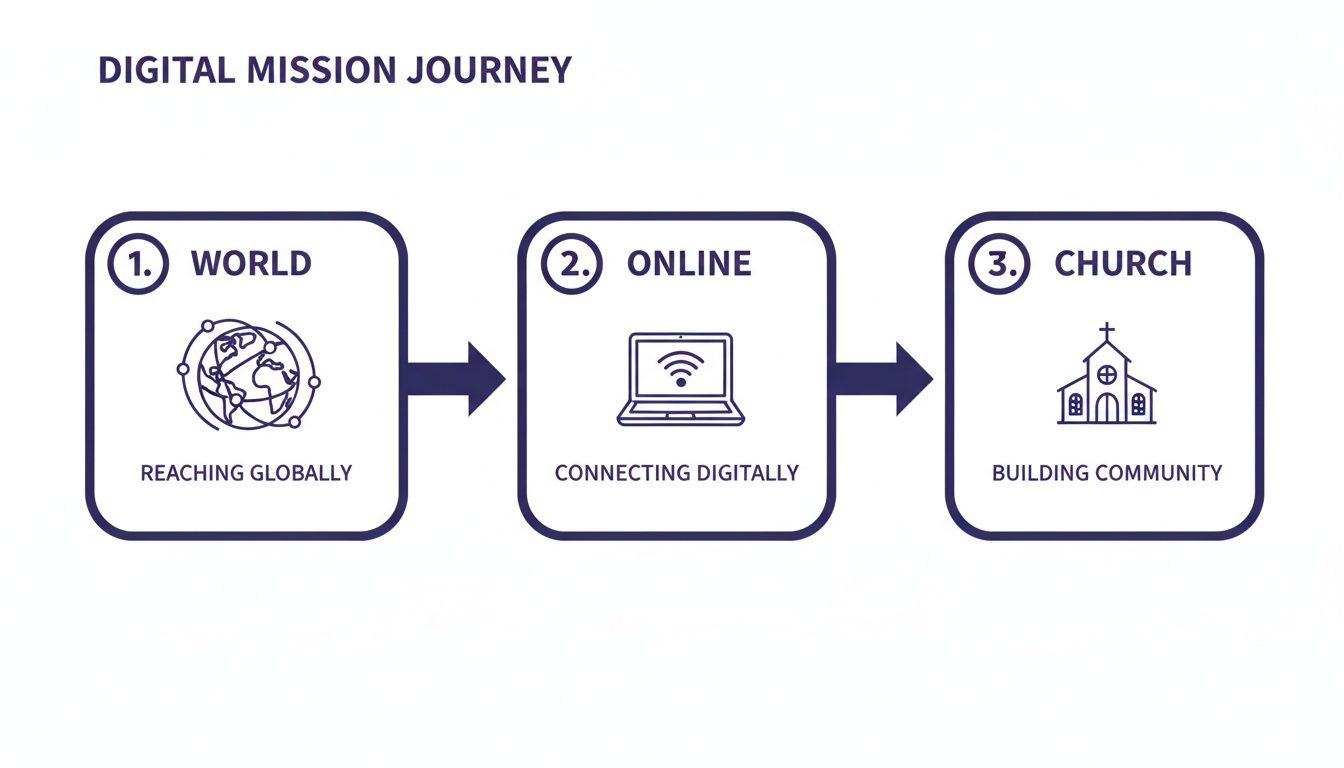
This simple visual shows how a great digital ministry intentionally bridges the gap between the noise of the online world and the close-knit community of your church. This is the strategy that turns a basic social media page into a powerful ministry tool.
Defining Your Community's Purpose
Let's get practical. A church that wants to foster deeper discipleship might create a private Facebook Group focused on weekly sermon-based questions and Bible study resources. On the other hand, a church laser-focused on outreach might pour its energy into a public Instagram profile full of shareable, encouraging content that points people to a weekend service.
There's no single right answer, but there is a right answer for your church.
Think through what you're really trying to accomplish. Are you aiming for:
- Deepening Fellowship: Creating a place for members to connect all week, share life updates, and pray for one another.
- Extending Discipleship: Providing resources, discussion prompts, and content that reinforces Sunday's message.
- Local Outreach: Building a visible, welcoming online presence to attract new families and individuals in your town.
- Centralized Communication: Using the space as the go-to channel for church-wide announcements and event info.
Pick one or two primary goals. This decision will be your north star, guiding every choice you make from here on out.
Crafting Clear and Gracious Guidelines
Once you know your ‘why,’ it's time to establish the ‘how.’ Community guidelines aren't about being restrictive; they're guardrails that create a safe, welcoming atmosphere for everyone. Getting these down on paper proactively addresses potential issues before they start, empowering your moderators and setting a positive tone from day one.
Your community guidelines are the constitution of your digital space. They communicate your values and set the expectation for Christ-like interaction, ensuring the space remains a healthy environment for spiritual growth and connection.
Good guidelines are simple, clear, and reflect the heart of your church. For instance, instead of a vague rule like "Be nice," get specific.
A solid guideline on respectful disagreement might be: "We encourage healthy discussion, but please challenge ideas respectfully without attacking individuals. Comments that are personally critical will be removed to maintain a supportive environment." Similarly, a policy on promotions could say: "To keep our focus on community, please refrain from posting business promotions or fundraisers. You can share these on our dedicated 'Community Bulletin Board' thread on Fridays."
Choosing the Right Digital Venue
With your goals and guidelines locked in, picking the right platform gets a whole lot easier. This isn't about chasing the newest, shiniest app. It’s about strategically choosing the space where your people already hang out and one that actually fits your ministry goals.
A bustling Facebook Group is fantastic for sparking discussions and creating that 'insider' feel. Instagram's visual-first approach is perfect for outreach, sharing inspiring quotes, and quick-hit content like Reels. Each platform just has a different DNA.
The table below breaks down some of the most common options to help you see where your church might fit best.
Choosing The Right Platform For Your Online Community
Once you've made your choice, the real work begins. And honestly, this is where having a clear foundation makes all the difference.
This is exactly why ChurchSocial.ai is so powerful. It doesn't replace your strategy; it fuels it. With your goals defined, you can use our platform to generate discussion questions from your sermon that align perfectly with your discipleship plan, or use our graphic templates and editor to create photos and carousels for events that support your outreach efforts. ChurchSocial.ai helps turn your foundational plan into a manageable, sustainable, and impactful digital ministry.
Creating Content That Actually Connects
An online community that’s truly thriving needs more than just service reminders and bulletin announcements. It runs on a steady diet of content that sparks real conversation, encourages people to jump in, and makes them feel seen and heard.
This is the shift from just broadcasting information to actually building relationships. The goal here is to find a simple, sustainable content rhythm that fuels your community without burning out your team.
The easiest way I’ve found to do this is by using a "content pillar" approach. Instead of scrambling for what to post each day, you build your entire strategy around a few core themes that tie back to your church's mission. These pillars keep your feed fresh and consistently point people toward your purpose.

From Sunday Sermon to a Week of Content
Your most powerful content pillar is probably the one you already have: the Sunday sermon. That single message is a goldmine of content that can keep your congregation engaged long after they’ve left the building. The real challenge is finding the time to dig it all out.
This is where ChurchSocial.ai becomes an indispensable partner for your church.
Imagine this simple workflow: After Sunday service, you just upload the sermon transcript. Our platform's AI gets to work, turning that one message into a whole host of high-impact content.
- AI-Generated Reels: Automatically create compelling, short-form video reels from the most powerful moments in your sermon, ready for Instagram and TikTok.
- AI-Generated Content: Pull thoughtful discussion questions, blog post outlines, and social media posts directly from the sermon transcript. This completely gets rid of that "blank cursor" feeling when you're trying to think of something meaningful to say.
What used to take hours of listening back, finding quotes, and writing posts can now be done in minutes. This frees you up to extend the life of every message and reinforce its truths all week long in different ways.
Building Your Content Pillars
Beyond the sermon, a few other content pillars can help you create a well-rounded and interactive feed. These pillars make sure you're speaking to the different needs and interests bubbling up within your community.
- Community Connection: These are posts designed to get people talking to each other. Think weekly prayer prompts ("What can we be praying for you this week?"), fun icebreakers, or even polls about upcoming sermon topics.
- Behind the Scenes: Show the human side of your church. A volunteer spotlight introducing the person who sets up coffee each week or a quick photo of the worship team practicing makes your church feel way more personal and approachable.
- Inspiration and Encouragement: Shareable graphics with a powerful verse or an encouraging quote can be a small light in someone's day. These are simple but incredibly effective touchpoints.
The most effective online content doesn't just inform; it invites. Every post should be an open door for someone to engage, whether by answering a question, sharing a prayer, or simply feeling encouraged.
The key is variety. Mixing these pillars keeps things dynamic and stops your feed from feeling stale. One day you might share a powerful sermon clip, the next a call for prayer requests, and the day after, a beautiful graphic for an upcoming event. To go deeper on this, we've got some great advice on how to create engaging social media content that really connects.
Equipping Your Team for Success
One of the biggest hurdles for churches is the creative bottleneck. So often, the job of creating graphics falls on one person who may or may not have any design experience. This is another spot where ChurchSocial.ai really helps level the playing field.
The platform includes a library of professional graphic templates and an editor, made specifically for churches. This empowers anyone on your team—a pastor, an administrator, or a volunteer—to create and post beautiful, on-brand photos and carousels without needing to be a graphic designer.
Combine that with our simple drag-and-drop calendar, and you can build a workflow that's both powerful and sustainable. You can schedule your AI-generated sermon content, your community prompts, and your custom graphics weeks in advance. This proactive approach ensures your online community stays vibrant and spiritually nourishing, all without overwhelming the people who make your ministry possible.
How To Shepherd Your Digital Flock
An online community that’s actually healthy doesn’t just happen. It needs real, intentional care—active shepherding, not just passive observation. Once you have a good rhythm with your content, your focus has to shift to nurturing the people who are actually there. This means having a practical game plan for managing all those interactions with both grace and wisdom, turning a simple social media page into a genuine outpost for your ministry.
This is all about proactively building a culture of support, not just reactively putting out fires. It’s the difference between a digital bulletin board and a fellowship hall. The good news? You don't have to do it alone, and the right tools can make this vital work feel surprisingly effortless.
Assembling Your Digital Care Team
No pastor would ever try to run every single part of the church by themselves. The same principle is true for your online Christian communities. One of the single most important things you can do is assemble a small team of trusted volunteers to serve as moderators. Think of them as your digital greeters and hosts.
Their job isn't to be online 24/7, but to help set the tone for the entire group. Giving them clearly defined roles is the key to empowering them without burning them out.
- Welcome New Members: Have one or two people personally welcome every single new person who joins. A simple comment like, "So glad you're here, [Name]!" makes a massive first impression.
- Spark Conversation: Equip them to ask follow-up questions on posts or even share a brief testimony of their own when you post a prompt.
- Uphold Guidelines: They can be the ones to gently redirect a conversation that’s drifting off-topic or flag comments that violate your guidelines so a pastor can review them.
This team really is an extension of your pastoral care, making sure the digital space stays safe and welcoming for everyone.
Stimulating Meaningful Conversation
The most vibrant online communities are the ones where people feel comfortable enough to share and interact with each other. Your job, along with your moderation team, is to gently prompt and guide these conversations. This means you have to move beyond just making announcements and start creating real opportunities for people to connect.
For example, instead of just posting about an upcoming Bible study, try using a poll. Ask something like, "Which topic for our next women's Bible study are you most interested in?" Not only do you get great feedback, but it gives your members a sense of ownership.
The heart of digital shepherding is creating consistent, low-pressure opportunities for people to share their lives and faith. It’s about asking good questions and then actively listening to the responses.
Personally welcoming each new member, asking for prayer requests on a regular schedule, and celebrating life milestones that people share in the group—these are all small acts that, over time, build a powerful sense of belonging.
Making Management Effortless and Effective
Let's be real. Juggling weekly discussion prompts, moderator check-ins, event reminders, and daily engagement can quickly become a full-time job. This is where a smart plan, backed by the right platform, is absolutely essential if you want to keep this ministry going for the long haul. The goal is to systematize the routine tasks so you can pour your energy into the relational ones.
This is exactly what ChurchSocial.ai was built for. Its simple drag-and-drop calendar allows churches to easily manage, update, and schedule their entire community management workflow weeks or even months out.
Imagine sitting down for just one hour and scheduling all of this:
- A "Welcome Wednesday" post to greet new members.
- A "Testimony Tuesday" prompt to encourage sharing.
- A dedicated "Prayer Request Friday" thread.
- A quick reminder for your moderation team to check in over the weekend.
That kind of organization ensures your community stays active and engaged, even during the busiest seasons of church life. Plus, we integrate with calendars like Planning Center to create content for events, seamlessly connecting what’s happening online with your in-person activities. To get a bigger picture of this, check out our guide to building an effective social media ministry.
By automating the predictable, you free up your time for the personal. That's how you turn community management from a chore into a joyful act of ministry.
Growing Your Community and Deepening Engagement
You’ve laid the groundwork, built the space, and the content is flowing. Now for the fun part: watching your online community truly come alive. Growth isn't just a numbers game; it’s about intentionally deepening connections and turning that digital space into a real extension of your church family.
This takes a two-pronged approach, blending simple, real-world promotion with thoughtful digital outreach.
The first, and honestly most powerful, step is to use your biggest asset: your Sunday morning gathering. Make it a regular habit to mention your online community from the pulpit. A simple, "If today's message resonated with you, we're going deeper on this in our Facebook Group all week," is a surprisingly effective way to bridge the gap between the physical and digital.
Don't forget to put a clear call-to-action with a QR code in your weekly bulletin or on the pre-service slides. Make it easy for them.

Fueling Organic Growth and Connection
Beyond Sunday mornings, your digital outreach should be all about making your content easy to share. This is how your community members become your best evangelists.
Use the graphic templates and editor in ChurchSocial.ai to whip up beautiful, shareable images with inspiring quotes or key takeaways from the sermon. When you post them, just add a simple line like, "Feel free to share this with a friend who might need some encouragement today!"
True community growth isn't just about getting more members; it's about creating an environment where current members feel so valued that they can't help but invite others in.
To keep your current members invested, make it a point to celebrate them. Acknowledge milestones like birthdays or anniversaries when people share them. Maybe host an exclusive online Q&A with your pastoral staff once a quarter, creating a space for questions they might not ask on a Sunday.
These small, intentional acts build real loyalty and make the online space feel like a genuine community, not just another content feed.
Bridging the Online and In-Person Gap
One of the biggest hurdles for churches is making sure digital efforts support, rather than compete with, in-person gatherings. This is where seamless integration is so important.
The reality is, the way people "do church" has shifted. A staggering 89 percent of churches now maintain a digital presence. With an estimated 25 million Americans now attending church online, creating meaningful online experiences that connect back to the physical church is non-negotiable. If you want to dive deeper into these trends, you can learn about the transformation in church attendance.
This is precisely the problem ChurchSocial.ai was designed to solve.
The platform's integration with tools like Planning Center is a game-changer for bridging this gap. For instance, when you add a new event to your church calendar—like a small group kickoff or a volunteer training—ChurchSocial.ai can automatically create and schedule promotional posts for it.
This automated workflow keeps your online community plugged into what’s happening in the life of the church, gently nudging them from online interaction to face-to-face fellowship. That seamless connection is the secret to turning casual online observers into deeply engaged members of your congregation. Our detailed guide on community engagement best practices offers even more strategies for this.
This synergy between digital and physical is what transforms a simple online group into one of the most powerful online christian communities you can build.
Got Questions About Digital Ministry? We’ve Got Answers.
Stepping into digital ministry can feel a little daunting. You might be wondering how much time this will really take, what to do when conversations get heated, or what a "successful" online group even looks like. These are the exact questions we hear from church leaders all the time, so let's tackle them head-on.
How Much Time Does It Really Take to Manage an Online Community?
I get it. The last thing you need is another full-time job on your plate. Many pastors worry that an online community will eat up all their time, but it doesn't have to be that way.
When you're just starting out, set aside about 3-5 hours a week. This initial phase is all about laying the groundwork—drafting your community guidelines, picking the right platform, and planning out that first month of content.
Once you find your groove, daily management can drop to just 30-60 minutes. This is where having the right tools makes all the difference. With a platform like ChurchSocial.ai, for example, you can sit down once and schedule an entire week's worth of posts and discussion starters. Batching your content like this frees you up to do what really matters: engaging with your people.
How Should We Handle Negative Comments or Tough Disagreements?
Shepherding a community means navigating conflict with grace, whether it's in the church lobby or in a Facebook group. The trick is to be proactive, not just reactive. Your best defense is a set of clear, easily accessible community guidelines that you can always refer back to.
When a difficult comment does pop up, try this simple framework: Acknowledge, Redirect, De-escalate.
- Acknowledge: Start with something simple like, "Thanks for sharing your perspective." This shows you're listening and values their voice, even if you disagree.
- Redirect: Gently steer the conversation back to a healthier place or take it offline. You could say, "That's a really big topic! Our pastoral team would be happy to chat more about that. Feel free to send us an email."
- De-escalate: If someone clearly violates your guidelines, send them a private message to explain why, then remove the post.
Remember, your job isn't to win an argument. It’s to shepherd the entire community and protect the safe, welcoming space you've created for everyone.
This approach lets you handle conflict with both firmness and grace, reinforcing the very culture you’re trying to build.
How Do We Know if Our Online Community is Actually Working?
Success in digital ministry goes way beyond follower counts and vanity metrics. Real success is measured by how well you’re meeting your ministry goals. You’ll want to look at a blend of both the numbers and the stories.
On the quantitative side, you can track metrics like your engagement rate (what percentage of your people are actually interacting with your posts?) or how many people click through to your church website or event sign-ups.
But the qualitative stuff is where you’ll find the true heartbeat of your community.
- Are people starting to share their own prayer requests and celebrate answered prayers together?
- Are you seeing new faces from the online group show up at in-person services?
- Are you hearing stories from people who feel more connected to the church during the week?
At the end of the day, your online community is successful if it’s helping you deepen fellowship, extend discipleship, or reach your local neighborhood. It's all about purpose.
Ready to plan and manage your church's social media accounts without all the stress? ChurchSocial.ai gives you everything you need—from AI-generated reels from your sermons to graphic templates and a simple drag-and-drop calendar to easily manage all of your social media. Start connecting with your congregation in new ways by visiting https://churchsocial.ai today.