Your church's message of hope and community deserves to be heard far beyond the sanctuary walls. Social media provides a powerful, always-on platform to engage your congregation and reach new people every day of the week. But creating impactful content, like sermon highlight reels or event graphics, is only the first step. To truly cut through the digital noise, you need to share that content precisely when your community is most likely to see and engage with it.
Figuring out the best times to post on social media can often feel like a guessing game, leading to missed opportunities and wasted effort. This guide removes the guesswork. We'll provide a platform-by-platform breakdown of the optimal posting windows specifically for churches, backed by data and tailored to the unique rhythms of your community. To effectively unlock your church's digital pulpit, it's beneficial to review various examples of social media strategy that have proven successful. By understanding these proven tactics, you can build a more intentional and effective plan.
Implementing these strategies doesn't have to be a major administrative burden. Tools like ChurchSocial.ai are designed to streamline this entire workflow. With ChurchSocial.ai, you can create AI-generated reels from your sermons, create AI-generated content from the sermon transcript like social posts, blogs, etc., you can use our graphic templates and editor to create and post photos and carousels, and our simple drag and drop calendar allows churches to easily manage and update all of their social media. We also integrate with Planning Center and other church calendars to create content for events. This guide will give you the knowledge to build a powerful posting schedule, and platforms like ChurchSocial.ai provide the tools to execute it flawlessly, ensuring your ministry's voice is heard loud and clear all week long.
1. Master Facebook: Connecting with Your Congregation All Week Long
Facebook remains the cornerstone for church community building. It's where your members share life events, connect in groups, and look for updates. Understanding the best times to post on social media, specifically on this platform, is crucial for sermon announcements, event reminders, and daily encouragement. Your congregation's schedule dictates their Facebook usage; think morning devotionals, lunch breaks, and evening wind-downs. Posting during these windows ensures your message integrates seamlessly into their daily lives, fostering a continuous sense of connection. The goal isn't just to be seen, but to be a welcome part of their daily scroll.

Actionable Facebook Posting Schedule
A well-timed post can transform a simple announcement into an engaging conversation. By aligning your content with the natural rhythm of your community's week, you maximize visibility and impact.
- Sunday Morning (8 AM - 10 AM): This is your prime opportunity. Post a welcome message, a link to the live stream, or a graphic with the sermon title. This captures members right before service, whether they're attending in person or online.
- Monday Morning (7 AM - 9 AM): Start the week with inspiration. Share a short clip or a key quote from Sunday's sermon. ChurchSocial.ai can automatically generate these AI-powered reels and quote graphics from your sermon transcript, making Monday morning encouragement effortless.
- Wednesday Evening (6 PM - 8 PM): Capitalize on the midweek lull. This is a perfect window for a Facebook Live Bible study, a Q&A session with pastoral staff, or an announcement about upcoming weekend events. Engagement is often high as people settle in for the evening.
- Thursday Afternoon (3 PM - 5 PM): As the weekend approaches, your community is making plans. Post about volunteer opportunities, community outreach events, or small group sign-ups.
Leveraging Tools for Perfect Timing
Consistently hitting these optimal times can be a challenge for busy church staff. This is where strategic automation becomes a game-changer.
Key Insight: The best times to post on social media are not just about platform algorithms; they're about human behavior. Your content should meet your congregation where they are, both digitally and in their daily routines.
Using a tool like ChurchSocial.ai simplifies this entire process. With its drag-and-drop calendar, you can schedule all your posts in advance. The integration with Planning Center automatically creates and schedules event posts, ensuring you never miss a chance to promote a key gathering. Schedule your Sunday service reminders on Saturday evening and Sunday morning to guarantee your message arrives at the perfect moment.
2. Leverage the 'Golden Hours' for Each Platform
While understanding your own congregation's behavior is vital, leveraging platform-wide "golden hours" provides a powerful starting point for your church's social media strategy. Each platform attracts a different audience with distinct usage patterns, creating peak activity windows you can tap into. Recognizing the best times to post on social media for each channel allows your church to tailor its message, whether it's a professional update on LinkedIn or a visual-heavy testimony on Instagram, for maximum reach. This cross-platform approach ensures your content isn't just posted, but delivered when the largest potential audience is actively scrolling.
Actionable Golden Hour Posting Schedule
Think of these golden hours as a baseline. Use them as your initial guide, and then refine your schedule based on the unique analytics of your church's accounts.
- Instagram (11 AM - 1 PM & 7 PM - 9 PM, Weekdays): This is ideal for visual content. Post an AI-generated reel from your sermon during the lunch break or share an inspiring quote graphic created in ChurchSocial.ai during the evening downtime to capture your community's attention.
- LinkedIn (9 AM - 10 AM & 12 PM, Tue-Thurs): Perfect for reaching community leaders, board members, or staff. Share a blog post derived from your sermon transcript or post updates about church leadership and community partnerships during these professional peak times.
- TikTok (7 PM - 9 PM, Tue-Thurs): Tap into the younger demographic as they unwind. This is the prime slot for short, engaging, and trend-focused videos, like quick sermon clips or behind-the-scenes content from your youth group.
- Twitter/X (8 AM - 10 AM & 6 PM - 9 PM, Weekdays): Capitalize on commute times. Share quick thoughts, scripture verses, or links to your weekly blog post to engage people during their daily journeys.
Leveraging Tools for Perfect Timing
Trying to manually post across all these platforms at their optimal times is nearly impossible for a busy church staff. A unified scheduling tool is essential for executing this strategy effectively.
Key Insight: The best times to post on social media are platform-dependent. A one-size-fits-all schedule limits your reach; a tailored approach for each channel amplifies your voice.
ChurchSocial.ai’s drag-and-drop calendar makes it simple to schedule content for each platform’s unique golden hours. You can plan your entire week, ensuring your Instagram reel, LinkedIn update, and TikTok video all go live at their most impactful moments without any last-minute stress. For more advanced strategies, explore these nonprofit social media best practices to further enhance your outreach.
3. Implement Strategic Weekend vs. Weekday Posting
Understanding the digital rhythm of your congregation's week is a game-changer for engagement. User behavior shifts dramatically between the structured work week and the more relaxed weekend, directly impacting the best times to post on social media. Weekdays often see engagement during commutes and lunch breaks, while weekends open up different windows as people browse more leisurely. A successful church social media strategy acknowledges this shift, adjusting both timing and content to match the community's mindset. This approach ensures your message is not just seen, but received at the most opportune moment.
Actionable Weekend vs. Weekday Posting Schedule
Tailoring your content to the day of the week can significantly boost its impact. Weekday posts should be concise and easily digestible, while weekend content can be more reflective and community-focused.
- Tuesday-Thursday (11 AM - 1 PM): These are peak weekday times. Post quick announcements, sermon reminders for the coming Sunday, or a link to a new blog post. Content should be valuable and easy to engage with during a lunch break.
- Saturday Morning (9 AM - 11 AM): Capture the weekend spirit. Share uplifting content, a family devotional idea, or a volunteer spotlight. This is a great time for inspiring lifestyle or community-oriented content that aligns with a slower weekend pace.
- Sunday Evening (6 PM - 8 PM): As people wind down and prepare for the week ahead, you have a captive audience. Post a recap of the Sunday service, a thought-provoking question related to the sermon, or a prayer for the week. This helps extend the Sunday experience into the rest of the week.
- Monday Morning (7 AM - 9 AM): Start the week with a powerful, positive message. Use ChurchSocial.ai to instantly generate an AI-powered reel or a beautiful quote graphic from Sunday's sermon transcript, providing a perfect dose of Monday motivation for your congregation.
Leveraging Tools for Perfect Timing
Distinguishing between weekday and weekend strategies requires careful planning, which can be overwhelming for busy church staff. Automation is the key to executing this strategy flawlessly.
Key Insight: The best times to post on social media are dictated by your audience's weekly schedule. Separate your strategy for weekdays and weekends to align with their different routines and content consumption habits.
With ChurchSocial.ai's drag-and-drop calendar, you can schedule your entire week's content in one sitting. Plan your concise, informative posts for weekdays and your more inspirational, engaging content for the weekend. The tool's integration with Planning Center can automatically create and schedule posts for weekend events, ensuring your community is always informed at the right time. This level of planning allows you to meet your congregation exactly where they are, any day of the week.
4. Test and Optimize with A/B Posting Experiments
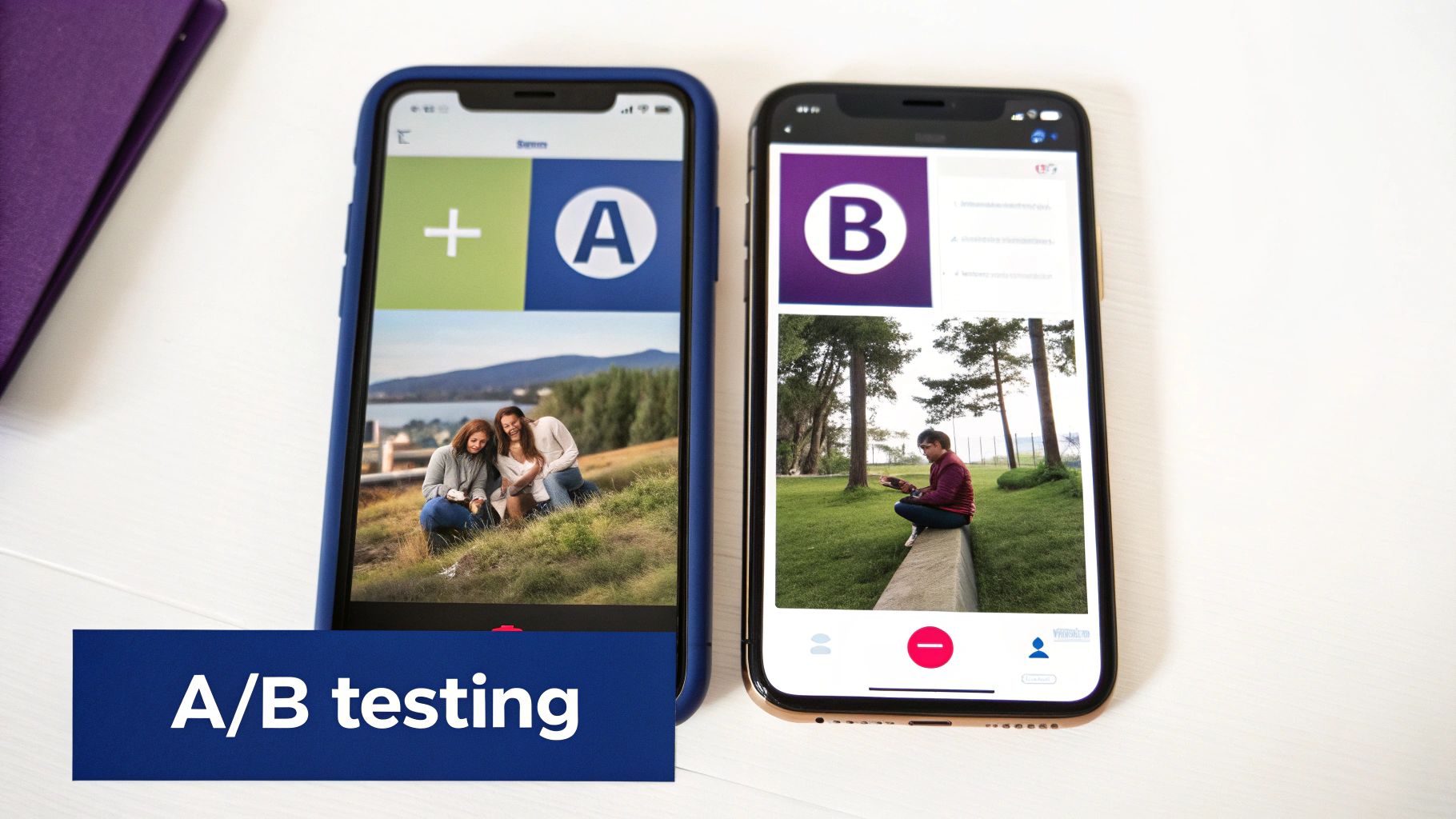
While general guidelines provide a great starting point, your specific congregation is unique. The best times to post on social media for your church might differ based on your community's specific demographics and routines. This is where A/B testing becomes an invaluable strategy. It involves systematically posting similar content at different times to see which window generates superior engagement. This data-driven approach removes guesswork, providing concrete evidence about when your members are most active and receptive online. By keeping the content type and message consistent while varying only the post time, you can scientifically identify the optimal engagement windows for your unique audience.
Actionable A/B Testing Schedule
To run a successful test, you need a clear, structured plan. This ensures your results are reliable and not just random fluctuations. Start with a hypothesis, such as "Our congregation engages more with sermon clips on Tuesday evenings than on Monday mornings."
- Week 1 & 3 (Test A): Post a sermon reel on Tuesday at 7 PM. Use your platform's analytics to track likes, comments, shares, and watch time.
- Week 2 & 4 (Test B): Post a different sermon reel of similar length and style, but this time on Monday at 8 AM. Track the exact same engagement metrics.
- Analyze the Results: After a month, compare the average engagement for the Tuesday evening slots versus the Monday morning slots. The data will reveal which time is more effective for that specific type of content.
- Expand Your Testing: Once you have a winner, you can test it against another time slot. For example, test Tuesday at 7 PM against Wednesday at 12 PM to see if the lunch hour can outperform the evening slot.
Leveraging Tools for Perfect Timing
Manually tracking and executing these tests can be tedious, especially for a busy church staff. A robust scheduling tool is essential for maintaining consistency and accuracy throughout your experiments.
Key Insight: Finding the best times to post on social media isn't a one-time task; it's an ongoing process of listening to your audience's digital behavior and adapting your strategy accordingly.
ChurchSocial.ai simplifies A/B testing with its intuitive drag-and-drop calendar. You can easily schedule two identical posts, created from the same sermon transcript, for different days and times. By cloning a post and simply changing its scheduled time, you ensure the content variable remains constant. The platform’s analytics will then help you compare performance directly, making it easy to identify the most impactful time slots for your announcements, devotionals, and event promotions. This allows you to refine your schedule based on hard data, ensuring your message always has the greatest possible reach and impact.
5. Adapt to Algorithm Changes and Feed Ranking
Understanding social media algorithms is like understanding the currents of a river; you can fight against them, or you can use them to carry your message further. Algorithms have shifted from simple chronological feeds to complex systems that prioritize content based on predicted user interest, recency, and engagement velocity. This means the best times to post on social media are not just when people are online, but when your content can spark rapid, meaningful interaction that signals its value to the platform. For a church, this means timing your posts to maximize both immediate engagement and the algorithmic amplification that follows, ensuring your message reaches more of your congregation and community.
Actionable Algorithm-Aware Posting Strategy
To work with algorithms effectively, your strategy must focus on creating a strong initial "splash." The first hour after posting is critical, as platforms like Instagram and LinkedIn use this early data to decide a post's long-term visibility.
- Trigger Initial Engagement: Post when your most engaged followers are online. Use platform analytics (like Instagram's 'Your Activity' insights) to identify these peak activity times for your specific audience.
- Aim for Velocity: Your goal should be to generate 40-50 engagements (likes, comments, shares) within the first hour. This signals to the algorithm that your content is high-quality and relevant. A post about an upcoming youth event, for example, should be timed for when parents are most active to generate quick comments and shares.
- Boost with Quick Replies: Respond immediately to the first few comments on your post. This doubles your comment count and shows the algorithm that your content is fostering conversation, a key metric for platforms like Facebook.
- Post Before the Peak: Schedule your posts for 15-20 minutes before the absolute peak time. This allows your content to be indexed and ready in the feed as the majority of your audience begins to log on.
Leveraging Tools for Algorithmic Success
Keeping up with ever-changing algorithms while managing ministry responsibilities is a monumental task. This is where a dedicated tool can turn a complex challenge into a simple, automated process.
Key Insight: The best times to post on social media are now defined by engagement velocity. It's not just about when your audience is online; it's about when they are most likely to interact quickly and meaningfully with your content.
ChurchSocial.ai is designed to help you master this. You can create content designed for high engagement, like AI-powered sermon reels or quote graphics that encourage shares and saves. Then, use the drag-and-drop calendar to schedule these posts precisely for those crucial pre-peak windows. By consistently delivering engaging content at the right moment, you train the algorithm to favor your posts, ensuring your church’s message consistently cuts through the noise.
6. Utilize Scheduling Tools with Optimal Time Recommendations
Manually tracking the best times to post on social media can feel like guesswork. Modern scheduling tools have evolved beyond simple automation; they now offer AI-powered analytics that recommend optimal posting times based on your church's unique historical data. These platforms analyze your past posts, engagement patterns, and follower activity to suggest personalized time slots when your congregation is most likely to see and interact with your content. This data-driven approach removes the uncertainty and ensures your messages have the greatest possible impact.
Actionable Tips for Using Scheduling Tools
Leveraging a smart scheduling tool means your ministry’s voice can be consistent and timely, even when your team is focused on other tasks. By letting data guide your schedule, you connect with your community more effectively.
- Allow for a Learning Period: Give any new tool 4-6 weeks to gather sufficient data on your account's performance before fully relying on its time recommendations.
- Trust But Verify: Review and adjust the tool's suggestions monthly based on your own performance analytics. Use the recommendations as a strong starting point, not an unbreakable rule.
- Segment Your Content: Use queue categories for different types of content. For example, the optimal time for an inspirational sermon quote may differ from the best time for a youth group event announcement.
- Stay Human: Schedule your core content, like sermon clips and event reminders, but post about trending topics or respond to real-time events manually to maintain an authentic, in-the-moment presence.
Leveraging Tools for Perfect Timing
For a busy church staff, maintaining an optimal posting schedule is nearly impossible without the right support. This is where a dedicated platform designed for churches makes all the difference.
Key Insight: The best times to post on social media are not static; they change as your community grows and their habits evolve. Smart tools adapt with them, ensuring your strategy remains effective.
Using a tool like ChurchSocial.ai transforms your social media management. Its drag-and-drop calendar allows you to plan and schedule all your content in advance, from AI-generated sermon reels to event graphics created from templates. The platform not only helps you post consistently but also learns your audience's behavior to suggest the most impactful times. By combining powerful automation with data-driven insights, you can ensure your ministry's message always arrives at the perfect moment. To dive deeper, check out our guide on how to schedule social media posts for your church.
7. Consider Industry-Specific Posting Patterns
While churches have a unique mission, they operate within broader industry-like categories such as non-profits, community organizations, and education. Understanding how audiences in these related sectors behave online provides a powerful strategic advantage. The best times to post on social media aren't universal; they shift dramatically based on the daily routines and digital habits of a specific audience. A B2B software company targeting 9-to-5 professionals will have a vastly different optimal schedule than a local restaurant targeting evening diners. By analyzing adjacent "industries," your church can refine its posting strategy to reach people when they are most receptive to messages of faith, community, and service.
Actionable Industry-Inspired Posting Schedule
Thinking like a non-profit or community hub can unlock new engagement windows. Align your content with the times people are most likely to seek out community information, educational content, or opportunities to give back.
- Non-Profit & Community Sector (Tuesday - Thursday, 10 AM - 2 PM): This window is prime time for community engagement and calls to action. Post about volunteer opportunities, fundraising drives, or community outreach events. This timing aligns with when people are actively engaged online but not yet overwhelmed by end-of-week tasks.
- Education Sector (Monday & Wednesday, 7 PM - 9 PM): Treat your Bible studies and small group content like educational material. Post devotionals, study guides, or discussion questions during these evening hours when adults have finished their workday and are open to learning and personal growth.
- Entertainment & Media (Friday & Saturday Evening, 6 PM - 9 PM): When promoting a major church concert, guest speaker, or holiday service, adopt an entertainment mindset. These are peak leisure times when people are actively looking for events and inspiring content to consume. Use AI-powered reels from ChurchSocial.ai to create engaging, short-form video promotions.
- Healthcare/Wellness (Tuesday Morning, 9 AM - 11 AM): For content focused on spiritual health, counseling services, or support groups, this timeframe is ideal. People are often in a mindset of self-improvement and seeking resources early in the work week.
Leveraging Tools for Niche Timing
Adapting to these varied schedules manually is nearly impossible for busy church staff. A robust scheduling tool is essential to execute a nuanced, industry-aware content strategy.
Key Insight: Your church isn't just a place of worship; it's also a community center, an educational institution, and a source of inspiration. Your social media timing should reflect these multifaceted roles to connect with your audience in every aspect of their lives.
With ChurchSocial.ai's drag-and-drop calendar, you can build a sophisticated schedule that targets different segments of your audience at the most effective times. Schedule your community outreach posts during non-profit peak hours and your sermon clips during media consumption windows. This tailored approach is a key part of the comprehensive marketing strategies for churches that drive real growth and engagement.
8. Balance Consistency with Strategic Timing Variations
While pinpointing peak hours is valuable, the true foundation of a successful online presence is consistency. Social media algorithms reward reliability, and your congregation learns when to expect updates from you. Understanding the best times to post on social media involves finding a sustainable rhythm that blends optimal timing with a predictable schedule. The goal is to create an established presence that your community can depend on for spiritual nourishment, event news, and connection, building a habit of engagement over time.
Actionable Tips for a Balanced Schedule
A balanced approach prevents burnout while maximizing reach. It’s about creating a realistic content framework that allows for both planned messages and spontaneous, Spirit-led moments of engagement.
- Establish a Baseline: Start with a schedule you can realistically maintain, even during busy seasons like Easter or Christmas. Aim for 3-4 posts per week at your generally optimal times.
- Apply the 80/20 Rule: Dedicate 80% of your posts to your consistent, pre-planned schedule. Use the remaining 20% for flexibility, allowing you to experiment with new times, share timely prayer requests, or jump on a relevant local trend.
- Batch Create Content: Set aside a few hours each week or month to create and schedule your posts. This ensures your social media channels remain active even when you are focused on other ministry duties.
- Communicate Schedule Changes: If you decide to shift your primary posting times or add a new feature like a weekly live devotional, let your audience know. This manages their expectations and encourages them to tune in.
Leveraging Tools for Sustainable Consistency
Maintaining a consistent schedule manually is a significant challenge for any church staff member or volunteer. This is where a dedicated platform becomes essential for turning strategy into reality without sacrificing quality.
Key Insight: The best times to post on social media are not a rigid set of rules, but a flexible framework. Consistency builds the audience, while strategic timing captures their attention.
ChurchSocial.ai is designed to solve this exact problem. Use the drag-and-drop calendar to build your baseline schedule weeks or even months in advance. You can batch-create and schedule your sermon-based AI reels, quote graphics, and event promotions, ensuring a steady stream of high-quality content. This frees you up to focus on genuine community engagement and provides the flexibility to post spontaneously when inspiration strikes, knowing your foundational content is already taken care of.
8-Point Social Media Posting Strategy Comparison
From Strategy to Action: Simplify Your Church's Social Media Today
Navigating the digital landscape to find the best times to post on social media can feel like trying to hit a moving target. As we've explored, success isn't about a single "magic" time slot. Instead, it's a dynamic strategy built on understanding your unique congregation, leveraging platform-specific "golden hours," and consistently testing what works. The goal is to ensure your messages of hope, community events, and sermon reflections reach people when they are most receptive and actively scrolling.
This process involves a delicate balance. You need to respect the different cadences of weekday versus weekend engagement, adapt to ever-changing platform algorithms, and analyze your own data to refine your approach. It’s a commitment to being both a faithful messenger and a savvy digital strategist.
Key Takeaways to Transform Your Posting Schedule
Remember these core principles as you move from learning to implementation:
- Your Data is Your Guide: Generic advice provides a starting point, but your church’s unique analytics are your most reliable roadmap. Dive into your Instagram Insights, Facebook Page Analytics, and TikTok data to see when your community is online and engaging.
- Consistency is Non-Negotiable: Finding the perfect time to post is only effective if you can maintain a consistent presence. A scattered approach, even at optimal times, will be less effective than a steady, reliable schedule that your audience can count on.
- Adaptability is Your Superpower: The digital world is always in flux. What works today might need adjustments next quarter. Stay curious, be willing to experiment with A/B testing, and don't be afraid to pivot your strategy based on performance.
From Overwhelmed to Empowered: Your Next Steps
Putting these principles into practice can feel like adding another full-time job to your plate, especially in a busy ministry environment. The cycle of analyzing data, creating content, and manually scheduling posts across multiple platforms is time-consuming. This is precisely where strategic tools can transform your workflow from a burden into a blessing.
Imagine turning one weekend sermon into an entire week's worth of compelling social media content without spending hours in front of a computer. Think about having a library of professional, church-specific graphic templates at your fingertips. Picture a simple, drag-and-drop calendar that not only schedules your posts but also uses AI to suggest the best times to post for you, taking all the guesswork out of the equation.
This isn't a far-off dream; it's the reality ChurchSocial.ai was built to provide for church leaders like you. By integrating with tools you already use, like Planning Center, it streamlines event promotion and ensures your digital communication is seamlessly aligned with your ministry calendar. You can dive deeper into content optimization techniques and platform trends by exploring the excellent resources on theclipbot blog, which offers further strategies to enhance your church's online presence.
Ultimately, mastering the best times to post on social media is about stewardship. It’s about stewarding your time, your resources, and the message you've been entrusted with. By being strategic, you honor the message and the people you hope to reach, ensuring it lands with impact and inspires connection.
Ready to stop guessing and start connecting? ChurchSocial.ai automates your content creation from sermons and events, provides beautiful graphics, and uses AI to schedule your posts at the optimal times for maximum impact. Reclaim your time for what matters most and watch your digital ministry flourish by visiting ChurchSocial.ai to start your free trial today.