A church stage is more than just a platform; it's a canvas for storytelling, a backdrop for worship, and the visual heart of your ministry. The right stage design can captivate your congregation, deepen the impact of your sermons, and create an atmosphere where hearts are open to connection. Yet, many churches struggle with limited budgets, volunteer capacity, and finding fresh, achievable inspiration.
This guide moves beyond generic advice to offer eight powerful and practical church stage decor ideas, from high-tech digital displays to beautiful, budget-friendly DIY concepts. Each idea is designed to be adaptable for any size venue and provides actionable steps to bring it to life. We will cover specific materials, setup tips for different church sizes, and ways to align the design with your sermon series or season.
A thoughtfully designed stage also becomes a powerful asset for your online ministry. It creates a visually stunning background for your livestreams and sermon clips, making your content more engaging on social media. After all, the first impression for many new visitors happens online, not in your sanctuary. To fully transform your worship experience, consider the impact of essential church signage ideas throughout your space, not just on the stage.
Furthermore, we'll show you how to share these beautiful stage designs effectively. Imagine turning your sermon into AI-generated reels and social posts that feature your new backdrop, all planned and scheduled effortlessly. With a tool like ChurchSocial.ai, you can manage this entire process, from creating graphics with built-in templates to scheduling posts on a simple drag-and-drop calendar that even integrates with Planning Center. Let's explore how you can create an environment that not only looks incredible but also supports your ministry's mission both in-person and online.
1. Projection Mapping and Digital Backdrops
Projection mapping offers a powerful way to create dynamic, immersive worship environments without permanent physical installations. This technique uses high-resolution projectors to display customizable backgrounds directly onto stage walls or screens. The result is a seamless, large-scale visual that can instantly change to match sermon topics, worship song moods, or seasonal themes. Churches like Elevation and Passion City have popularized this method, showing how technology can craft a focused and engaging atmosphere.

This modern approach provides unmatched flexibility, allowing your stage to transform from a serene nature scene for a series on Creation to bold, abstract graphics for a conference. The key benefit is adaptability; you can refresh your entire stage look weekly with minimal physical effort, keeping the visual experience fresh for your congregation.
Practical Tips for Implementation
To make your digital backdrops effective, careful planning and execution are essential.
- Test Everything: Always run through all projection content before a service. Check for synchronization issues, correct formatting, and color accuracy under stage lighting.
- Create Templates: Develop a library of design templates for different sermon series, holidays, and special events. This saves time and ensures a consistent visual identity.
- Prioritize Contrast: Use colors that read well both in person and on camera. High-contrast designs photograph better, which is crucial for your livestream and social media clips. For a deeper dive into what makes a visual compelling, explore these best practices for church slide backgrounds.
- Coordinate Calendars: Maintain a content calendar that aligns your sermon schedule with your projection visuals and social media posts. This creates a cohesive message across all platforms.
Extend Your Reach with Digital Content
Your projection mapping isn't just for the in-person experience; it’s a source of high-quality digital content.
Key Insight: Record your services with the projections clearly visible. With ChurchSocial.ai, you can use AI to instantly generate shareable reels from your sermon footage. The dynamic background adds a professional polish that makes your content more shareable and engaging online.
2. Minimalist Stage Design with Strategic Lighting
A minimalist approach shifts the focus from physical decorations to the powerful impact of strategic lighting. This design philosophy creates a clean, uncluttered stage where atmosphere is crafted through color, shadow, and focus. Using tools like color-changing LEDs, gobos (stencils for lights), and spotlights, you can guide attention, evoke emotion, and transform the space without a single physical prop. Churches like The Village and Bethel have demonstrated how this "less is more" strategy creates a profound and distraction-free worship environment.
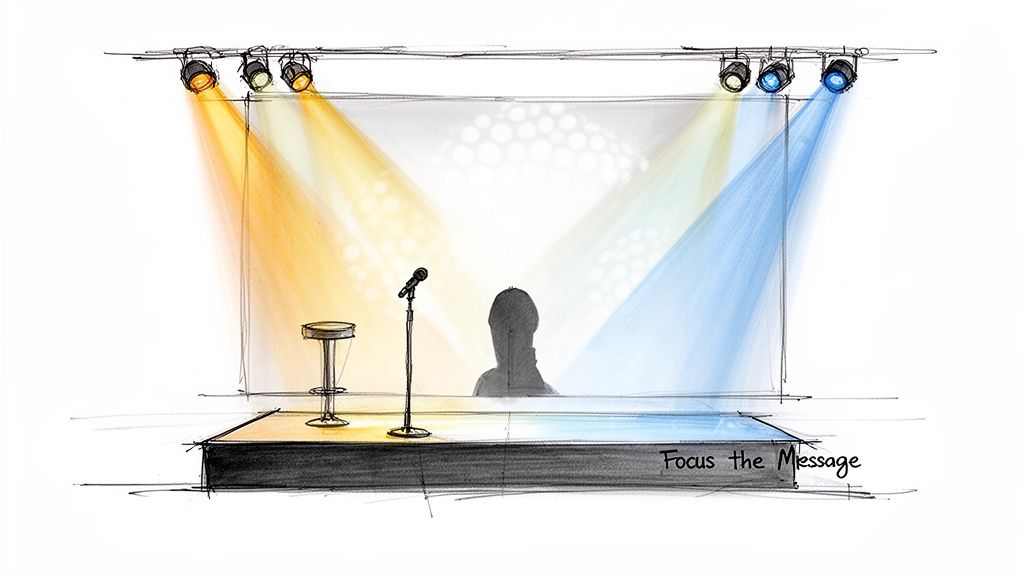
This method is exceptionally effective for churches with limited space or budgets, as it maximizes visual impact through a one-time investment in quality lighting fixtures rather than recurring costs for decor. The simplicity of the stage keeps the congregation’s focus on the message and worship, while the lighting itself becomes the dynamic "set" that changes from song to sermon with the press of a button.
Practical Tips for Implementation
To make your lighting design a central element of your stage, precision and purpose are key.
- Invest in Quality Fixtures: Opt for RGB (Red, Green, Blue) LED lights that offer smooth color mixing and transitions. Quality fixtures will prevent flickering on camera and provide a richer color palette.
- Program Thematic Scenes: Create and save lighting presets for different parts of your service. Use warm whites and ambers for intimate moments and cooler tones or dynamic colors for high-energy segments.
- Establish a Visual Identity: Develop a consistent lighting style that becomes recognizable. This visual "brand" should reflect your church's identity and complement its theological messaging. For more on creating a unified look, explore these ideas for building effective church color palettes.
- Train a Team: Don't rely on a single person. Train multiple volunteers on your lighting system to ensure consistency and prevent burnout. Create simple guides for them to follow for different service types.
Extend Your Reach with Digital Content
Your strategic lighting design is a significant asset for creating professional-looking video content that stands out online.
Key Insight: A well-lit stage translates beautifully to video. Capture services and use the clean, dynamic visuals as a backdrop for sermon clips. With ChurchSocial.ai, you can upload your sermon footage and automatically generate shareable Reels and social media posts, with the vibrant lighting adding a layer of visual polish that grabs attention.
3. Seasonal and Thematic Stage Sets
Seasonal and thematic sets anchor your stage decor in the church calendar, telling a cohesive visual story that supports sermon series and liturgical seasons like Advent or Easter. This approach involves creating more elaborate, semi-permanent installations that remain for several weeks or months. It allows your church to build a distinct visual identity around a teaching series, helping the congregation connect more deeply with the message. Churches like North Point and Seacoast are known for creating memorable environments that complement their teaching.
By dedicating resources to a single, high-impact design that lasts for a full series, you create a powerful and immersive atmosphere. The visual consistency reinforces the theme each week, making the teaching more memorable. This method is one of the most effective church stage decor ideas for building anticipation and a unified experience across all your church's platforms, from in-person to online.
Practical Tips for Implementation
A successful thematic set requires careful coordination and long-range planning.
- Plan Ahead: Begin designing your stage and sermon series 3-6 months in advance. This lead time is crucial for sourcing materials, construction, and aligning all your ministry teams.
- Develop a Mood Board: Create a central mood board with a clear color palette, textures, and key symbols. This guide ensures your stage design, screen graphics, and social media content are all visually consistent.
- Design for the Camera: Build your set with multiple camera angles in mind. This provides variety for your livestream and gives your social media team different shots to work with for promotional content.
- Incorporate Symbolism: Use elements that have a deeper, symbolic meaning related to the sermon series. This adds a layer of depth and provides excellent talking points for behind-the-scenes content.
Extend Your Reach with Thematic Content
Your thematic set is a content goldmine, providing a consistent visual backdrop for an entire sermon series.
Key Insight: Use your new set as the foundation for a full promotional campaign. Before the series launches, post teaser photos of the design process. ChurchSocial.ai makes this easy with its drag-and-drop calendar and graphic editor. Once the series begins, the consistent backdrop ensures every sermon clip and Reel generated with our AI has a recognizable, professional look that reinforces your series branding online.
4. Living Walls and Floral Stage Design
Incorporating living walls and floral elements brings an organic, vibrant energy to the stage, connecting themes of creation, renewal, and life directly into your worship space. This design uses real or high-quality artificial plants, flowers, and greenery to build stunning backdrops that add texture, color, and a sense of natural beauty. Churches like Mosaic and Transformation Church have shown how botanical designs can create powerful visual statements for everything from a sermon series on growth to a memorable Easter service.
This approach is particularly effective for spring, Easter, or series focused on stewardship and the environment. The natural elements create a refreshing and calming atmosphere, moving away from purely digital or structural designs to offer something tangible and alive. Whether it's a permanent moss wall or a temporary floral installation, this is one of the most visually impactful church stage decor ideas.
Practical Tips for Implementation
A successful botanical stage requires thoughtful planning to look lush and intentional.
- Partner with Locals: Connect with local florists or nurseries. They can often provide fresh arrangements or plants at a discount for non-profits and ensure you have the best seasonal options.
- Invest in Quality Faux Plants: If maintenance and longevity are concerns, invest in high-quality artificial plants. Cheaper options can look plastic on camera and under stage lights, detracting from the effect.
- Create Visual Interest: Use a mix of plant heights, leaf textures, and shades of green to build depth. Avoid a flat, uniform look by layering different species.
- Use Strategic Lighting: Incorporate subtle uplighting or spotlights to highlight the textures of the plants and create a warm, inviting ambiance, especially for evening services.
Extend Your Reach with Digital Content
Your beautiful floral stage is a perfect backdrop for creating engaging social media content that shows the life of your church.
Key Insight: Document the setup process to create behind-the-scenes Reels. With ChurchSocial.ai, you can manage your content calendar and even pull sermon transcripts to generate AI-powered social posts and blogs that connect the visual theme of the stage to the message being preached.
5. Flexible Modular Stage Sets
Modular stage sets provide a highly practical and sustainable approach to stage design, using customizable components that can be quickly reconfigured. This method involves a collection of movable panels, risers, and interchangeable elements that allow your team to create multiple distinct looks from the same core inventory. This system maximizes your creative potential and allows for rapid changes between sermon series or events without requiring a complete teardown and rebuild.
Multi-site churches and networks like Gateway Church and Foursquare have effectively used this strategy to maintain a consistent brand identity while allowing for local campus expression. A modular system is one of the best church stage decor ideas for growing organizations because it's a scalable investment that adapts to your needs, offering both consistency and creative freedom.
Practical Tips for Implementation
To get the most out of a modular system, a little organization goes a long way.
- Invest in Quality: Opt for professionally designed modular systems. While DIY can seem cheaper initially, professional-grade components are safer, more durable, and fit together more reliably.
- Create a Style Guide: Develop a visual guide showing approved component combinations. This empowers your volunteer teams to create polished, on-brand designs without constant oversight.
- Track Your Assets: Maintain a simple inventory system to track all components and their common configurations. Photograph each setup for future reference and training.
- Train Your Team: Host regular training sessions with your volunteers on proper setup, breakdown, and safety procedures to ensure smooth and safe transitions. Discover more helpful tips in our guide to stage design for small churches.
Extend Your Reach with Digital Content
Documenting your stage transformations can become compelling content for your social media channels.
Key Insight: Record time-lapse videos of your team setting up a new modular design. This behind-the-scenes content gives your community a fun glimpse into the work that goes into a service. You can use ChurchSocial.ai to schedule these posts and even create captions that explain the theme of the new series.
6. Scripture-Focused Typography and Wall Art
Scripture-focused typography places God's Word at the visual center of your worship space. This approach uses large-scale text installations of Bible verses, sermon series titles, or key spiritual phrases as the primary stage decor. By employing dimensional lettering, vinyl applications, or projected text, this design makes the core message of your teaching impossible to miss, creating a focused and declarative atmosphere.

This method provides powerful clarity and reinforces the teaching theme throughout a sermon series. Instead of abstract visuals, the decor itself is the main point. It’s a minimalist yet impactful style that serves as powerful visual branding, perfect for churches that want their stage to directly reflect the biblical truth being preached.
Practical Tips for Implementation
To make your typography-based stage design effective, attention to detail is critical.
- Choose High-Impact Text: Select a primary verse or theme for each 4-6 week sermon series. This creates a memorable anchor for your congregation.
- Invest in Quality Fonts: A well-chosen font communicates a specific tone. Invest in a professional font or custom lettering that aligns with the series' mood and your church's brand.
- Prioritize Readability: Ensure the text is large enough to be easily read from the back rows without causing distraction. High-contrast colors are essential for legibility, especially for your livestream camera.
- Triple-Check Everything: Before installation, have multiple people proofread the text for spelling, punctuation, and verse accuracy. A small error can become a major distraction.
Extend Your Reach with Digital Content
Your typographic stage design is a ready-made source for cohesive digital content. The strong visual theme creates a consistent look across all your communication channels.
Key Insight: The typography from your stage can become the branding for your entire sermon series. Use the graphic templates and editor in ChurchSocial.ai to apply the same fonts and styles to sermon clip videos, social media graphics, and quote cards. This creates a professional and unified message that reinforces your teaching well beyond Sunday morning.
7. Multi-Sensory Stage Design with Interactive Elements
Moving beyond purely visual aesthetics, multi-sensory design creates an experience that engages sight, sound, and even touch or smell. This approach incorporates elements like fabric textures, water features, atmospheric haze, or interactive components to make worship a more immersive and memorable encounter. Churches like Bethel and Hillsong often use these techniques to foster an atmosphere where the congregation can feel physically connected to the worship moment, moving them from passive observers to active participants.
This method is powerful for special services, sermon series finales, or moments of intense spiritual focus. By layering sensory inputs, you can guide the emotional and spiritual journey of your congregation, making key messages resonate on a deeper level. For instance, impactful messages or scripture can be beautifully displayed using quotation wall decals amidst these other elements for a multi-layered effect.
Practical Tips for Implementation
To use sensory elements effectively, they must serve the message, not distract from it.
- Test All Effects: Run through every effect with your stage lighting and sound system before the service. Haze can look different under colored lights, and water features need to be acoustically balanced.
- Warn Attendees: Be considerate of those with sensitivities. Post signs or make a pre-service announcement if you plan to use fog, strong scents, or other potent sensory elements.
- Build the Narrative: Coordinate sensory cues with the sermon's narrative arc. Introduce haze to build intensity during a powerful worship set or use a gentle scent during a moment of quiet reflection.
- Use Sparingly: Reserve these high-impact designs for key moments or special events. Overuse can diminish their effect and become a distraction rather than an enhancement.
Extend Your Reach with Digital Content
A multi-sensory environment creates incredible opportunities for compelling social media content that stands out.
Key Insight: The atmospheric quality of haze, lighting, and textures looks fantastic on camera. Capture this during your service and use the AI tools in ChurchSocial.ai to quickly generate sermon reels and clips. The rich visual texture will make your short-form videos more engaging and shareable, helping you connect with a wider audience online.
8. Heritage and Cultural Stage Design
A heritage and cultural stage design connects your congregation to its roots, telling the story of God's faithfulness through your church's unique history and identity. This approach moves beyond generic decor to incorporate symbolic elements, historical artifacts, or culturally relevant artwork that reflects the community's journey. It’s a powerful way for established churches to honor their legacy and for culturally specific congregations to celebrate their unique heritage.
This method fosters a deep sense of belonging by making the stage a visual representation of the church's story. For a church celebrating its 100th anniversary, this could mean displaying historical photos and artifacts. For an immigrant-focused church, it might involve using textiles and patterns from their home country. The key is authenticity, creating a space that feels deeply personal to the people who call it home.
Practical Tips for Implementation
To honor your church's story well, a thoughtful and collaborative approach is crucial.
- Gather Stories: Interview long-time members and church founders. Ask them about key moments, meaningful symbols, and the original vision for the church. These stories are the heart of your design.
- Research and Archive: Dig into church archives to find old photographs, documents, or bulletins. Create high-quality digital scans to use in projections or printed materials, ensuring the originals are preserved.
- Balance Old and New: Integrate historical elements with modern design to create a look that feels both reverent and relevant. For example, place a historic pulpit alongside modern lighting and screens.
- Seek Cultural Expertise: If incorporating elements from a specific culture, partner with members or experts from that background to ensure your representation is authentic and respectful.
Extend Your Reach with Digital Content
Your church's history is a rich source of compelling content for your online community.
Key Insight: Use your heritage stage design as a backdrop for a sermon series on your church's history. Then, use ChurchSocial.ai to turn your sermon transcript into AI-generated content. You can create social posts with founding members' stories, design graphics with historical photos, and write blog posts that share God's faithfulness over the decades.
Church Stage Decor: 8-Option Comparison
From Stage Design to Social Engagement: Your Next Step
We've explored a wide spectrum of powerful church stage decor ideas, from the dynamic possibilities of projection mapping to the deeply personal touch of heritage-inspired designs. Each concept offers a unique way to create an atmosphere that prepares hearts and minds for worship, teaching, and community. The journey, however, doesn't conclude when the final light dims on Sunday morning. In fact, a thoughtfully designed stage is the starting point for a week's worth of digital engagement.
The core takeaway is that your stage is more than a backdrop; it's a visual anchor for your message. A minimalist design with strategic lighting isn't just for the in-person experience; it’s a source for cinematic sermon clips and moody, shareable quote graphics. The vibrant colors of a seasonal set can define the visual identity for an entire sermon series across Facebook, Instagram, and your website. That scripture-focused typography you built becomes a powerful, repeatable visual element in your daily social media posts.
Turning Visuals into Ministry Content
The real challenge for many church leaders, especially volunteers and small teams, is translating that physical creativity into a sustainable digital outreach strategy. The effort put into building a living wall or a modular set shouldn't be a one-time investment. It's a wellspring of content waiting to be shared.
- Document the Process: Capture behind-the-scenes photos and videos of your team building the set. This creates authentic content that celebrates your volunteers and builds anticipation.
- Create Thematic Graphics: Use colors, textures, and fonts from your stage design to create a cohesive set of social media templates for announcements, sermon quotes, and event promotions.
- Generate Shareable Moments: Identify the most visually compelling angles of your stage. Use these as backdrops for short video prayers, scripture readings, or key sermon takeaways.
- Extend the Conversation: Post a high-quality photo of the stage and ask a question related to the sermon series. For example, with a "Living Wall" design for a series on growth, you could ask, "What is one area where you're praying for growth this week?"
From Actionable Ideas to Effortless Execution
Mastering this connection between physical space and digital presence is what separates a pretty stage from a powerful ministry tool. It amplifies your message far beyond your four walls, reaching people where they are throughout the week. But this process requires time, consistency, and a clear plan, which can feel overwhelming.
This is precisely where the right tools can make all the difference. Imagine uploading your sermon audio and having an AI generate not only the transcript but also dozens of ready-to-post social media content ideas, blog outlines, and short video clips. Think about having a library of professional graphic templates that you can quickly customize to match your current stage decor.
By bridging the gap between your Sunday presentation and your weekly digital strategy, you honor the creative work of your team and multiply the impact of your message. Your stage becomes the visual heartbeat of a conversation that continues long after the service ends, fostering a truly connected church community both online and off.
Ready to stop the content creation scramble and turn your beautiful stage designs into a full week of engaging social media? Let ChurchSocial.ai become your ministry partner. Our platform helps you generate reels from sermons, create graphics with our simple editor, and manage your entire content calendar with a drag-and-drop interface, giving you back hours to focus on your people. Learn more at ChurchSocial.ai and see how simple it can be to amplify your message.