Sunday morning in a small church often starts the same way. Someone is stacking chairs, someone is tracing a bad cable, and the person adjusting lyrics may also be the one aiming lights and checking the livestream. In rooms like that, stage design has to earn its space.
Good church stage designs for small churches work because they are realistic to build, realistic to store, and realistic to reset with volunteers. Low ceilings, tight budgets, shared spaces, and limited rigging change what makes sense. Clean shapes, lightweight materials, and flexible pieces usually beat permanent scenic builds that look great once and become a burden every week.
The stage also serves a second job now. It sits behind your pastor in sermon clips, livestreams, announcement videos, volunteer photos, and social posts. A design that feels flat in the room will usually look worse on camera. A design with depth, contrast, and controlled lighting gives your church better images before anyone opens an editing app.
That connection between physical design and digital outreach matters. The ideas in this guide focus on stage products small churches can use, plus how each option will photograph, film, and hold up in weekly content. For a broader look at practical small church stage design ideas, ChurchSocial.ai has examples that show how simple setups can still look strong online.
The goal is straightforward. Build a stage your team can manage, then turn that same backdrop into content your church can post consistently through ChurchSocial.ai.
1. ModScenes
Sunday starts in a multipurpose room. The stage has to go up fast, come down fast, and still look intentional on camera. That is the kind of church ModScenes fits.
ModScenes sells modular coroplast panels built for church stage design. A key advantage is speed. Volunteers can assemble repeating patterns, shallow walls, and freestanding shapes with basic hardware and simple instructions. For churches without a shop, a paint area, or a set builder on call, that lowers the barrier to doing more than a plain back wall.
Where ModScenes earns its keep
These panels work well in churches that need flexibility week to week. A student ministry setup can become a Sunday backdrop. A sermon series can get a fresh look without building from scratch. If your room serves weekday programs or community events, ModScenes gives you stage pieces you can reconfigure instead of scenery that only works one way.
Storage is part of the value. Coroplast packs down more easily than wood flats, which matters when your stage closet is already fighting for space with cases, signs, and seasonal décor. If your team is still sorting through church stage decor ideas for small teams and shared spaces, modular panels are usually easier to justify than a permanent scenic build.
A few trade-offs matter:
- Strong on texture and depth: Repeating shapes break up a flat wall and give your camera something to read behind a speaker.
- Less forgiving in storage: Coroplast can scuff or bend if volunteers stack heavy gear on it.
- Lighting does a lot of the work: White or translucent panels look better with side light, color, or shadow. Without that, they can feel unfinished.
I have seen churches buy scenic pieces first and leave no budget for lighting. The result usually looks better in their heads than in the room.
ModScenes also has a practical digital advantage. Geometric patterns and layered panels give sermon clips a background that looks deliberate in vertical video. They create separation behind the pastor, help still photos feel less flat, and make it easier to keep a consistent visual style across announcement slides, reels, and volunteer spotlights. ChurchSocial.ai helps manage that follow-through. Teams can turn one weekend setup into a week of posts instead of letting the design work stop at Sunday morning.
If your facility requires fabric elements around the stage, check the documentation on NFPA 701 compliant drapes before you mix scenic products and soft goods in the same setup.
Visit ModScenes.
2. Georgia Expo
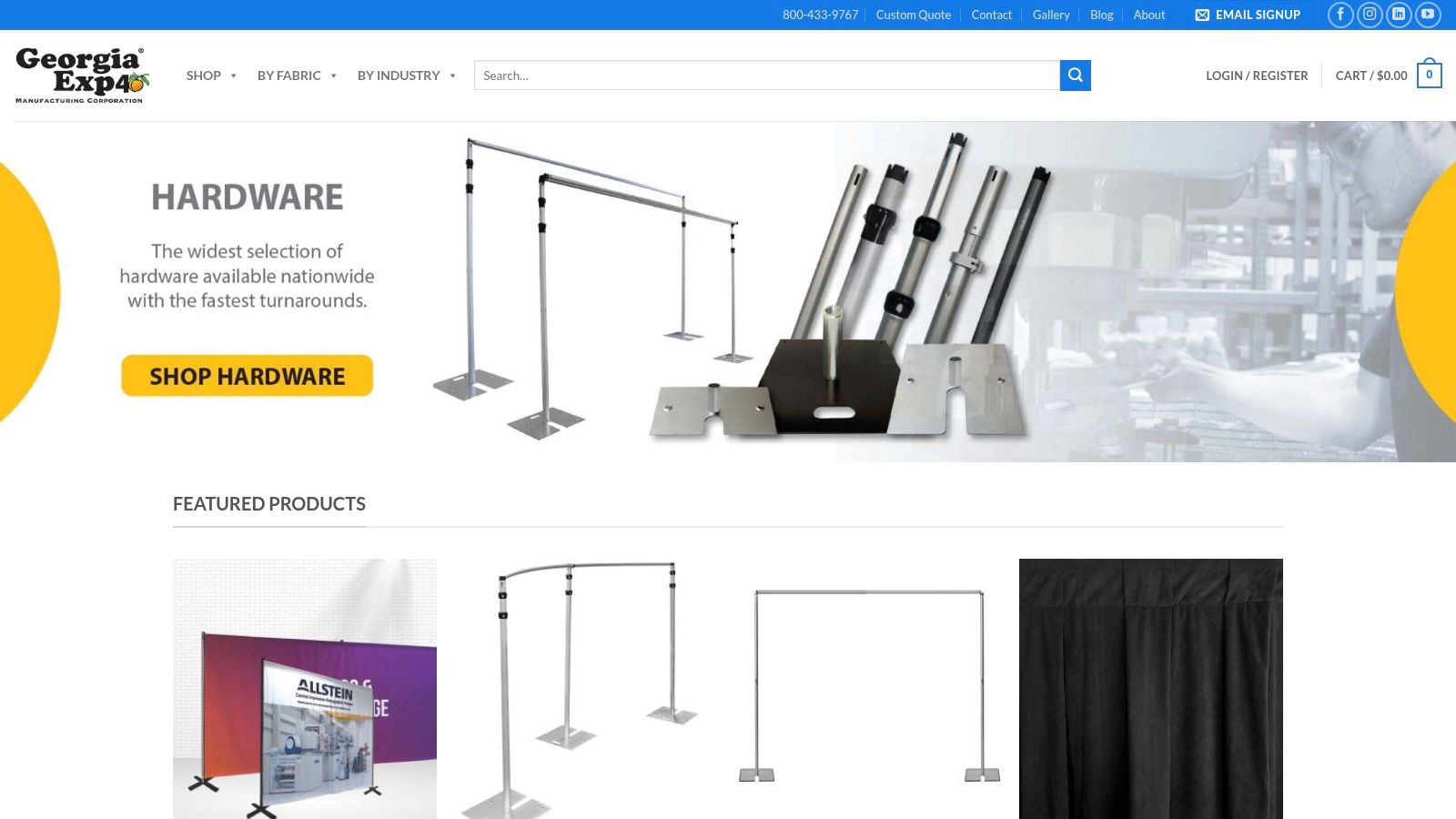
Pipe and drape isn’t glamorous. It is useful. That’s why Georgia Expo belongs on this list.
When a small church needs to hide clutter fast, define a speaking area, or clean up a stage wall that can’t be painted, drape systems solve the problem with very little drama. Volunteers can learn the setup process quickly, repeat it every week, and get a much cleaner background for both the room and the livestream.
Why churches keep using pipe and drape
Georgia Expo offers complete systems with uprights, bases, crossbars, and fabric options. They also provide flame documentation for fabrics, which matters if your facility team or insurer asks questions. If you’re evaluating NFPA 701 compliant drapes, that documentation is part of the buying conversation, not an afterthought.
Their kits scale from smaller widths to very wide runs, and that flexibility matters in churches that meet in sanctuaries one week and fellowship halls the next. If your room is visually messy, drape can give you a clean wall in less time than building a custom scenic backdrop.
The downside is simple. On its own, pipe and drape can look plain.
That’s where lighting and branded graphics come in. ChurchSocial.ai’s article on church stage decor ideas is useful here because drape works best when you treat it as a base layer, not the whole design. Add color, side light, or a central scenic element, and the fabric starts doing its job well.
- Fast win: It hides storage doors, wall damage, old choir shells, and visual clutter immediately.
- Volunteer friendly: Once your team knows the order of bases, uprights, and crossbars, setup is predictable.
- Storage drawback: Base plates are heavy, and that becomes annoying if your team is moving them every week.
Pipe and drape isn’t a statement piece. It’s a cleanup tool. Used that way, it’s excellent.
For digital outreach, drape helps because it removes distractions from your frame. That’s a bigger improvement than many churches realize. Clean backgrounds make sermon clips feel more intentional, and that gives you better raw material for ChurchSocial.ai when you turn those clips into reels, event promos, and announcement posts.
Visit Georgia Expo.
3. ChurchBanners.com
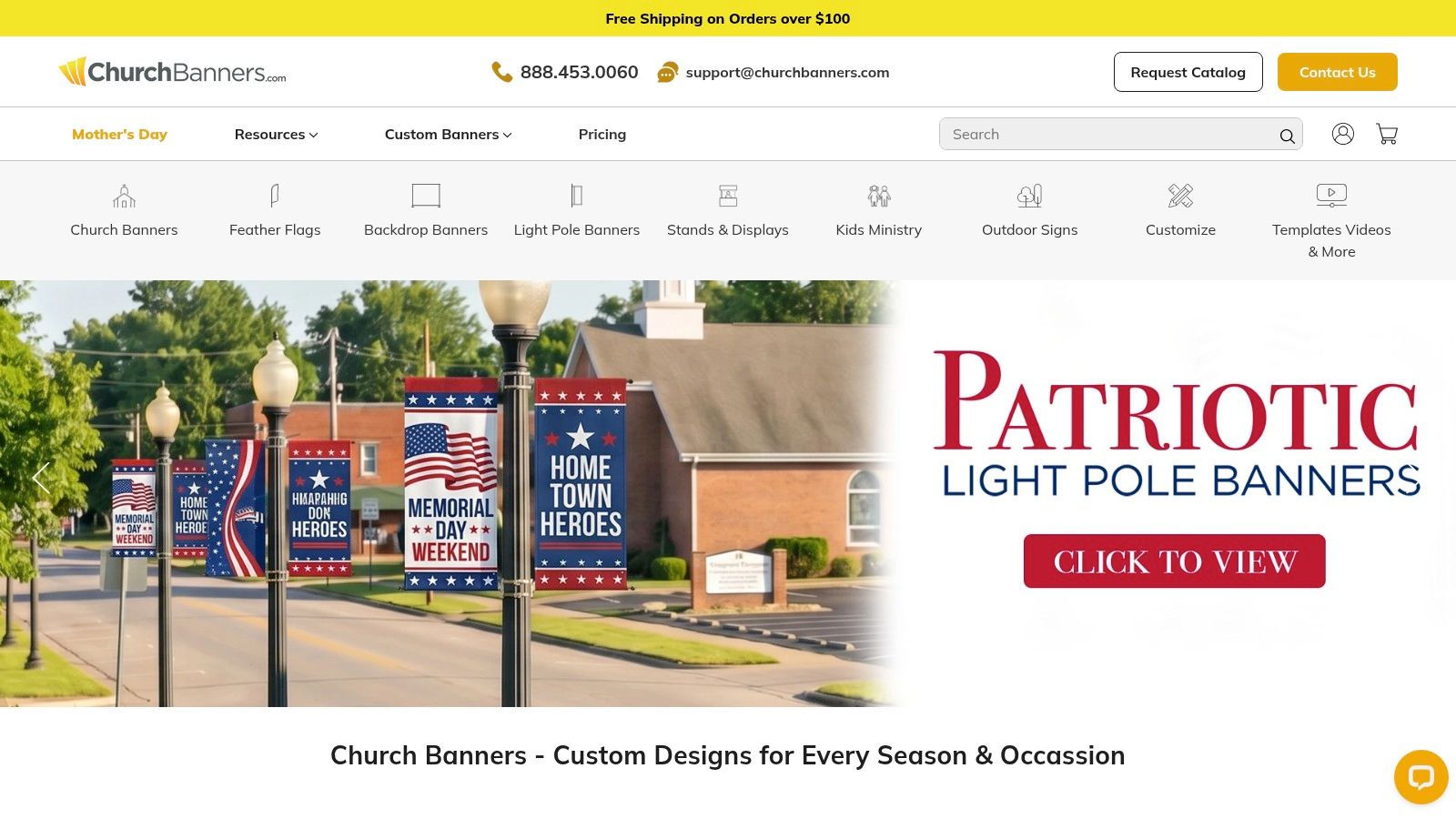
A lot of small churches need a stage design they can swap fast. One month it is Advent. Next it is a family series, missions weekend, or Vacation Bible School signup push. ChurchBanners.com fits that kind of ministry rhythm well because printed backdrops give you a clear visual theme without a fabrication project.
Their appeal is straightforward. You can choose stock artwork or order custom designs, pair them with lightweight display hardware, and get a backdrop that communicates the message in the room and in a camera frame. For churches with a small volunteer team, that trade-off is often worth making. You give up some scenic depth, but you gain speed, consistency, and easier seasonal changes.
Best use case for printed backdrops
Printed fabric works best when the church needs a strong central visual and already has decent lighting on the platform. Tension backdrops, banner walls, and pop-up displays can reset the whole look of a stage in one setup. That makes them useful for rented spaces, multipurpose rooms, and churches that cannot leave a permanent set in place all week.
I like printed systems because the expectations are clear. You are not buying texture, layers, or architectural shape. You are buying branding, readability, and fast turnaround. For a sermon series package, holiday setup, or outreach event, that can be the right call.
There are a few limits to watch:
- Good video depends on prep: Wrinkles, sagging corners, and crooked frames show up fast on livestream.
- Graphic impact is the strength: These systems set the theme well, but they usually do less to create physical depth on stage.
- Lighting still matters: Uneven front light can flatten the print and make colors look tired on camera.
This category also connects well to digital outreach. A printed backdrop gives sermon clips, volunteer photos, and announcement videos an instant visual identity. That helps your church look consistent across Sunday screens, Instagram posts, Facebook event graphics, and recap reels. ChurchSocial.ai becomes especially useful here because the same series look from the stage can carry into social captions, carousels, and promo assets without your team starting from scratch every week.
Visit ChurchBanners.com.
4. Sew What? Inc.
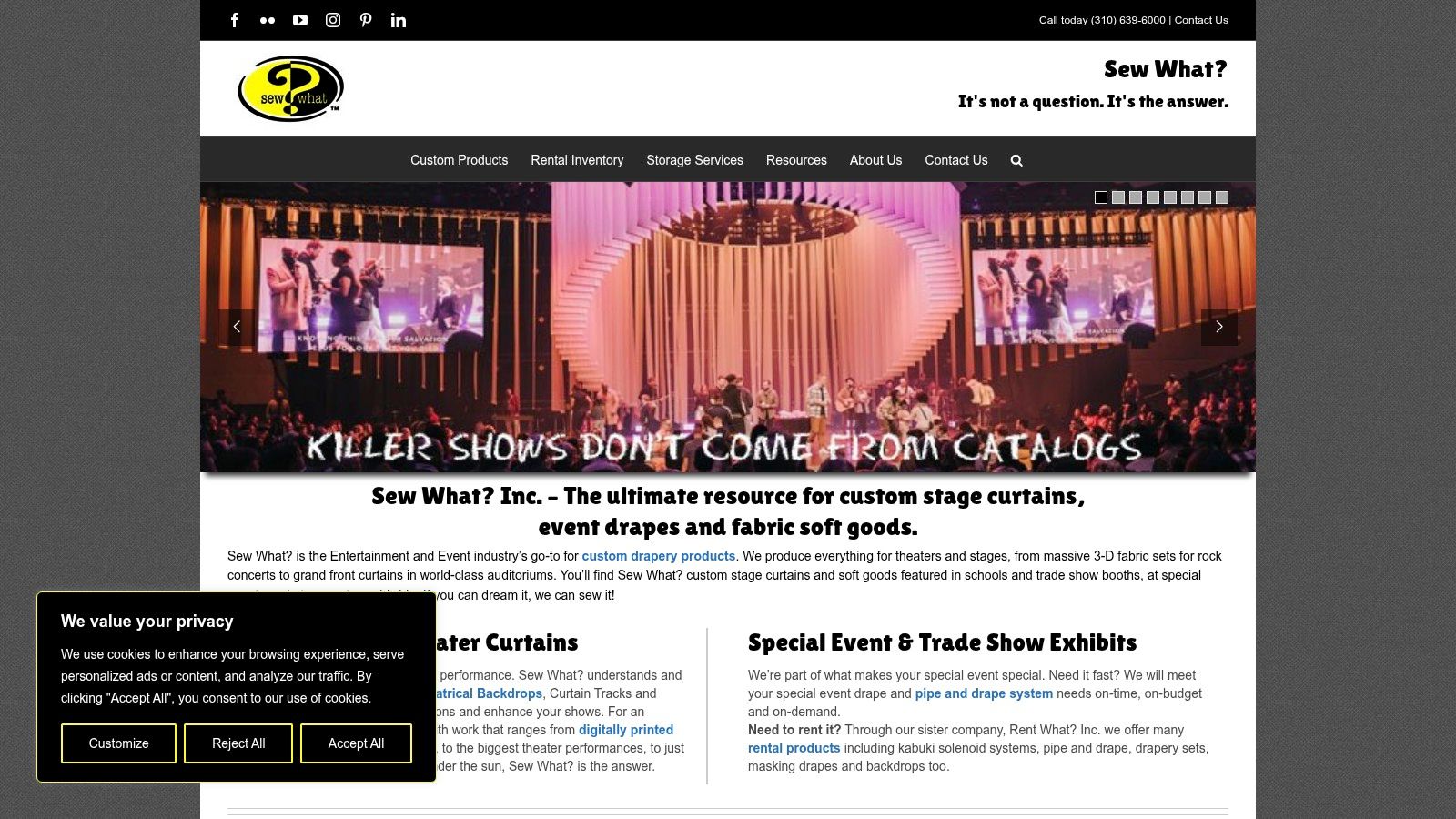
Sew What? Inc. is the option I’d point to when a church wants a softer, more architectural look without building hard scenery. Their custom drapery, printed backdrops, and stretch-fabric shapes can create a stage that feels deeper and more polished while still storing compactly.
That storage point matters. Many church stage designs for small churches fail because the idea looks fine on paper but nobody asks where it will live on Monday. Soft goods solve that better than many rigid scenic options.
Soft goods can do more than people think
Stretch shapes and custom drapery respond well to simple color changes. That makes them more reusable than they first appear. If your room has basic lighting, one fabric setup can support a sermon, worship set, student night, and special event with a very different feel each time.
The catch is that custom soft goods often require more planning than boxed kits. Pricing is usually quote-based, and some shapes install more easily when you have decent mounting points or a simple truss solution. That doesn’t make them impractical. It just means they reward churches that know their room and think ahead.
A reusable backdrop is only a good value if your volunteers can install it without panic.
Sew What? is also a good fit for churches that care about livestream aesthetics. Fabric shapes and drape usually look better on camera than random stage clutter or shiny, improvised materials. Matte texture is forgiving. It separates the subject without stealing attention.
For digital content, this can become a strong visual base for weekly clips. Record your sermon against a calm, layered fabric background, then use ChurchSocial.ai to cut vertical reels from the message, generate social copy from the transcript, and schedule a full week of content around the same look. The consistency helps a lot, especially if your church is trying to build recognition across Instagram, Facebook, YouTube, and short-form video.
Visit Sew What? Inc..
5. IntelliStage via StageDrop
Saturday night in a multipurpose room often looks the same. Volunteers finish stacking chairs, someone rolls out cable ramps, and the worship team still needs a stage that people can see. IntelliStage, available through StageDrop, solves that problem with modular decks you can set up for Sunday and clear out when the room needs to become a gym, classroom, or fellowship hall again.
The value is flexibility with structure. These portable stage platforms come in different heights and shapes, so a church can build a simple teaching platform, add risers for worship, or create a few levels that give the room more visual depth. That matters in person, and it matters even more on camera.
A low speaker position is hard to film well. Heads in the congregation creep into the frame. The back wall takes over the shot. Even a modest platform fixes a lot of that. If your team is still working through small church stage lighting basics, added stage height gives your lights and cameras a better starting point.
IntelliStage tends to work best in a few specific situations:
- Multipurpose churches: You get a defined platform without committing the room to one use all week.
- Volunteer-run setups: Labeled sections, a rolling cart, and a repeatable layout make setup much easier.
- Churches improving video: Different heights help camera framing, create cleaner subject separation, and make the stage feel planned.
There are trade-offs, and they are practical ones.
- Storage has to be solved first: Portable decks need a safe, sensible place to live between uses.
- The platform is only part of the picture: If the wall behind the speaker is distracting, the livestream will still look unfinished.
- Setup labor is real: These systems are manageable, but they still require people, time, and a plan.
I’ve seen small churches get strong results from modular staging when they stop treating it like furniture and start treating it like part of the production system. Mark deck positions on the floor. Decide which camera gets the center shot. Keep the cleanest angle ready for sermon clips and announcement videos.
That last part matters for digital outreach. A better stage height gives you cleaner sermon footage, stronger worship shots, and better-looking photos for event promotion. Once that content is captured, ChurchSocial.ai can turn sermon moments into short-form clips, write social captions from the transcript, and schedule a consistent week of posts built from one Sunday setup.
Visit IntelliStage on StageDrop.
6. Pro Church Lights
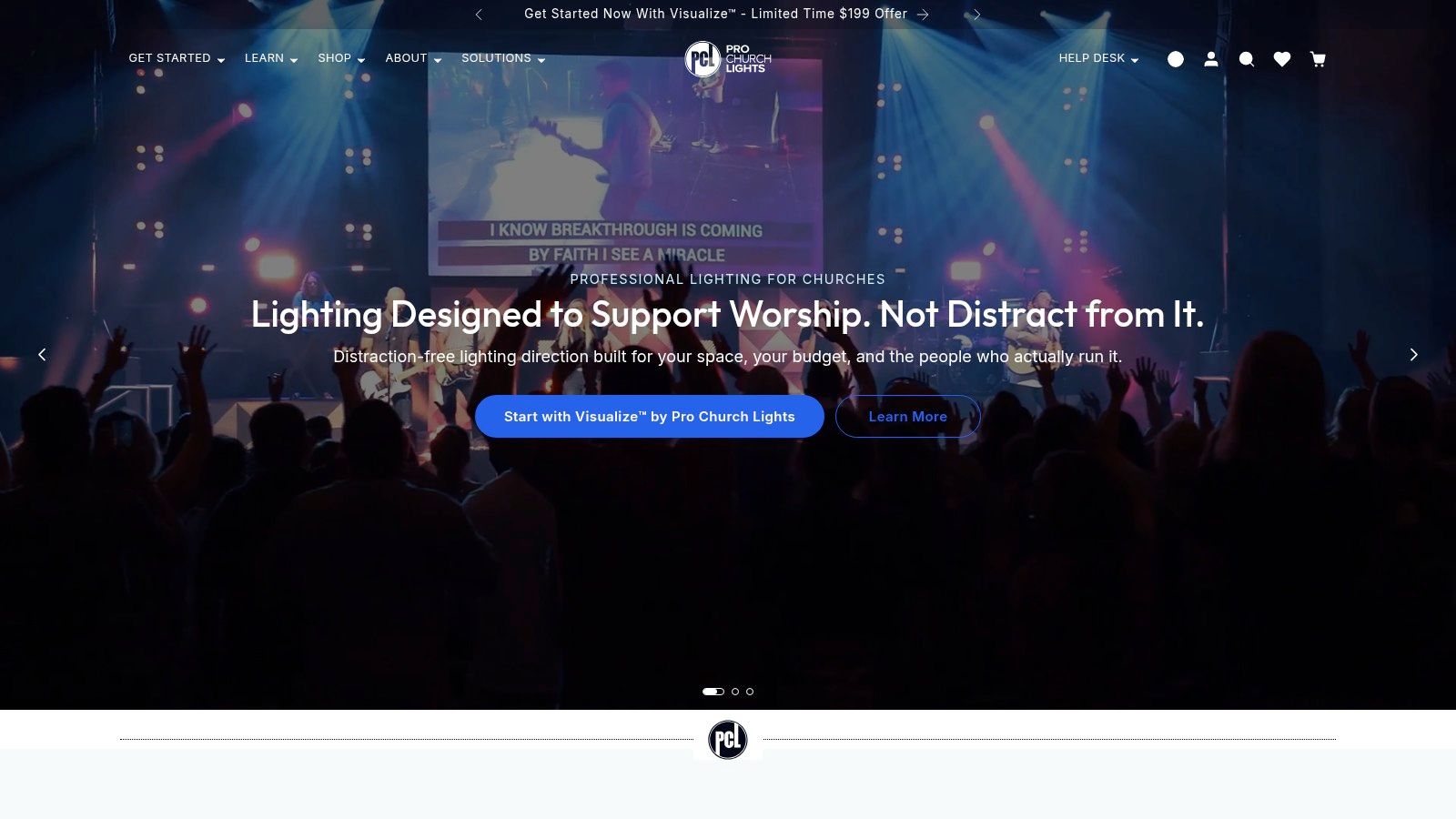
A pastor steps up to preach. The room feels flat, the face light is uneven, and the sermon clip you post on Monday looks darker than it did in person. Small churches run into this problem every week. In many rooms, better lighting will improve the stage faster than adding another scenic piece.
That is where Pro Church Lights stands out. They help churches build a lighting plan that fits the room, the volunteer team, and the weekly routine. For a small church, that matters more than owning a pile of fixtures that never quite work together.
The best starting point is usually simple. Get even front light on the speaker. Add a little separation from behind. Put controlled color on the back wall so the frame has depth on camera. As noted earlier in this article, small churches can often do a lot with a modest LED lighting package if the fixtures are placed well and programmed with restraint.
I like Pro Church Lights for churches that need direction, not just products. Their design and training approach helps teams avoid a common mistake: buying lights one at a time based on price, then ending up with mismatched color, uneven output, and volunteer frustration. Cheap fixtures can become expensive if they force a second round of purchases six months later.
A 2025 ministry report found that LED lighting adoption in small church stage design had risen sharply from 2020 levels, with churches pointing to lower operating cost and greater flexibility as key reasons for the shift, according to this church stage design report from MinistryJobs. If your team needs practical setup guidance, ChurchSocial.ai also has a helpful guide on lighting for a small church stage.
- Best fit: Churches that want a coordinated system with volunteer-friendly training.
- Real trade-off: Design support and matched fixtures can cost more up front than bargain shopping.
- Big upside: A planned lighting rig usually looks better on Sunday and saves money over time.
Good lighting improves more than the in-room experience. It gives you cleaner sermon reels, better worship photos, and stronger thumbnails for YouTube and Facebook. If the speaker is lit well and the background color is controlled, your content team spends less time fixing footage and more time publishing it. ChurchSocial.ai can then turn that weekend content into clips, captions, blog posts, and scheduled social posts built from one service.
Visit Pro Church Lights.
7. Motion Worship
Not every church should build more physical scenery. Sometimes the better move is to use the screens you already have.
Motion Worship gives churches access to motion backgrounds, countdowns, and seasonal visual media that can create a much stronger stage impression without adding another storage problem. If your church already uses projection or LED displays, this can be the fastest way to refresh the platform.
Digital stage design without physical construction
This approach works best when the room has decent projection and the physical stage is already reasonably tidy. Screen content can create atmosphere, support sermon series branding, and give the stage a seasonal update quickly. It’s especially effective for churches that need to change visual direction often but don’t have the volunteers to rebuild scenic elements.
The limitation is also obvious. A screen won’t hide clutter. If your stage has exposed cases, random stands, or awkward wall features, motion backgrounds won’t solve that. They enhance what’s already there.
That said, for churches with a clean platform and limited setup bandwidth, Motion Worship can be a great value. You can refresh your visual tone for Christmas, Easter, sermon series, youth nights, or community events without touching a saw or paintbrush.
Here’s where it becomes especially useful for outreach. Your stage screens can establish the visual theme for the whole week. Then ChurchSocial.ai can carry that same theme into social posts generated from your sermon transcript, graphics made in the template editor, and scheduled event promotions pulled into your content calendar from Planning Center and other church calendars.
- Strongest use: Fast seasonal updates and sermon series branding.
- Weakest use: Rooms where the physical environment still looks chaotic.
- Smart combo: Pair digital backgrounds with a simple, uncluttered platform and solid front light.
Visit Motion Worship.
Top 7 Small-Church Stage Design Comparison
| Product | Implementation Complexity 🔄 | Resources & Speed ⚡ | Expected Outcomes 📊 | Ideal Use Cases 💡 | Key Advantages ⭐ |
|---|---|---|---|---|---|
| ModScenes | Low, tool‑free, volunteer builds in hours | Low cost; minimal tools; buy or rent; fast US shipping | Modular, changeable scenic looks; best with basic lighting | Small churches needing quick, reconfigurable stage backdrops | Affordable, highly reconfigurable library; quick setup ⭐⭐⭐⭐ |
| Georgia Expo (Pipe & Drape Kits) | Low, repeatable setups; volunteer‑trainable | Moderate, fabric, bases; scalable widths; some heavy storage | Clean, consistent backdrop that conceals clutter; visually plain without lighting | Scalable rooms or events needing straightforward backwalls | Scalable, NFPA documentation, fast reliable masking solution ⭐⭐⭐ |
| ChurchBanners.com | Very low, popup/tension frames assemble in minutes | Low to moderate, rapid turnaround (48h after approval); lightweight frames | Thematic printed backdrops that read well on camera | Churches needing fast themed graphics and easy reorders | Clear pricing, fast production, video‑friendly prints ⭐⭐⭐⭐ |
| Sew What? Inc. | Medium, custom builds; some shapes need basic rigging | Moderate, quote‑based pricing; rental inventory; compact storage | High‑impact, camera‑friendly soft goods; flexible with lighting | Churches seeking professional, reusable soft‑goods and rentals | Professional quality, flame‑retardant options, rental availability ⭐⭐⭐⭐ |
| IntelliStage (StageDrop) | Medium, modular deck assembly; needs storage/handling | Higher upfront investment; portable modules; storage carts helpful | Adds levels, presence, and improved sightlines for audiences/cameras | Multipurpose rooms, gyms, mobile plants needing staged platforms | True portability, configurable footprints, reliable product line ⭐⭐⭐⭐ |
| Pro Church Lights | Medium, requires workflow adoption and training | Moderate, pre‑viz service ($199 credit), training reduces risk | Professional lighting looks, faster volunteer proficiency, better livestreams | Small churches wanting pro lighting without full install team | Pre‑viz, training modules, buy‑back program to reduce risk ⭐⭐⭐⭐ |
| Motion Worship | Low, media playback setup; depends on presentation software | Very low cost vs scenic; requires projection/LED hardware | Immediate high‑impact visuals on screens; does not hide stage clutter | Screen/LED‑centric services and livestream‑focused churches | Large library, multi‑resolution files, fresh seasonal content ⭐⭐⭐⭐ |
Your Stage is Your Digital Backdrop
Sunday service ends, but the stage keeps showing up all week. It sits behind the sermon clip on Instagram, the volunteer thank-you photo on Facebook, the announcement reel, the YouTube thumbnail, and the quick midweek devo shot on a phone in ten minutes before work. For a small church, that platform is not just a ministry space. It is also your most-used content background.
That changes how stage design should be evaluated. A setup can work fine in the room and still look weak on camera. Flat lighting makes faces look tired. Busy backgrounds pull attention away from the speaker. A dark wall with no separation makes phone footage feel muddy. Small churches feel this fast because the same stage usually has to serve live worship, announcements, sermon capture, and social content without a dedicated studio.
The good news is that small churches can build for both. As noted earlier, the strongest small-church designs usually rely on flexible pieces, simple materials, and clear sightlines instead of expensive custom construction. That same approach also helps online. A clean backdrop, controlled color, and a little depth behind the speaker go a long way in photos and video. Teams in the event world have worked this way for years because good Exhibition Stand Design also has to read well in person and on camera.
Start with the camera view, not just the front row. Stand where you normally shoot. Open your phone camera. Check what appears behind the pastor from waist up and from a wider worship shot. If the frame shows cable clutter, stacked chairs, extra mic stands, or a blank wall with harsh shadows, fix that first. Those details are easy to ignore in the room and hard to hide online.
A practical stage for digital outreach usually does four things well.
It gives faces good light. It creates separation from the back wall. It keeps the background simple enough for text overlays. It stays consistent enough that your church posts look like they came from the same place.
ChurchSocial.ai helps put that consistency to work. Upload a sermon recording, turn transcript moments into short clips and captions, build matching announcement graphics, and schedule the week’s content from one calendar. That matters for small teams because a better stage only helps if the footage gets used after Sunday.
I have seen churches spend hours on stage decor and then post a dim, crooked clip that hides all the work. The fix is usually simple. Shoot in the brightest, cleanest angle. Keep one or two repeatable camera positions. Use the same backdrop area for sermons, host moments, and quick promos. Then let ChurchSocial.ai turn those recordings into reels, posts, blogs, and graphics without adding another job for an already stretched volunteer team.
Treat the platform like part set, part communications tool. If it looks clear, warm, and intentional in person, and if it also frames up well on a phone, your church gains more value from every dollar and every volunteer hour you put into it.
If your church is investing time into better church stage designs for small churches, make sure that work keeps paying off online. ChurchSocial.ai helps churches turn sermons into short clips, generate social posts and blog content from transcripts, create branded graphics with templates, and organize everything in a simple drag-and-drop calendar. For small teams and solo volunteers, it’s one of the easiest ways to make your stage look good all week, not just on Sunday.