A volunteer opens Instagram after dinner to check the church's latest sermon clip. The first few comments are encouraging. Then one asks a sincere question about baptism. Another points out the event time in the caption is wrong. A third launches into a heated theological argument. That mix is normal now.
Church comment sections aren't just engagement spaces. They're ministry spaces. People test whether your church is warm, defensive, attentive, organized, and safe long before they visit in person.
That's why learning how to respond to comments matters. It's not only about protecting your reputation or keeping the algorithm happy, though that matters too. Replying to comments on social media posts can increase engagement by more than 40 percent, according to Buffer's 2026 State of Social Media Engagement report as cited here. For churches, the deeper issue is what those replies communicate about your care for people.
Why Every Comment Matters for Your Ministry
A church's social feed functions like a public lobby. Visitors look around before they step inside. Members watch how leaders handle tension. Hurt people often ask their first real question in the comments because it feels safer than sending an email or walking into a church office.
That's why every comment matters. A simple “thanks for sharing” can affirm someone who's reconnecting with faith. A clear answer to a service-time question can remove friction for a first-time guest. A calm reply to criticism can show the church's character more clearly than the original post ever could.
Comments are a form of digital hospitality
Churches already understand hospitality in physical spaces. You greet people at the door, answer questions, help parents find kids check-in, and notice when someone seems uncertain. The same instinct belongs online.
When someone comments, they're not interrupting your content plan. They're stepping onto your digital front porch and seeing whether anyone notices. If your team wants to build online community, the comment section is one of the clearest places to do it.
Practical rule: Treat comments the way an usher treats the front door. Welcome quickly, answer clearly, and keep the atmosphere calm.
Ministry happens in public and in the margins
The public nature of comments changes the stakes. Your reply serves the commenter, but it also serves everyone else reading along. People who never type a word still form an impression from what they see.
That creates real trade-offs. If you answer everything, you may waste energy on bad-faith debates. If you ignore too much, sincere people may assume nobody's listening. Wise churches don't chase every thread. They respond with purpose.
A lot of teams feel overwhelmed here, especially small churches with one volunteer handling Facebook, Instagram, and maybe YouTube comments between other responsibilities. The work is important, but it doesn't have to become chaotic. What helps most is a clear filter for deciding what deserves a response, what should wait, and what should be moderated without fanfare.
The First Decision When to Respond and When to Wait
The biggest mistake church teams make is believing they must reply to every comment. That sounds loving, but it's often unwise. Some comments invite conversation. Others invite conflict.
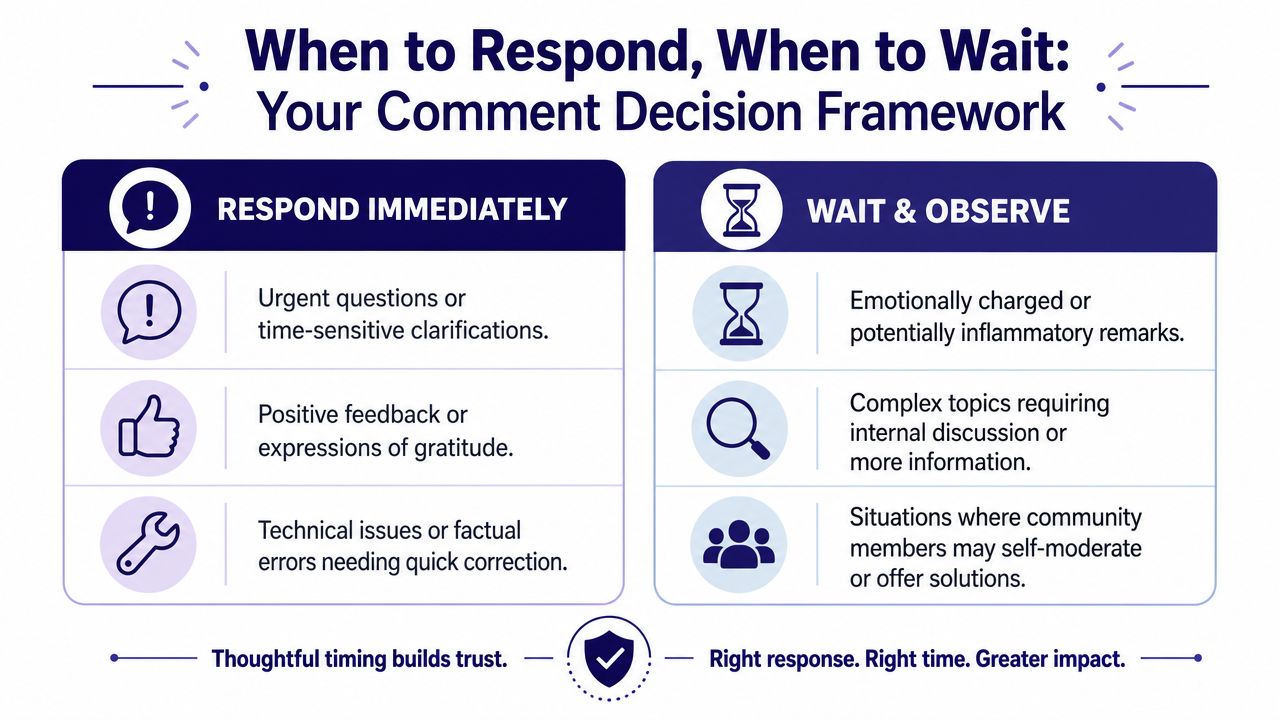
A better approach starts with discernment. Before you type, ask one question: Will this reply help people, or will it only feed the heat? That question protects your team from reacting emotionally and protects your community from unnecessary escalation.
Sort the comment before you answer it
Most church comments fall into a few recognizable categories:
- Genuine questions: Service times, beliefs, event details, next steps, livestream issues.
- Encouragement: Gratitude, testimonies, appreciation for worship, preaching, or ministry updates.
- Constructive correction: Wrong event date, broken registration link, audio issue, unclear wording.
- Pastoral concern: Prayer requests, grief, personal struggle, spiritual confusion.
- Baiting or hostility: Mocking, repeated provocation, ideological fighting with no openness.
- Spam or unsafe content: Irrelevant promotions, abusive language, threats, slurs.
That quick sort changes your response. Genuine questions deserve clarity. Encouragement deserves warmth. Constructive correction deserves humility. Hostility often deserves restraint.
Use a simple response filter
Here's the filter I'd give any church volunteer managing comments:
Is this person asking for help?
Respond quickly and helpfully.Is this factually wrong and likely to confuse others?
Correct it in public, briefly.Is this emotionally charged but potentially sincere?
Pause. Don't answer while irritated. Check with a pastor or ministry lead if needed.Is this plainly trying to provoke?
Don't reward it with a public debate.Does it break your community standards?
Hide, report, or block according to policy.
Many teams need permission to wait. Immediate response is not always mature response. Some comments need internal discussion first. Some are better answered the next morning. Some should receive no public reply at all.
Responding isn't the same as caring. Sometimes caring means refusing to turn your comment section into a stage for hostility.
That restraint matters because responding to hostile comments can increase their visibility by 40% in the first hour, according to this guidance on responding to offensive comments thoughtfully. The same source highlights the Why-Me-Ask technique as a measured option for churches trying to de-escalate without endorsing hostility.
When a measured reply is better than silence
If a comment is sharp but not abusive, a brief de-escalating response can help. The Why-Me-Ask pattern is useful:
- Why: Name the impact. “This thread is becoming unhelpful for others trying to engage.”
- Me: State your values. “We want this space to reflect honesty, respect, and care.”
- Ask: Request a different path. “If you'd like to discuss this sincerely, send us a message and we'll continue there.”
That keeps your church from sounding thin-skinned while still guarding the space. You're not trying to win a thread. You're trying to lead the tone of the room.
Crafting Grace-Filled Responses for Any Situation
Once you know a comment deserves a reply, the next challenge is tone. Churches often drift into one of two extremes. They either sound stiff and corporate, or they sound casual in ways that minimize the issue.
A better standard is clear, warm, and human. That starts with a simple five-part response pattern: remain calm, acknowledge the concern, apologize if warranted, offer a solution, and take conversations offline when needed, as outlined in this practical guide to responding to comments and messages. The same source notes that 78% of users perceive generic automated replies as impersonal, which is why canned language often backfires.
Start with voice, not just wording
Your church's reply should sound like a thoughtful staff member in the lobby, not a legal department. That means using the person's name when appropriate, answering the actual question, and avoiding robotic phrases like “We apologize for any inconvenience this may have caused.”
Try language people use in ministry settings:
- “Thanks for asking.”
- “We're glad you brought this up.”
- “You're right, and we've fixed that.”
- “We're sorry this was your experience.”
- “Please send us a direct message so we can help.”
If your team struggles to write natural replies under pressure, it can help to study strong service writing outside social media. Humantext.pro's expert email guide is useful because it models concise, respectful language that translates well into public replies and direct messages.
Response Templates for Common Church Comments
| Comment Type | Response Goal | Script Starter |
|---|---|---|
| Positive encouragement | Affirm and deepen connection | “Thank you for the encouragement. We're grateful you're part of this community.” |
| First-time guest question | Remove friction | “We'd love to help. Our service starts at…” |
| Event logistics question | Give a direct answer | “Yes, registration is open, and you can find the details here…” |
| Correction from a follower | Acknowledge and fix | “Thanks for catching that. You're right, and we've updated it.” |
| Prayer request | Show care without overexposing | “We're praying with you. If you'd like, send us a message so our team can follow up personally.” |
| Constructive criticism | Lower defensiveness | “Thank you for saying this clearly. We're sorry for the frustration, and we're looking into it now.” |
| Theological question | Invite thoughtful dialogue | “That's an important question. We'd be glad to continue the conversation and share how our church approaches it.” |
Adjust your tone by situation
A thank-you comment doesn't need a paragraph. A complaint shouldn't get a smiley emoji. A theological question may need more care than a public thread allows.
Three common situations come up often in church social media:
Celebratory comments
These are easy to overlook because they don't feel urgent. Reply anyway. When someone says a sermon helped them or they loved baptism Sunday, acknowledge it specifically.
A weak response says, “Thanks.”
A stronger one says, “Thank you for sharing that. We're grateful the message encouraged you.”
That kind of reply reinforces testimony without sounding polished to death.
Logistical and factual questions
These comments deserve straightforward answers. Don't make people hunt through a website if you can answer in one sentence.
If the answer is simple, reply in public. If details are sensitive or complex, answer briefly and move to direct message. The goal is usefulness, not completeness at all costs.
Theological and pastoral questions
These require discernment. Some are honest and deserve a public starting point. Others need a private conversation because nuance gets lost quickly in comments.
A public reply can open the door. It doesn't need to hold the entire conversation.
Good script starters include:
- “We appreciate the question. Our church teaches…”
- “There's a lot that could be said here, but briefly…”
- “This is better handled thoughtfully than quickly. Send us a message if you'd like to talk more with a pastor.”
That gives a real answer without turning sacred topics into a performance for onlookers.
Managing Negative Comments and De-escalating Conflict
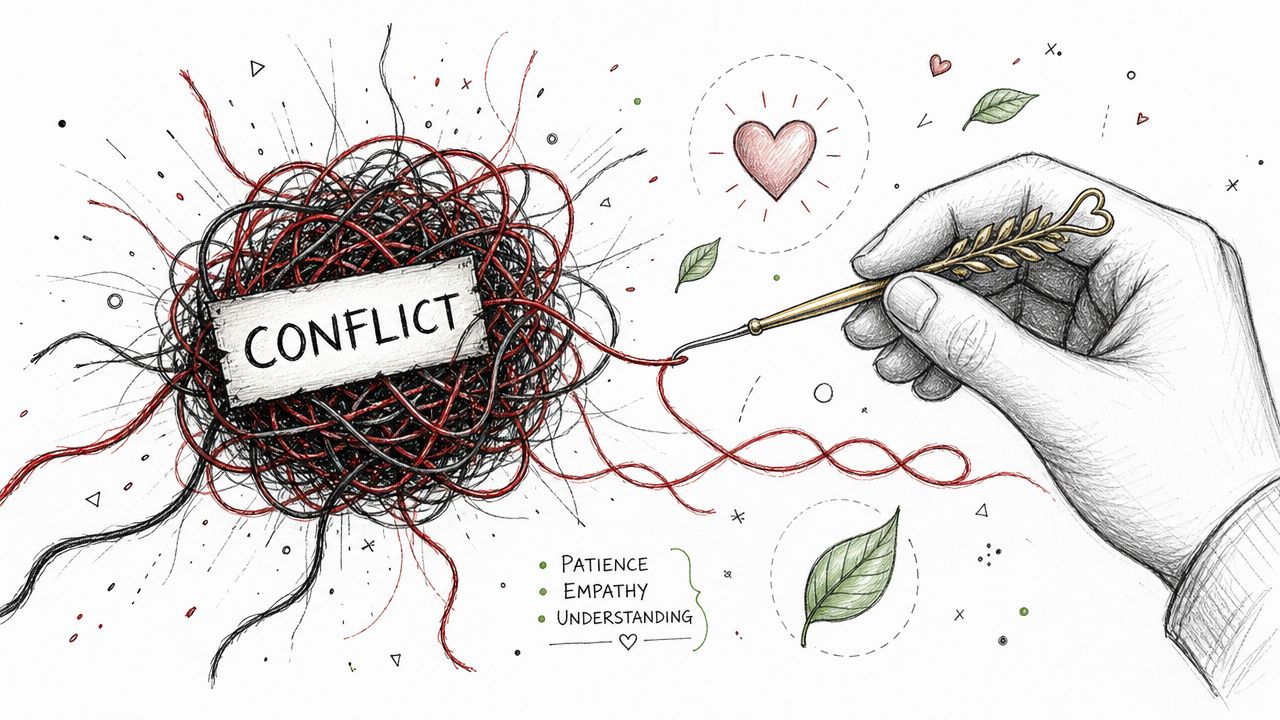
Negative comments raise the emotional temperature fast, especially when they target a church's integrity, doctrine, leadership, or care for people. The instinct is usually to defend, explain, or delete. All three can make things worse.
The better path is calm acknowledgment, brief public clarity, and private follow-up whenever the issue needs detail.
Move quickly, but don't get pulled into a fight
Responding within 24 hours is critical, and this guide on social media comment management reports that 65% of dissatisfied customers remain loyal if their complaint is acknowledged promptly and empathetically. Churches should hear that as a relationship lesson, not just a customer service lesson.
A short response often works best:
Acknowledge the frustration
“We're sorry this happened.”Own what you can honestly own
“You shouldn't have been left confused about that.”Offer a next step
“Please send us a direct message so we can make this right.”
That keeps your reply focused on care instead of self-protection.
Know the difference between transparency and chaos
Not every negative comment should remain fully visible forever, but deleting criticism just because it's uncomfortable is a mistake. Publicly visible accountability often builds more trust than a polished image does.
That said, churches still need boundaries. A comment policy helps your team decide what to hide or remove. If you haven't documented that yet, it helps to think in terms of content governance for church teams, especially when multiple staff members or volunteers share moderation duties.
Use these lines:
- Leave it visible when it's criticism, disappointment, or a tough but fair complaint.
- Hide or remove it when it includes harassment, hate, threats, or repeated disruption.
- Block the user when the pattern shows they're not engaging in good faith and are harming the space for others.
Churches are not required to host abuse in the name of openness.
What not to do
When teams get rattled, they usually make one of four mistakes:
- Arguing point by point: This almost never restores trust.
- Copy-pasting a canned apology: It reads cold and evasive.
- Overexplaining publicly: Long explanations often sound defensive.
- Deleting too fast: That can inflame the issue and make the church look evasive.
Negative comments aren't interruptions to ministry. Handled well, they can become moments of repair, clarity, and witness.
Streamlining Your Workflow with ChurchSocial.ai
Good comment care depends on organization more than personality. The churches that respond well usually aren't staffed by social media geniuses. They have a system. They know who checks comments, what needs escalation, and where information lives when someone asks a question about an event, a sermon, or a ministry next step.
That matters because the best practice is not merely replying fast. It's having a repeatable process to acknowledge the issue, thank the poster, apologize when needed, and provide a private channel for follow-up, which requires tools that help monitor channels and ensure nothing gets missed, according to this London School of Economics Business Review article on social media comments.

The workflow problems churches actually face
Most church teams don't struggle because they lack compassion. They struggle because the work is scattered.
A volunteer answers Instagram comments but doesn't know the event changed. A staff member posts a sermon clip but forgets that Facebook messages are piling up. A pastor gets tagged into a theological thread long after it's already turned sour. The issue isn't effort. It's fragmentation.
ChurchSocial.ai addresses that operational problem by giving churches one place to plan and manage their social presence with a unified calendar and publishing workflow. Teams can use the platform's social media management tools for churches to organize posts across platforms instead of managing each channel in isolation.
Better planning leads to better responses
Comment management improves when your content calendar is coherent. If your team already knows what's posting this week, what event is coming, and which sermon clips are going live, your replies become faster and more accurate.
ChurchSocial.ai is especially useful here because churches can:
- Create AI-generated reels from sermons: Sermon clips naturally prompt questions, testimonies, and theological discussion.
- Generate content from sermon transcripts: Social posts, blogs, and other follow-up content give your team clearer language to draw from when answering comments.
- Use graphic templates and an editor: Branded posts and carousels help communicate details clearly, which reduces confusion in the comments.
- Manage a drag-and-drop calendar: Staff and volunteers can see what's scheduled and update it without chasing details across tools.
- Integrate with Planning Center and other church calendars: Event information can stay aligned with what people are asking online.
If your team is also exploring automation for routine replies, it helps to understand the technical trade-offs first. This breakdown of how to compare Instagram auto-reply APIs is useful background for teams deciding what should be automated and what still needs a human touch.
The goal isn't to automate pastoral care. It's to remove the busywork that keeps your team from doing pastoral care well.
Your Social Media as a Welcoming Front Porch
Churches often treat comments like cleanup work after the “real” ministry of posting is done. That mindset misses what is happening. The comment section is where many people decide whether your church feels open, attentive, and safe enough to trust.
That's why learning how to respond to comments is more than a communications skill. It's a ministry habit. You're shaping the emotional tone of a public space. You're showing whether your church can answer a question without sounding annoyed, receive criticism without becoming defensive, and hold conviction without becoming combative.
A healthy comment section reflects a healthy ministry posture
People notice the small things. They notice when encouragement gets acknowledged. They notice when confusion gets cleared up. They notice when pain receives care instead of spin.
They also notice when a church knows when not to engage. Silence can be wise. Boundaries can be loving. A hidden abusive comment may protect the wider community better than a public back-and-forth ever could.
For teams trying to keep that tone human at scale, resources on humanized social media strategies can be helpful. The principle is simple. Technology should support presence, not replace it.
Your social media feed is a front porch. Every reply either pulls up a chair or shuts the screen door.
Churches don't need perfect wording in every thread. They need a consistent posture. Respond with grace. Clarify what's confusing. Move sensitive conversations to safer spaces. Refuse bait. Protect the room. Keep the mission in view.
That kind of comment culture doesn't happen by accident. It comes from clear standards, steady attention, and tools that help your team stay organized without losing its humanity.
ChurchSocial.ai helps churches turn that kind of care into a repeatable workflow. You can plan content in a simple drag-and-drop calendar, create AI-generated reels from sermons, generate social posts and blogs from sermon transcripts, design photos and carousels with built-in templates and an editor, and keep event content aligned through Planning Center and other church calendar integrations. If your team wants a simpler way to manage church social media with more consistency and less stress, explore ChurchSocial.ai.