Not too long ago, media in worship just meant getting the song lyrics up on a projector screen. Times have changed. Today, it’s about building a complete digital ministry that connects with people both in the sanctuary on Sunday and online all week long. This isn’t just a nice-to-have upgrade anymore; it’s a core part of discipleship and outreach in the modern world.
Why Media in Worship Is No Longer Optional
We live in a world of constant digital connection. Because of that, the church can't afford to treat its online presence like an afterthought. A smart, intentional approach to media in worship is a massive opportunity to share a timeless message of hope with a world that’s hungry for it—meeting people right where they are, on their phones, tablets, and computers.
This isn't about replacing the sacredness of gathering together. It's about extending its impact far beyond the church walls.
The hesitation from many church leaders is totally understandable. Juggling websites, social media, and live streams can feel like a second job. But this challenge is also a huge opportunity. When you get it right, media becomes a bridge, connecting your Sunday message to the daily lives of your congregation and reaching people who might never walk through your physical doors.
The Shift to a Digital-First Ministry
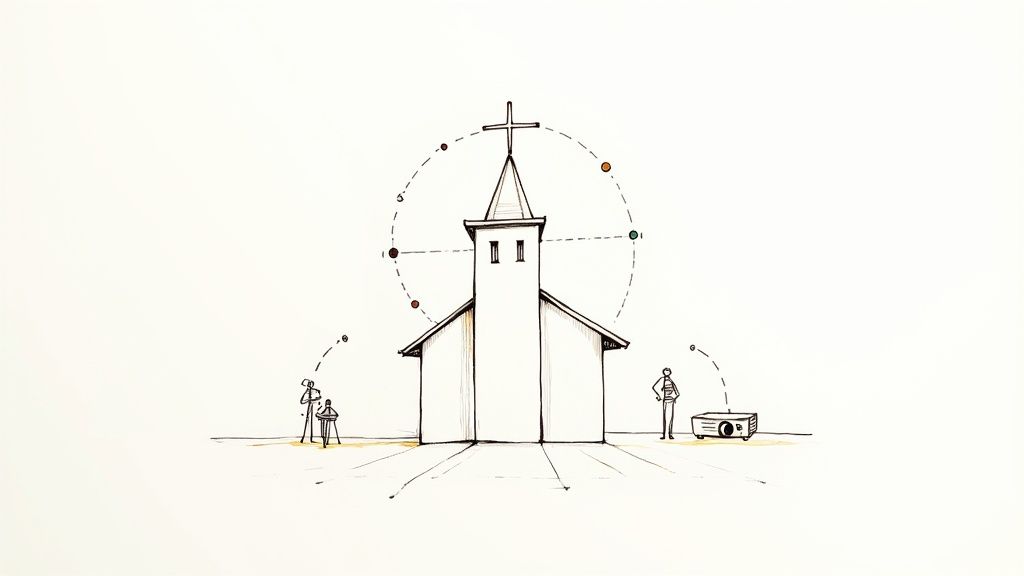
Technology has fundamentally changed how we do church. Live streaming, which exploded during the COVID-19 pandemic, is now a permanent fixture for many. As of 2025, a staggering eighty-seven percent of churches are still streaming their services online. This isn't a passing trend; it shows just how vital digital connection has become for faith communities. You can dig into the full report on how digital tools are shaping the future of ministry.
This new reality demands more than just pointing a camera at the stage. It means intentionally creating a seamless experience that feels connected, whether someone is sitting in a pew or watching from their living room.
Your church's digital presence is its new front door. It’s the first impression for someone searching for a new church and the main connection point for your members during the week. A solid media strategy makes sure that door is always open and welcoming.
From Sunday Service to Daily Engagement
The real magic of a media ministry happens when the Sunday sermon is treated as the beginning of a conversation, not the end of one. Think about it: every message is packed with potential touchpoints for encouragement, discussion, and outreach. The big problem has always been finding the time and people-power to turn a 40-minute sermon into a week's worth of meaningful content.
This is exactly where modern tools built for ministry come into play. A platform like ChurchSocial.ai, for example, takes the heavy lifting out of this process, making it easy to plan and manage your church social media accounts.
Here’s a quick look at what that looks like:
- AI Sermon Repurposing: Create AI-generated content from your sermon transcript, like social posts, blogs, and small group questions.
- Automated Reel Creation: Instantly create AI-generated reels from your sermons to engage your audience on Instagram and TikTok.
- Simplified Content Management: Our simple drag-and-drop calendar allows churches to easily manage and update all of their social media.
- Professional Graphics: Use our graphic templates and editor to create and post photos and carousels for a polished, branded look.
- Calendar Integration: We also integrate with Planning Center and other church calendars to create content for your events automatically.
By weaving these elements together, a church can move from simply broadcasting a service to building a vibrant, engaged online community that fuels its mission 24/7.
Here’s a breakdown of the core components that make up a thriving digital ministry.
Core Components of a Digital Ministry
Each of these components plays a distinct role, but they work best when they're all pointing in the same direction, reinforcing the same core message.
Building Your Church's Digital Front Door
Think about how most people find anything new these days. They pull out their phone. Your church is no different. Your website and social media profiles are no longer just online bulletin boards; they’re the first handshake, the first "hello," for a huge number of people looking for a church home.
This digital front door is where they get their first impression, long before they ever think about stepping into your actual building. It’s where your own people stay connected during the week and where newcomers decide if your community is one they might want to be a part of.
But here’s the tough part. A recent look at over 2,700 churches found a massive gap. A staggering 46.3% of churches have no website at all. Of those that do, only about 35% have a site that actually helps people connect and get involved. On top of that, 59% don't offer any way to give online. You can see the full breakdown in the state of church websites report—it’s a real eye-opener.
An outdated or non-existent online presence sends a message, whether we mean it to or not. It can accidentally say, "We're not really ready for you," or that the church is disconnected from everyday life. That’s a huge missed opportunity to reach people right where they are.
From Sermon to Social Media
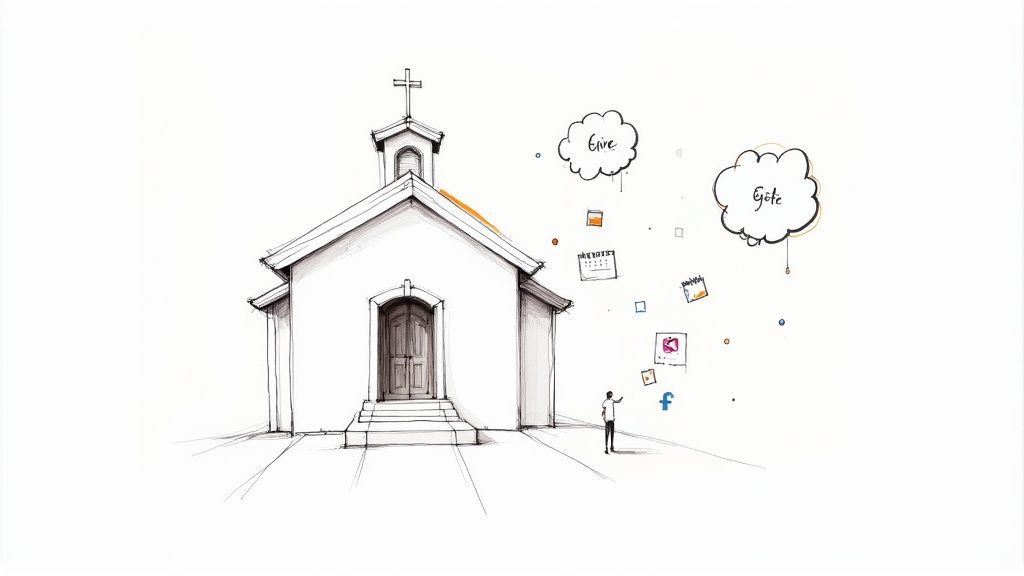
Let's be honest—the biggest reason most churches struggle to keep up online isn't because they don't want to. It's time. And people. The idea of creating fresh, meaningful content every single day feels impossible for already stretched staff and volunteers.
But what if your Sunday sermon wasn't the end of your content creation for the week, but the beginning? That one message is a goldmine. It's packed with powerful quotes, biblical truth, and real-life applications that can encourage your community all week long.
This is exactly where a tool like ChurchSocial.ai comes in. It was literally built to turn one sermon into an entire week's worth of posts. By simply analyzing your sermon transcript, it can generate blog posts, discussion questions for small groups, and social media updates. It tackles that content bottleneck head-on.
Key Elements of an Effective Digital Presence
To build a truly welcoming digital front door, you need to focus on a few core areas. Get these right, and you'll create an online experience that feels cohesive and inviting.
- A Modern, User-Friendly Website: Think clean, simple, and easy to use on a phone. The first things anyone should see are your service times, location, and a little bit about what to expect on a Sunday.
- Consistent Social Media Activity: You have to be where your people are. Regular posts with sermon clips, event reminders, or just a behind-the-scenes look at ministry keeps everyone connected.
- Clear Calls to Action: Don't leave people guessing. Tell them what to do next. "Plan a Visit," "Join a Group," or "Watch a Sermon" are all clear, helpful next steps.
- Visually Appealing Graphics: Good-looking images and videos grab attention and communicate the personality of your church.
A strong digital front door doesn't just attract new visitors; it serves your existing congregation by providing a central hub for information, encouragement, and connection throughout their busy week.
Simplifying Your Digital Ministry
Pulling all of this together doesn't have to be a headache. ChurchSocial.ai puts all the tools you need in one place, so your team can manage everything without losing their minds. You can use its built-in editor and templates to create beautiful graphics and photo carousels that match your church's look and feel.
From there, our simple drag-and-drop calendar lets you plan out and schedule all your posts across Facebook, Instagram, and more. We also integrate with church calendars like Planning Center to automatically create content for events. This kind of organization makes sure your digital front door is always active, welcoming, and a true reflection of the life of your church—helping you foster growth and discipleship every single day.
Creating Social Media Content That Connects
In a world buzzing with constant updates, how does a church’s message actually cut through the noise? It’s a real challenge. Just posting service times isn't enough anymore.
The secret is to create content that genuinely connects with your community, turning a passive scroll into a moment of active engagement. This means we have to move beyond simple announcements and start sharing content that offers real encouragement, sparks conversation, and truly reflects the heart of your ministry.
Social media is a massive part of modern media in worship, but the old playbook is losing its punch. Organic reach has absolutely plummeted on the big platforms, sometimes dropping as low as 0.08%. This forces churches to adapt. If we stick to outdated approaches, we risk becoming digitally irrelevant, especially with younger generations. You can get a deeper dive on this from my friend Brady Shearer and how churches can navigate declining social media reach.
The goal is simple: stop the scroll. And to do that, we have to shift from just informing our audience to truly engaging them with content that feels authentic and valuable.
Maximize Your Sunday Sermon
Here's some good news: your most powerful piece of content is probably the one you're already creating every single week—the Sunday sermon. That message is an absolute goldmine of potential social media posts. The problem has always been finding the time and energy to mine it.
This is exactly where technology can come alongside your ministry. Instead of seeing the sermon as a one-and-done event, think of it as the starting point for a week-long conversation with your community.
The most effective social media strategies don't require you to constantly invent new content. They empower you to amplify the powerful message you're already delivering, reaching people where they are, every day of the week.
Imagine turning a single sermon transcript into a dozen different pieces of content without piling hours of extra work onto your team. This isn't some futuristic dream; it’s precisely what platforms like ChurchSocial.ai are built for. With its AI-powered tools, you can automatically create AI-generated reels from your sermons and spin up other compelling content that extends the impact of your teaching all week long.
Transform One Message Into Many
The real magic of repurposing is formatting your message for how people actually consume content on different platforms. A 30-minute sermon video won't fly on Instagram, but a punchy 60-second highlight reel? That's a different story. This is where AI makes a real, practical difference.
Here’s a look at how ChurchSocial.ai helps you do this without breaking a sweat:
- AI-Generated Sermon Reels: The platform can scan your sermon and automatically pinpoint the most powerful moments, creating short, shareable AI-generated reels perfect for Instagram, TikTok, and YouTube Shorts.
- Instant Quote Graphics: It can pull out impactful one-liners from the message and drop them into beautifully designed graphics using our graphic templates and editor. No design skills needed.
- Sermon-to-Post Content: It can even generate written content right from the sermon transcript, like social posts, blogs, or key takeaways for a carousel post.
This approach transforms your social media from a nagging chore into a natural extension of your core ministry.
Create Visually Stunning Posts with Ease
Great content deserves to look great. Your visuals are often the first thing people notice, and they say a lot about the quality and personality of your church. But let’s be honest, most churches don’t have a professional graphic designer on staff.
To solve this, ChurchSocial.ai includes a built-in graphics editor with a whole library of professional templates. This tool empowers your staff and volunteers to create and post stunning, branded photos and carousels that keep everything looking consistent across all your channels.
You can easily create:
- Event Announcements: Promote upcoming services, small groups, and community outreach events.
- Verse of the Day Graphics: Share a quick hit of daily encouragement with your congregation.
- Testimonial Carousels: Highlight the amazing stories of life change happening in your church community.
By making the design process simple, you save a ton of time and make sure every post represents your church with excellence. That consistency builds recognition and makes your digital front door look polished and inviting. For more practical ways to keep your community involved, check out these social media post ideas to supercharge engagement. Combining these ideas with an efficient creation tool ensures your feed stays fresh, meaningful, and alive.
Streamlining Your Media Workflow
Let's be honest. A powerful media ministry can feel like it needs a full-time production crew, and that pressure often leads straight to volunteer burnout and an inconsistent online presence. The sheer logistics of managing media in worship—from getting sermon notes ready to scheduling the week's social media—can get out of hand, fast.
But what if you could trade that chaos for a sustainable, impactful ministry? The secret isn't working harder; it's building a clear, manageable workflow. This is all about working smarter, giving staff and volunteers well-defined roles, and using the right tools to handle the repetitive tasks that drain everyone's energy and passion. The goal is a system that just works, whether you have a team of one or a team of ten.
From Sermon Prep to Scheduled Post
The bedrock of an efficient media workflow is learning to repurpose your core content: the Sunday sermon. Instead of thinking about the sermon and your social media plan as two separate, massive jobs, see them as a single, continuous process.
When the sermon becomes your starting point, you immediately lift the heavy burden of trying to invent brand-new content from scratch all week long.
This simple idea—turning one sermon into many pieces of content—is a total game-changer.
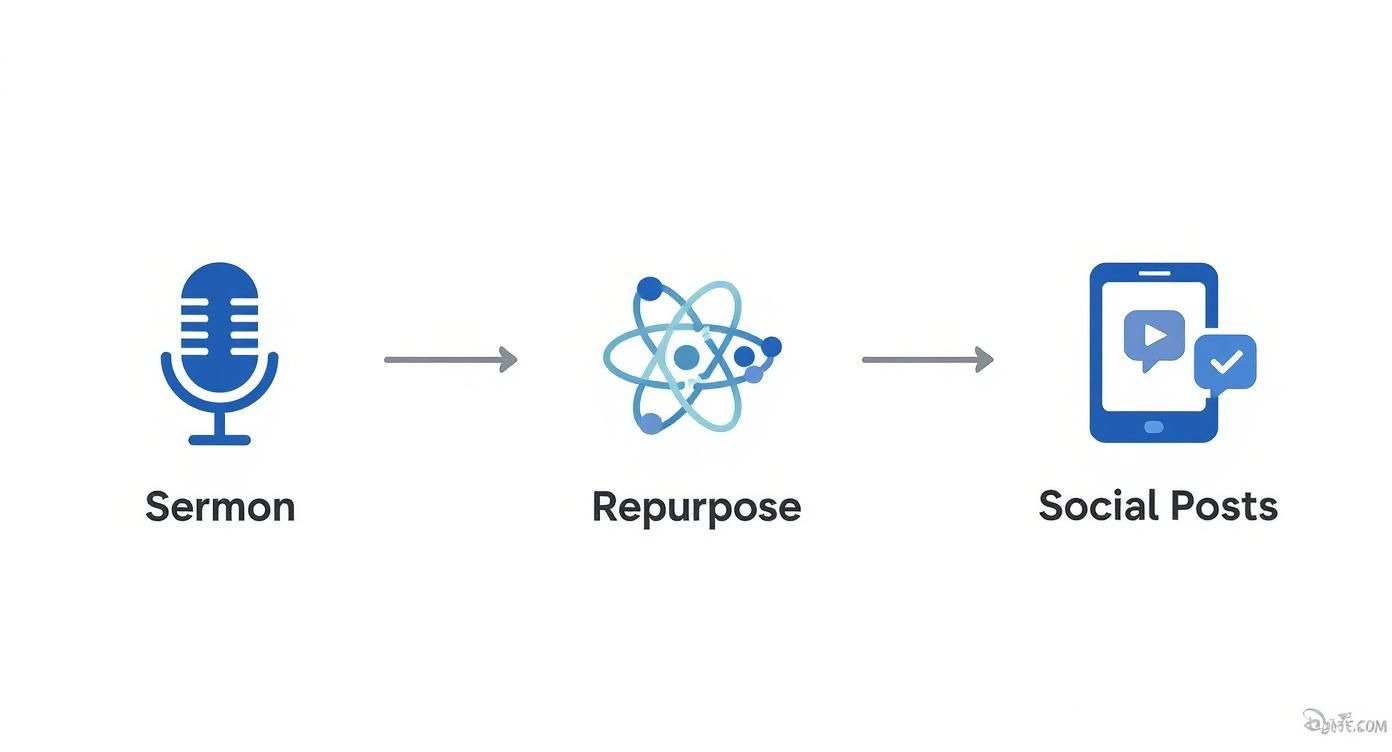
Think about it: the hard work of creating the content is already done. The next step is just repackaging it for different platforms.
To make this happen, you need a central planning hub. This is where a tool like ChurchSocial.ai can become the command center for your entire media ministry. Its simple drag-and-drop calendar lets you visually plan, create, and schedule everything in one spot. You can see your whole week or month at a glance, which means no more last-minute scrambling to post something. For a deeper dive on keeping your creative files organized, check out our complete guide to digital asset management software for churches.
Automating Your Content Calendar
One of the biggest time-sucks for any church communicator is manually creating posts for every single event, service, and announcement. It's tedious, prone to typos, and often the first thing to get dropped when a busy week hits.
This is where integrating your media workflow with your church's main calendar changes everything.
ChurchSocial.ai, for instance, connects directly with church management platforms like Planning Center. This integration automatically grabs upcoming events—from youth group meetings to special services—and drafts social media posts for them. This kind of automation can save hours of manual work every single week and makes sure your community never misses an announcement.
A streamlined workflow isn’t about being more rigid; it’s about creating more freedom. When repetitive tasks are automated, your team is free to focus on what truly matters: building relationships and sharing the gospel creatively.
Defining Roles for a Sustainable Team
To keep your volunteers from burning out, their roles need to be clear and manageable. A great workflow naturally helps define these jobs.
- Content Creator: This person’s job is to upload the sermon transcript to ChurchSocial.ai and use its AI tools to generate reels, post ideas, and graphics.
- Calendar Manager: A volunteer or staff member can then take that generated content and simply arrange it on the drag-and-drop calendar, scheduling it out for the week.
- Community Engagement: This role is all about relationships—responding to comments and messages, and really nurturing the community side of your online presence.
With a central platform, everyone knows exactly what their piece of the puzzle is. The ministry can grow and thrive without one person having to do it all. To take your efficiency even further, it's worth exploring the benefits of media workflow automation to cut down on even more manual tasks. By putting these systems in place, a powerful media ministry is well within reach for any church, no matter the size of your team or budget.
Using Media to Enhance the Worship Service
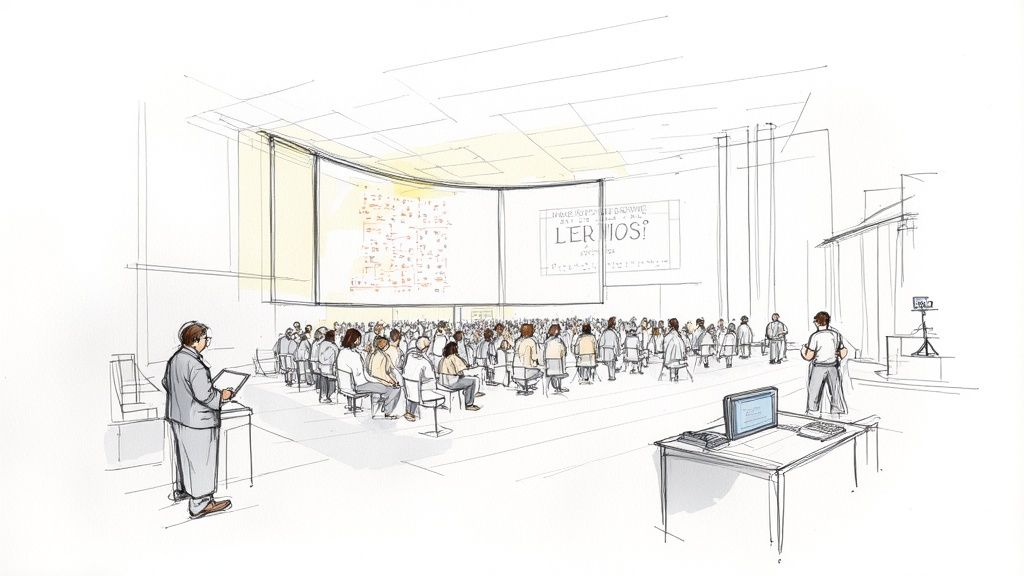
While a strong social media presence keeps your church connected all week, how you use media in worship on Sunday morning is still the cornerstone of a modern ministry. The goal isn't to put on a show. It's to enrich the entire service, making it more engaging and accessible for everyone, whether they're sitting in the pews or tuning in from home.
Effective in-service media is all about intentionality. Every slide, every video, every background visual needs a purpose. Does it deepen understanding? Does it remove a potential distraction? Does it support the central message of worship? When it's done right, media blends seamlessly into the experience, helping people connect more deeply with God and with one another.
Best Practices for In-Service Visuals
Let’s start with the basics: projecting song lyrics and sermon points. It sounds simple, but the small details here can make a huge difference between a helpful aid and a major distraction. Your two guiding principles should always be consistency and clarity.
Take your lyric slides, for instance. Readability has to be the top priority. Use a clean, large font with high contrast against whatever background you’re using. A good rule of thumb? Stick to a maximum of four lines of text per slide. This keeps people from reading ahead of the music and helps them stay focused on the act of worship.
When designing in-service media, the ultimate test is whether it supports or subtracts from the moment. If it pulls focus from the worship leader, the sermon, or the sacrament, it's time to simplify.
To create a cohesive feel, develop a consistent visual identity for your services. You can use platforms like ChurchSocial.ai, which provides graphic templates and a simple editor, to design branded sermon slides, announcement graphics, and even the lower-thirds for your live stream. This small step ensures a professional and unified look every single Sunday.
Key Considerations for a Quality Live Stream
For the growing number of people who join your services online, the live stream is their worship experience. A polished, professional broadcast communicates care for your online congregation and removes the technical hiccups that can pull them out of the moment.
Here are a few technical elements to lock in:
- Stable and Clear Audio: This one is non-negotiable. Bad sound is the quickest way to lose an online viewer. Invest in decent microphones and make sure you have a clean audio mix that properly balances the vocals, instruments, and the speaker’s voice.
- Thoughtful Camera Angles: If you can, use more than one camera to create a more dynamic feel. A wide shot can show the context of the congregation, while a tighter shot on the pastor or worship leader helps online viewers feel more connected and engaged.
- Good Lighting: Make sure the stage and key speakers are well-lit. Proper lighting gets rid of distracting shadows and gives your video feed that crisp, professional look that’s crucial for holding people's attention.
Balancing Engagement with Reverence
At the end of the day, the most important part of using media in worship is maintaining a spirit of reverence. It's absolutely crucial to handle the sacred moments of your service with care. During communion or a quiet time of prayer, for example, your visuals should become simple and static—or even fade to black—to give people space for quiet reflection.
Beyond that, always be respectful of people’s privacy. Set up clear guidelines for filming or taking photos of your congregation, and be mindful of copyright laws for any music or videos you use. A thoughtful approach ensures your media enhances worship without ever compromising its sacred nature. For a deeper dive into this, check out our comprehensive guide on using media for worship effectively and ethically.
Measuring What Matters in Your Digital Ministry
So, you’re putting all this effort into your church’s media… but how do you know if it's actually working? It’s tempting to chase surface-level numbers like likes and follows, but let's be honest, those "vanity metrics" don't tell you much about real ministry impact. To get a true sense of your digital strategy's health, you have to look deeper.
This means shifting your focus from the noise to the numbers that genuinely connect to your church's mission. These are the Key Performance Indicators (KPIs) that show how your online presence is actually helping people grow, building real community, and reaching new people. The point isn’t just to collect data for data’s sake—it’s about using that information to make smarter, more intentional decisions.
Moving Beyond Vanity Metrics
A huge follower count looks impressive, but it doesn't automatically mean people are engaging or growing spiritually. Instead, let's focus on the metrics that signal a real connection.
- Online Viewership: Don't just count the total views on your live stream. Pay close attention to the average watch time. A longer watch time is a great sign that people are truly plugged into the service, not just popping in and out.
- Website Traffic from Social Media: Dig into your analytics and see how many people are clicking from your social posts over to your church website. This is a huge indicator that your content was compelling enough to make someone take that next step.
- Digital Giving Trends: Are you noticing a connection between your digital outreach and online giving? A bump in generosity might mean your message is hitting home and inspiring people to support the vision.
Tracking these more meaningful data points gives you a much clearer picture of what's happening. You can learn more about how to do this in our detailed guide on how to measure social media ROI for your ministry.
Connecting Data to Discipleship
Analytics aren't just for business gurus; they’re powerful tools for ministry. The data you gather can point you to incredible discipleship opportunities and show you exactly where your message is connecting most deeply. For instance, what if an AI-generated sermon reel about forgiveness gets twice the engagement of any other post that month? That’s not just a random spike; it’s a clear signal. It’s telling you that this is a topic your community is wrestling with and is hungry to hear more about.
Data gives you the insight to move from guessing what your community needs to knowing what they're responding to. It allows you to be more strategic and pastoral in your digital outreach.
This is where a platform like ChurchSocial.ai can be a game-changer. You can easily manage and create the kind of content that moves these needles. Use its AI tools to generate sermon clips, carousels, and posts to test different themes and see what resonates. The simple drag-and-drop calendar helps you plan your content strategy, and the built-in analytics show you what’s working, empowering you to fine-tune your approach and make your digital ministry more effective than ever.
Common Questions About Media in Worship
Jumping into media ministry often brings up some very real, practical questions. What's this going to cost? How much time will this take? Where in the world do we start? Let's tackle some of the most common concerns we hear from churches.
How Can Our Small Church Afford a Quality Media Strategy?
A powerful media strategy doesn't have to mean a massive budget. The secret is to start with the powerful content you're already creating every single Sunday: the sermon. Think of that one message as a content goldmine for the entire week.
This is exactly where a tool like ChurchSocial.ai comes in. It’s built to take a single sermon transcript and, using AI, turn it into dozens of social media posts, quick reels, and even full blog articles. This approach completely changes the game, reducing the need for more staff or pricey gear. You can focus your energy on just one or two social platforms, use the ready-made templates for graphics, and build a high-impact presence, even on a small-church budget.
How Do We Prevent Volunteer Burnout with Social Media?
Volunteer burnout is almost always a symptom of two things: a chaotic workflow and the constant, draining pressure to create new content from nothing. A platform like ChurchSocial.ai is designed to solve both problems by simplifying the whole process.
Its drag-and-drop calendar makes it easy to plan and schedule posts weeks ahead of time, which means no more last-minute scrambling. But the real game-changer is the AI content creation—it lifts the heavy burden of brainstorming and writing off your team's shoulders. When you automate the repetitive stuff and bring everything into one place, you free up your volunteers to do the creative and relational work they love, making their role energizing instead of exhausting.
How Can We Make Our Online Presence Feel Authentic?
True authenticity is a blend of polished teaching and the real, everyday life of your church. It's about showing both the wisdom your church shares from the pulpit and the warmth of the community that lives it out.
A great way to start is by using a tool like ChurchSocial.ai to create high-quality, engaging posts from your sermons. That ensures your core message gets out there with excellence. Then, sprinkle in those genuine, behind-the-scenes moments you can grab with a smartphone—volunteers setting up, people chatting over coffee, a powerful moment from a prayer meeting. This mix of polished, valuable content and raw, relational snapshots is what creates a digital presence that feels both professional and genuinely human.
Ready to take the struggle out of your church's social media and see your ministry's reach grow? ChurchSocial.ai gives you everything you need—from AI-powered sermon repurposing and reel creation to a simple drag-and-drop calendar and beautiful graphic templates. It’s time to stop the content hamster wheel and start building a thriving online community.
Discover how ChurchSocial.ai can transform your digital ministry.