Sunday starts, and the bulletin is already doing more than listing announcements. A parent hands one to a child before the first song. A guest flips through it while waiting for service to begin. A longtime member circles a question tied to the sermon text and brings it up again over lunch. That is the opportunity church bulletin games create when they are planned with the service in mind.
Used well, these games keep people engaged during natural transition moments and help the message stay in front of them after they leave the room. Kids have a clear activity. Adults have a reason to pay closer attention to Scripture, songs, and sermon themes. Church staff also get a practical content pipeline, because the same game prompt can be reposted during the week as a story poll, caption contest, trivia slide, or email follow-up.
Print and digital work better together than many churches assume.
I have seen simple bulletin activities carry more engagement than bigger, more complicated ideas because they meet people where they already are. A verse match can become an Instagram quiz. A hymn puzzle can turn into a Facebook comment prompt. A sermon quote game can be repurposed in ChurchSocial.ai, using its AI tools to rewrite the same idea for social captions, image posts, and short-form follow-up content without rebuilding the concept from scratch. If you already create weekly Scripture graphics, this guide to custom Bible verse content fits naturally with that workflow.
Churches have plenty of ready-made models for age-appropriate activity design, and Children's Worship Bulletins is one example often referenced by ministry teams for recurring kids' bulletin formats. For churches that also want stronger digital follow-through, this guide on how to boost church engagement online offers helpful context. The strongest approach is not choosing print or digital. It is building bulletin games that start in the pew and continue on social media during the week.
1. Scripture Verse Matching Game
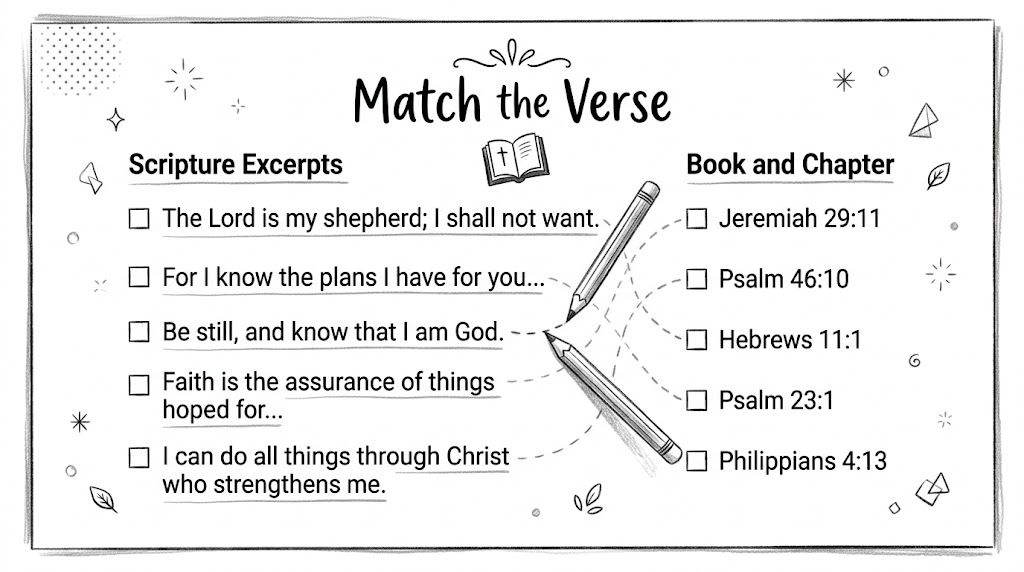
A Scripture matching game is one of the easiest church bulletin games to run well because it fits almost any tradition. You can match a verse excerpt to the correct book, pair a sermon text with its theme, or ask people to complete a familiar line from Scripture. It works in formal liturgical settings and in casual contemporary services because the mechanic is simple and the spiritual payoff is clear.
Use it when you want the bulletin to reinforce what's already happening in worship. If the sermon is in James, don't build a puzzle from Revelation just because it sounds harder. Familiarity helps people participate.
What makes this one work
Churches often overcomplicate Bible games. Matching games do better when the challenge is modest and the wording is clean. A half-page puzzle with sermon-related verses usually gets more participation than a dense full-page quiz.
A few practical formats tend to hold attention:
- Book match: Pair short excerpts with Matthew, Psalms, Romans, and so on.
- Theme match: Pair verses with themes like forgiveness, courage, generosity, or hope.
- Complete the verse: Use a well-known line and leave out one or two key words.
- Reading match: Tie the game to that day's Gospel, Epistle, or Old Testament reading.
Practical rule: Match the game to the sermon text whenever possible. Repetition helps people remember what they heard.
If you want to build this out beyond print, create a Monday social post with one verse clue and invite comments. Then publish the full answer set later in the week. For churches already creating digital discipleship content, that's an easy handoff from bulletin to social.
For creative prompts, weekly verse art, or supporting content around your puzzle, this guide on custom Bible verse content fits naturally into the workflow.
2. Church Member Trivia and Guess Who
Some church bulletin games teach content. Others build connection. A good Guess Who feature does both, because it helps people notice the people serving around them.
This game works especially well in churches where people know faces but not names, or names but not stories. A few clues about a choir member, deacon, greeter, youth volunteer, or longtime prayer team member can turn a routine bulletin into a community-building tool.

The trade-off to watch
This game feels warm when it's inclusive. It feels cliquish when it only features the same visible leaders. Rotate broadly. Include newer members, behind-the-scenes volunteers, older saints, students, and people from different ministries.
Good clues are specific without being invasive. “Serves on the meal train and bakes for almost every funeral reception” is better than “lives on the east side and had surgery last year.” You want recognition, not oversharing.
Try a short structure like this:
- Service clue: What ministry they help with
- Personality clue: A hobby or interest
- Church clue: How they're involved in community life
- Optional bonus clue: Favorite hymn, Bible book, or ministry memory
Value comes after Sunday. Repurpose the same profile into a social graphic, a short captioned reel, or a carousel introducing the people who make your church run. If your church struggles to post consistently, bulletin content like this gives you ready-made material without starting from scratch.
When churches use Planning Center or another calendar system to track volunteer rhythms, it becomes much easier to spot who should be featured next. That kind of steady rotation also keeps this game from becoming random.
Churches don't need more content ideas as much as they need repeatable systems. Member trivia works because it's simple to repeat.
3. Hymn or Worship Song Puzzle Game
The prelude is starting, people are still finding their seats, and a short song puzzle gives them something warm and familiar to engage with before the service begins. This one works well because it meets people where memory is strongest. Congregations may forget dates and names, but they often remember lyrics they have sung for years.
That creates a useful planning choice. Traditional churches can draw from hymns people know by heart. Contemporary churches can use recent worship songs that already appear in regular rotation. Mixed churches should not force both into one crowded puzzle. Alternate by week or tie the game to that Sunday's set list so the bulletin feels connected to the service, not pasted in from somewhere else.
Keep it short and legally clean
Avoid printing long lyric sections. It raises copyright concerns and makes the activity feel heavier than it should. Short prompts work better in print and are easier to repurpose online.
Formats that hold attention:
- Unscramble the title: Rearrange the words from a familiar hymn or worship song
- Fill in one missing word: Use a short, recognizable line
- Match the theme: Pair songs with clues like grace, trust, lament, resurrection
- Name that writer: Add a brief note about the hymn author or the song's background when it serves the lesson
Church leaders looking for examples of familiar game structures adapted for ministry can see that pattern at Ministry-to-Children. The principle is simple. Use what people already recognize, then shape it for your ministry context.
The main trade-off is familiarity versus variety. If every puzzle uses songs from the same era, one part of the church will enjoy it and another part will tune out. If you chase novelty, participation drops because people cannot solve what they do not know. A steady rotation usually fixes this. One week use a classic hymn. The next week use a current worship song. On a fifth-Sunday or church anniversary, mix in a song tied to your congregation's story.
This format also bridges print and digital better than many bulletin games. A one-line lyric clue can become an Instagram Story poll, a Facebook post, or a short reel with your worship leader giving the answer and a 20-second reason the song was chosen. If your team uses ChurchSocial.ai, you can turn the same bulletin prompt into social captions, graphics, and short video ideas without rebuilding the concept from scratch.
For churches that want a stronger teaching angle, add one sentence of context under the answer. A hymn writer's story, a Scripture connection, or a note about the season of the church year gives the puzzle more value than simple recall. If you want another model for connecting church content with learning, you can explore biblical history on ClearBible.ai.
4. Bible Timeline and Historical Context Sequencing
A family sits down before service and sees four events in the bulletin: Abraham, Exodus, David, and the exile. The children start guessing. The parents start debating. By the time worship begins, they have already done a small piece of Bible study together. That is what makes sequencing games useful. They turn scattered knowledge into a clearer framework.
This format works best when the goal is understanding, not just recall. Many people in the pews know the names, but they do not always know what came first, what followed, or why the order matters. A short timeline puzzle helps them place events inside the larger story of Scripture.
Keep the scope tight. Four or five items is enough for a bulletin. Once you push past that, the activity stops feeling inviting and starts feeling like a classroom test.
Good options include:
- Old Testament sequence: Flood, Abraham, Exodus, David
- Gospel sequence: Baptism of Jesus, feeding of the five thousand, crucifixion, resurrection
- Acts sequence: Pentecost, Stephen, Paul's conversion, missionary journeys
- Church history sequence: Early church, Reformation, modern missions, your church's founding
The teaching value goes up when you add one short line after the answer key. Note why the event matters, what covenant or leader it connects to, or how it sets up the next stage in the biblical story. If you want a strong example of how chronology improves understanding, you can explore biblical history on ClearBible.ai.
A sequencing game works best when the order explains something important.
This is also one of the easiest bulletin games to reuse online. The print version can run on Sunday morning, then the same content can become a Facebook carousel, an Instagram Story quiz, or a short video that reveals the correct order one item at a time. Churches that use ChurchSocial.ai can turn a simple bulletin prompt into social captions and visual post ideas without rebuilding the content from scratch.
There is a real trade-off here. If the sequence is too easy, people glance at it and move on. If it requires too much background knowledge, only the strongest Bible students will engage. The middle ground usually works best. Pick familiar anchor events, then use the explanation below the puzzle to add depth for newer believers and children.
For sermon series, this game can do more than fill space in the bulletin. It can reinforce the week's message, help parents continue the conversation at lunch, and give your digital team one more teaching asset to post during the week.
5. Attendance Incentive Scratch-Off Game Card
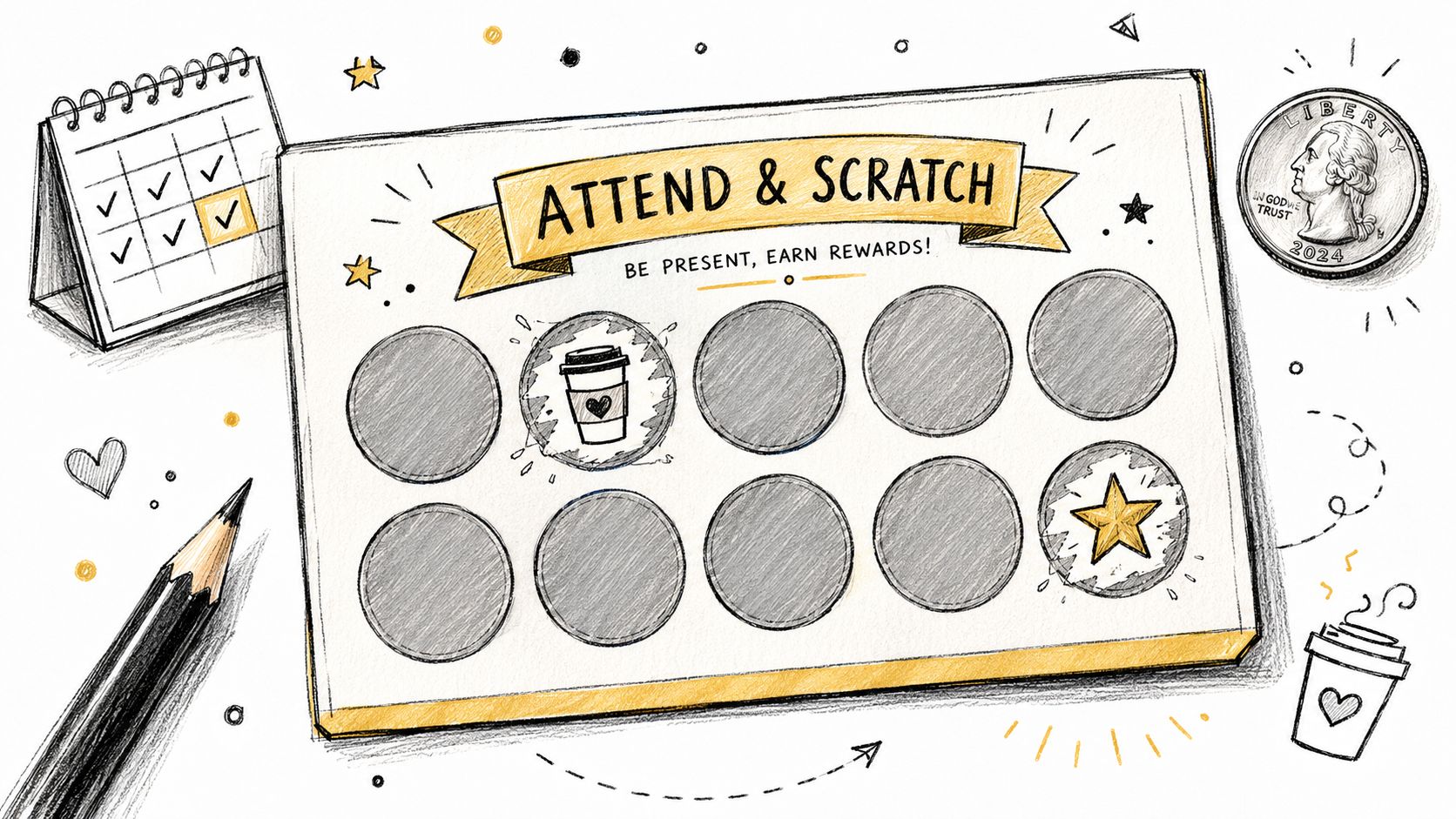
A parent opens the bulletin while waiting for service to start. Their child spots a scratch-off square, asks what happens if they fill the card, and suddenly the bulletin has done something useful. It has created a reason to pay attention now and come back next week.
That is the best use of an attendance incentive game. It supports rhythm, not just turnout. Churches get better results when the card reinforces habits you want to pastor, such as consistent worship attendance, Scripture memory, serving, or bringing back a completed family discussion prompt.
Where this fits and where it doesn't
This format works best in children's ministry, youth ministry, vacation Bible school follow-up, and short seasonal campaigns. It can also help newcomer classes where the goal is simple repetition and familiarity. Used across the whole adult congregation for too long, it often starts to feel forced.
The practical question is not whether people like prizes. The practical question is whether the game supports discipleship or distracts from it.
Set it up around three clear choices:
- Who it serves: Kids, students, families, or first-time guests in a follow-up track
- What action you are reinforcing: Weekly attendance, Bible reading, prayer, service, or memory work
- What reward fits the ministry goal: Public recognition, a small ministry-themed item, a class celebration, or a next-step invitation
Small rewards usually work better than flashy ones. A sticker, bookmark, snack coupon, or family pizza night drawing can keep the tone light. Big prizes can attract attention for the wrong reason and create disappointment for the families who participate faithfully but never win.
Build the print version so it can live online too
The strongest version starts in the bulletin and continues during the week. A printed punch card on Sunday can become an Instagram Story progress update on Tuesday and a reminder post on Saturday. That gives the communications team one idea with multiple uses instead of a one-service activity that disappears by lunch.
ChurchSocial.ai helps churches turn that same game into weekday content without rebuilding it from scratch. A ministry leader can hand your team the bulletin prompt, then use pastor quote content ideas for church social posts alongside attendance graphics, captions, and follow-up reminders that match the campaign.
Keep the setup simple. If volunteers have to explain the rules three different ways, the game is too complicated. If families can understand it in ten seconds, track progress easily, and know what happens when the card is complete, you have a format that can work in print and on social media.
6. Sermon Application Caption This or Quote Attribution Game
Some of the best church bulletin games don't feel like games at first. A sermon application challenge is one of them. Instead of asking people to remember facts only, it asks them to remember what was said and what they're going to do with it.
This format works especially well when your church wants Sunday engagement to continue into the week. It can be as simple as matching sermon quotes to the right application point, finishing a phrase from the message, or writing a short caption that connects the sermon to daily life.
Strong sermons create strong prompts
The better the sermon structure, the easier this game is to build. Pull one memorable phrase, one key text, and one practical takeaway. Then ask people to connect them.
Useful prompt types include:
- Quote match: Which point did this line belong to?
- Application match: Which real-life scenario fits this sermon takeaway?
- Caption this: Write a one-sentence application for a sermon image or phrase
- Series recall: Match this week's message to the larger series theme
For churches publishing sermon-based content online, this becomes even more useful. A bulletin prompt can become a comment question on Facebook, a reel caption, or a short follow-up email to small group leaders. If your team already works from transcripts or sermon notes, you're closer than you think.
A practical resource here is this roundup of quotes from pastors for church content, which can help shape the way you pull memorable lines without making them sound forced.
Don't use sermon quotes just because they sound clever. Use the lines people can actually live on Monday.
Keep the focus on application
This game falls flat when it becomes a memory contest. Participants won't remember exact wording, and that's fine. They do remember images, phrases, and practical direction. Build around those.
It also helps remote participation. A sermon quote graphic on social media can mirror the bulletin prompt for livestream viewers or members who missed the service. That kind of consistency makes your communication feel connected instead of fragmented.
7. Digital Interactive QR Code Scavenger Hunt and Web-Based Bulletin Games
A family finishes service, heads to the car, and the bulletin usually gets folded into a bag or left on the seat. A QR scavenger hunt gives that same bulletin a second life on the ride home, at lunch, or later in the week. It turns print into a digital follow-up tool your church can measure.
Used well, this format reaches people in the room and people who only see your church online. A printed code can lead to a short Bible clue, a campus scavenger hunt, a sermon review quiz, or a prayer response page. The stronger play is to reuse that same game on social media. With ChurchSocial.ai, churches can take the bulletin prompt, turn it into a post or story version, and keep one idea working across print and digital instead of rebuilding content from scratch.
Keep the path simple. If the code opens to a crowded page, a login wall, or three extra clicks, participation drops fast.
A few setup choices make a big difference:
- Use one clear prompt: “Scan for this week's 60-second Bible hunt”
- Send people straight to the activity: No menu page first
- Build for phones first: Large buttons, fast load time, readable text
- Keep a paper version available: Some people will not scan, and they should still be able to join
- Match the visual style: The bulletin and landing page should look like they belong together
The printed handoff matters too. A weak QR block in the corner gets ignored. A bold, well-labeled callout gets scanned. If your team wants stronger visual examples, this guide on church bulletin graphics gives a practical starting point.
Churches can also borrow ideas from event check-in systems. The flow used in QR code ticketing for church gatherings works well for bulletin games too. The lesson is simple. Tell people what happens after the scan, reduce confusion, and make the next step obvious.
Accessibility deserves more attention here than many church teams give it. The World Health Organization reports that about 1.3 billion people, or 16% of the world's population, experience significant disability. That affects how people read, tap, hear, process, and move through a digital game. Use strong contrast, readable font sizes, plain instructions, and tap targets that do not require precision. If a clue depends only on color, tiny text, or quick movement across campus, part of your church will get left out.
The best version is usually hybrid. Put a simple puzzle in the bulletin. Add a QR code for bonus clues, audio instructions, or a mobile answer form. Then repost the same game on Facebook or Instagram for members who watched from home. That approach respects the people who love print, serves the people who prefer digital, and gives your communications team one engagement idea that can run all week.
Church Bulletin Games: 7-Item Comparison
| Item | Complexity 🔄 | Resources ⚡ | Expected outcomes 📊 | Ideal use cases 💡 | Key advantages ⭐ |
|---|---|---|---|---|---|
| Scripture Verse Matching Game | Low, simple layout and rules 🔄 | Minimal, bulletin copy, optional design ⚡ | Moderate engagement; improves verse recall 📊 | Weekly bulletins, sermon tie-ins, all ages 💡 | Reinforces Scripture, low cost ⭐⭐⭐⭐ |
| Church Member Trivia & "Guess Who" | Low–Medium, coordination and vetting needed 🔄 | Low–Medium, staff time for interviews, photos ⚡ | High community connection; shareable content 📊 | Community building, newcomer integration, social posts 💡 | Strengthens bonds; generates organic content ⭐⭐⭐⭐ |
| Hymn/Worship Song Puzzle Game | Medium, music knowledge and copyright checks 🔄 | Medium, music director input, careful layout ⚡ | Engages music lovers; deepens worship familiarity 📊 | Music ministries, worship-centered services, liturgical seasons 💡 | Promotes musical heritage and reflection ⭐⭐⭐ |
| Bible Timeline & Historical Sequencing | Medium–High, research and sequencing complexity 🔄 | Medium, content research, educational graphics ⚡ | High educational impact; boosts biblical literacy 📊 | Sunday school, sermon series, discipleship programs 💡 | Substantive discipleship tool; evergreen content ⭐⭐⭐⭐ |
| Attendance Incentive "Scratch-Off" Card | Medium, distribution and redemption logistics 🔄 | Medium–High, printing/digital system, rewards, tracking ⚡ | Increases attendance and repeat participation 📊 | Attendance drives, youth/college ministries, multi-site campaigns 💡 | Tangible motivation; measurable attendance lift ⭐⭐⭐ |
| Sermon Application "Caption This" Game | Low–Medium, requires sermon transcripts/coordination 🔄 | Minimal, pastor notes, communications editing ⚡ | High retention and practical application of sermons 📊 | Sermon series reinforcement, small groups, discipleship 💡 | Deepens sermon impact with little extra content ⭐⭐⭐⭐ |
| Digital QR Code Scavenger Hunt & Web Games | Medium–High, tech setup, hosting, maintenance 🔄 | High, web hosting, analytics, QR design, developer time ⚡ | Very high engagement; measurable metrics and multimedia reach 📊 | Tech-savvy congregations, multi-site churches, online services 💡 | Best analytics and multimedia integration; modernizes bulletin ⭐⭐⭐⭐ |
Automate Your Engagement from Bulletin to Social Media
The best church bulletin games do more than fill empty space beside announcements. They create a weekly rhythm of attention. People notice the sermon more closely, kids stay engaged longer, families talk after the service, and members have one more reason to pick up the bulletin instead of ignoring it.
The strongest results usually come from choosing one or two repeatable formats and improving them over time. A Scripture match tied to the sermon. A member spotlight every month. A QR code challenge during a teaching series. Those simple patterns are easier for volunteers to manage and easier for the church to recognize. Familiarity builds participation.
It also helps to think past Sunday morning. A bulletin game should rarely end in the bulletin. The Scripture clue can become an Instagram story. The hymn puzzle can become a Facebook post. The sermon application prompt can become a reel caption or a small group discussion starter. Once churches start treating bulletin content as reusable ministry content, the workload gets lighter and the message gets more consistent.
There are practical limits to remember. If you charge for digital bulletin access or subscription-style content, tax treatment may become more complicated. Maryland's digital product guidance notes that subscriptions or access to digital products are generally taxable in many cases, which is one reason churches often take the safer route of including this kind of content inside free ministry communications rather than selling access at Maryland's digital products tax guidance.
ChurchSocial.ai fits naturally into this workflow if your team wants to extend bulletin ideas into social media. Churches can use it to create sermon-based posts from transcripts, generate reels from sermons, design graphics and carousels, and schedule everything from a drag-and-drop calendar. It also supports workflows tied to Planning Center and church calendars, which helps when bulletin themes, events, and social posts need to stay aligned.
A good bulletin gets read. A better bulletin gets reused all week.
If you want to turn church bulletin games into a repeatable social media system, ChurchSocial.ai can help you plan posts, create sermon-based content, design graphics, and schedule everything in one place without building a new workflow every week.