If you're dealing with bulletins stacked on a welcome desk, sliding off a side table, or disappearing before the late service starts, the problem usually isn't the bulletin. It's the system around it. A good holder keeps the entryway tidy, makes the bulletin easy to spot, and tells visitors your church pays attention to details.
Church bulletin holders seem simple until you have to choose one, mount it, keep it stocked, and make sure it still looks presentable a few months later. That's where a lot of churches get stuck. The right setup depends on your wall type, your traffic flow, your bulletin size, and whether your team treats the bulletin as a throwaway handout or a core communication tool.
Why Bulletin Holders Are Still Essential for Your Church
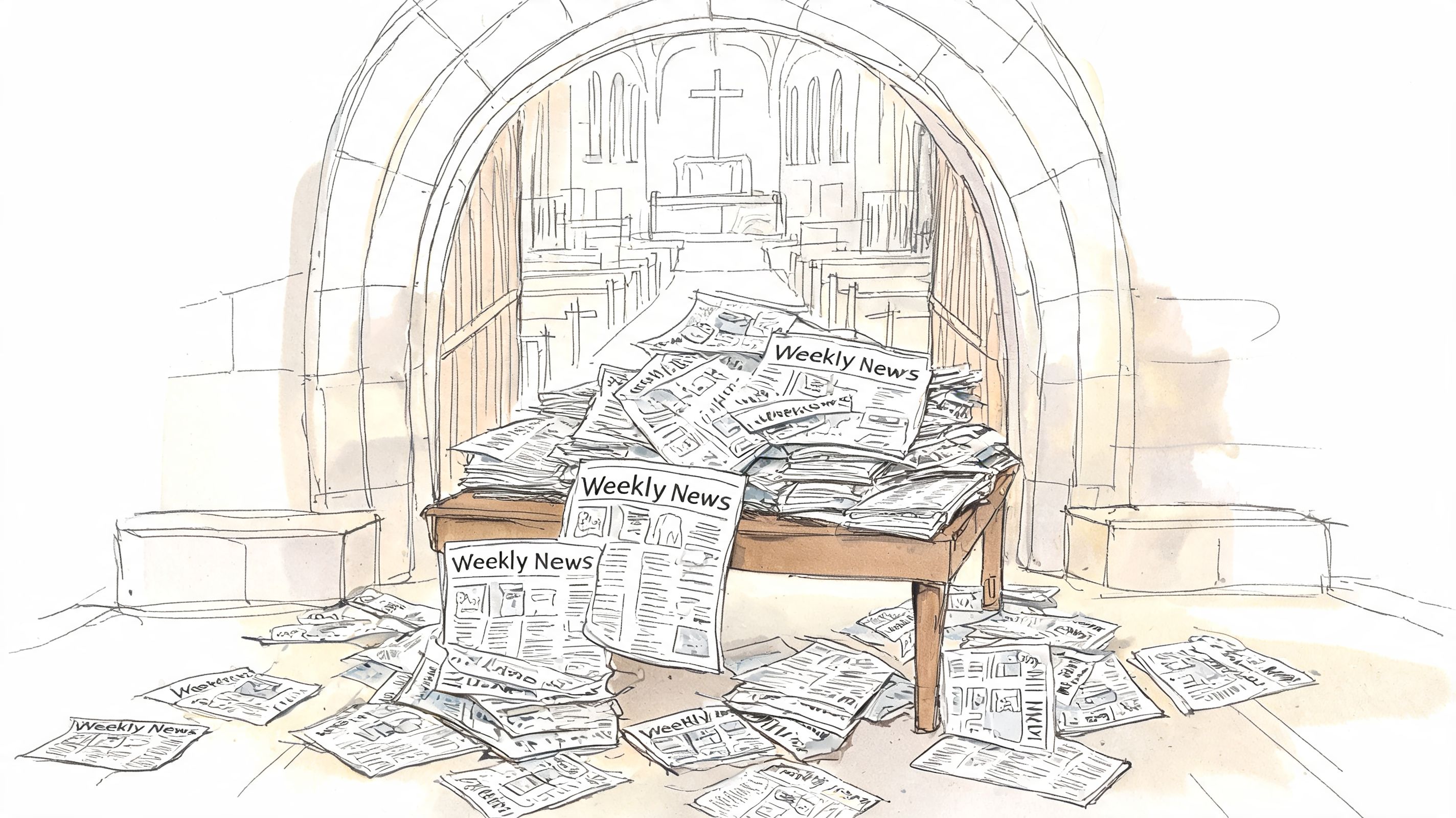
A messy foyer creates work for volunteers and sends the wrong signal to guests. When bulletins sit in uneven stacks on a windowsill or folding table, people grab them awkwardly, half the pile bends, and the rest ends up scattered by the door. A holder fixes a very practical problem. It organizes distribution and makes the bulletin feel intentional instead of leftover.
That matters because print bulletins still get read. A 2023 CARA study summarized by 4LPi found that 90% of weekly Mass attendees read their parish bulletin, and 46% prefer a print-only format. For churches that have assumed everyone moved to screens, that finding is a useful correction.
What a holder actually solves
A holder does more than store paper. It improves the handoff between your church and the person walking through the door.
- Visibility: People notice a mounted holder faster than a paper stack on furniture.
- Consistency: Ushers and office volunteers know exactly where fresh copies go each week.
- Protection: Bulletins stay flatter, cleaner, and less prone to curling at the edges.
- Presentation: The entrance feels managed, not improvised.
Practical rule: If your bulletin matters enough to print every week, it deserves a permanent place in the building.
There's also a visitor issue here. Guests don't know your routines. Members may know to pick up the bulletin from a side hallway shelf. Visitors won't. A clearly placed holder near the main path removes that guesswork.
Why this still matters in a digital church environment
Print and digital don't compete as much as people think. In most churches, they do different jobs. The printed bulletin reaches people at the moment they arrive. Digital channels extend that communication during the week.
If your bulletin is cluttered or hard to find, fix that before redesigning everything else. A lot of churches also make preventable content mistakes, which is why it's worth reviewing these common church bulletin mistakes to avoid. Good content in a bad distribution setup still underperforms. The holder is part of the communication system, not an afterthought.
Choosing the Right Bulletin Holder for Your Space
A church can print a well-designed bulletin and still create friction if the holder is the wrong fit for the room. I have seen churches buy a handsome unit for the foyer, then realize a month later that volunteers are bending bulletins to make them fit, or that the holder looks too small against a wide entry wall. The right choice starts with how the space functions on Sunday and how your team works during the week.
Start with bulletin format, not the catalog photo
For a standard bulletin on 8.5 x 11 inch paper, choose a holder with enough interior room for easy loading and clean removal. Volunteers should be able to drop in a fresh stack without squaring every edge by hand. Guests should be able to pull out one copy without dragging out three.
If your church uses folded programs, connection cards, envelopes, or seasonal inserts, leave extra depth in the pocket. A holder that is barely large enough usually becomes the one people avoid refilling.
Churches that refresh both print and digital announcements each week also benefit from keeping the bulletin format consistent. That makes it easier to browse digital church bulletin templates that match what people see in the building and what they later see online.
Material trade-offs
Wood, acrylic, and metal each have a place. The better choice depends on wear, cleaning habits, and the tone of the room.
| Bulletin Holder Material Comparison | |||
|---|---|---|---|
| Material | Pros | Cons | Best For |
| Wood | Warm appearance, fits traditional interiors, easy to match existing furniture | Can show wear, may react to humidity, usually heavier | Sanctuaries, narthexes, historic churches |
| Acrylic | Clean look, easy to see contents, simple to wipe down | Can scratch or crack if mishandled, may look too modern in some spaces | Contemporary lobbies, multi-use entries |
| Metal | Strong, practical, lower-fuss in utility areas | Less inviting visually, can feel institutional | Hallways, office entrances, education wings |
Wood usually looks best in older church interiors, but it needs a little more care. Acrylic works well where you want visitors to see immediately whether bulletins are stocked. Metal tends to last in high-use areas, even if it is not the most welcoming option visually.
Choose the material your volunteer team can maintain without special effort.
Wall-mounted, freestanding, or countertop
Wall-mounted holders solve the most problems in the least space. They keep the pickup point consistent, reduce clutter, and work well in foyers where traffic backs up before and after worship.
Freestanding units are useful when one entrance serves several ministries at once, such as Sunday worship, children's check-in, and adult classes. The trade-off is floor space. If the lobby already feels tight, a freestanding rack can turn into one more obstacle to walk around.
Countertop holders belong in office reception areas, weekday entrances, or staffed welcome desks. They can work on Sundays, but only if someone owns that surface and keeps it organized. Otherwise, the holder disappears into the pile of sign-up sheets, pens, and leftover flyers.
Match the holder to the communication job
This is the part churches often skip. The holder is not just storing paper. It is delivering one piece of your communication system at a key moment. If the bulletin includes a QR code, event signup, sermon series graphic, or social follow prompt, the holder should support that job by keeping the front page visible and easy to grab.
That matters even more if your church is connecting print to online outreach through ChurchSocial.ai. A printed bulletin can introduce the message in person, then social posts can repeat it during the week with the same headline, artwork, and next step. The holder you choose should make that printed first impression clear, tidy, and consistent.
A practical selection filter
Before ordering, answer these questions:
- What exactly goes in the holder each week? Single sheet, folded bulletin, insert-heavy packet.
- How busy is the area? Light weekday use calls for a different build than a packed Sunday foyer.
- Who will refill it? Staff can manage a more design-forward option. Rotating volunteers usually do better with something obvious and forgiving.
- Does the holder fit the room visually? It should belong in the space without disappearing into it.
- Will it support your digital follow-up? Front-cover visibility matters if you are pointing people to a QR code or social channel.
A church does not need the fanciest holder. It needs one that fits the paper, fits the room, and supports the way the church communicates now, both on the wall and online.
Best Practices for Placement and Accessibility
Sunday at 9:55 a.m., the lobby fills fast. A first-time guest is looking for the sanctuary, a parent is steering children toward check-in, and a longtime member is scanning for this week's announcements. If the bulletin holder is tucked behind a door or buried in a dark corner, that moment is lost.
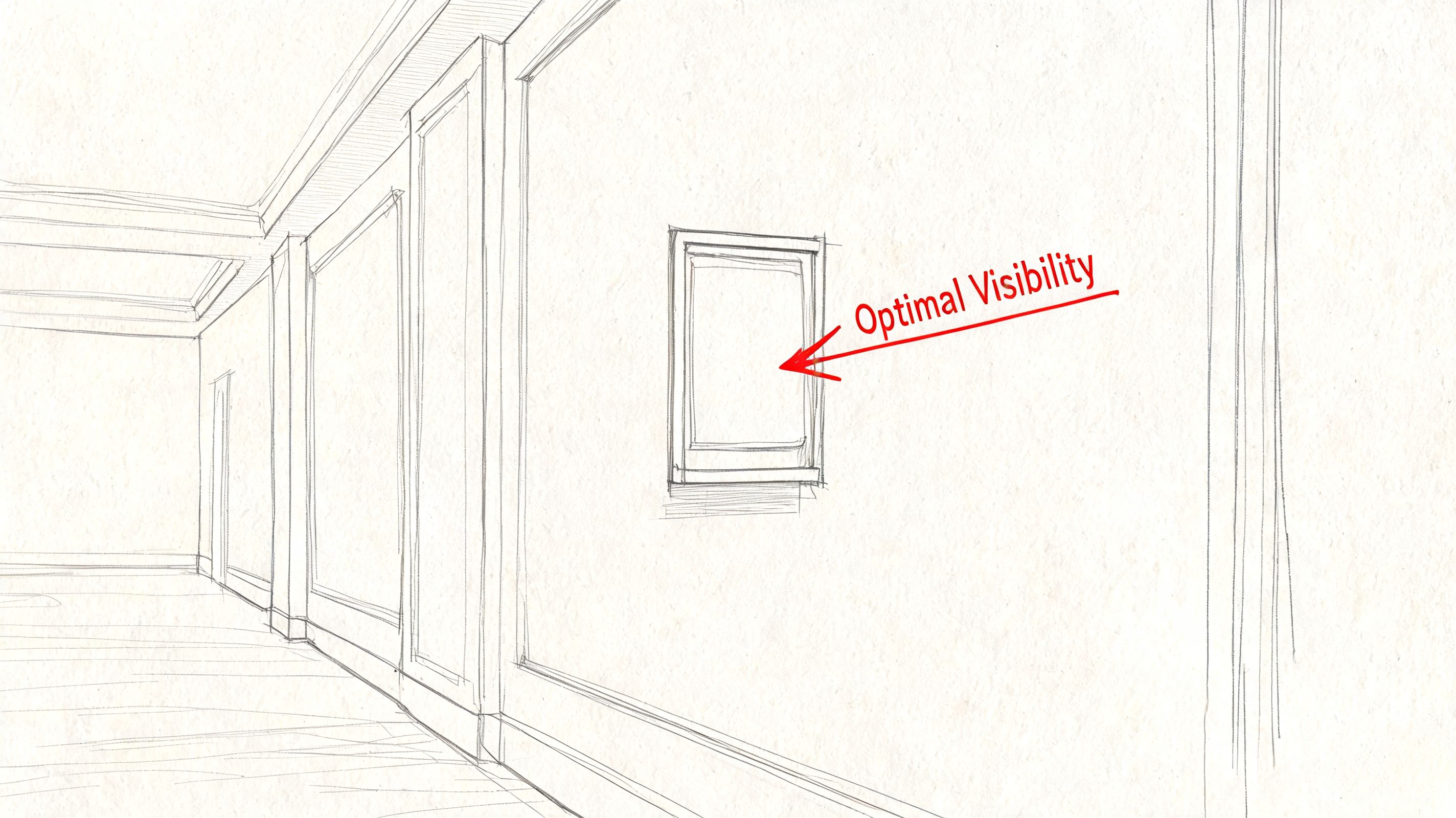
Placement works best at natural pause points. Good spots include the main foyer, the wall just outside sanctuary doors, the entrance to a fellowship hall, or an exit path where people slow down before heading home. The test is simple. Can someone notice the holder, step over without blocking traffic, and grab a bulletin in a few seconds?
Poor placement creates predictable problems. Hidden alcoves get ignored. Tight corners create backups. Walls behind open doors disappear for half the morning. I have also seen holders mounted beside busy sign-in tables, where people avoid stopping because they do not want to interrupt the line.
Mount for reach and visibility
A practical mounting range for many churches is about 48 to 60 inches above the finished floor. That usually keeps the opening within comfortable reach while making the holder easy to spot from across the room. Exact placement still depends on who uses that entrance, what else is on the wall, and whether the holder sits near furniture, donation stands, or brochure racks.
A few field-tested checks help:
- Leave open space around the holder: People need room to stop, take a bulletin, and keep moving.
- Watch traffic patterns: Avoid placing it where coffee lines, restroom traffic, or children's check-in already create congestion.
- Check visibility from the approach: Stand where a guest first enters and see whether the holder is obvious.
- Use good lighting: A clear bulletin cover and visible title matter more if you include a QR code, event promo, or social media prompt.
- Account for wheelchair access: The holder should be reachable without forcing someone into a narrow turn or blocked path.
That last point matters more than many churches expect. Accessibility is not only about code. It affects whether guests and members can use the information you worked to prepare.
If the bulletin includes a QR code that points people to sermon clips, event registration, or your weekly posts created with ChurchSocial.ai, placement has to support that next step. People need enough space to hold the bulletin, scan the code, and move along without feeling rushed. Print and digital work better together when the holder is placed where people can pause for five extra seconds.
If you are revising the bulletin itself, it can help to browse digital church bulletin templates and compare mastheads, contrast, and front-page layout. A bulletin that looks clear in a design file can still disappear inside a holder if the title is small or the top third is visually weak.
Test the location before drilling
Tape a paper outline to the wall for a week. Then watch what happens after service.
Ask ushers where people bunch up. Watch whether guests notice the spot without being directed. Try holding a sample bulletin in that location and check whether the front page is readable from a few steps away.
Small adjustments make a big difference here. Six inches higher, two feet closer to the door, or a move to a better-lit wall can turn a rarely used holder into a reliable part of your communication flow.
A Guide to Secure Mounting and Installation
Sunday starts in twenty minutes, someone grabs the last few bulletins, and the holder shifts against the wall. That is the moment a small installation mistake becomes a ministry problem.
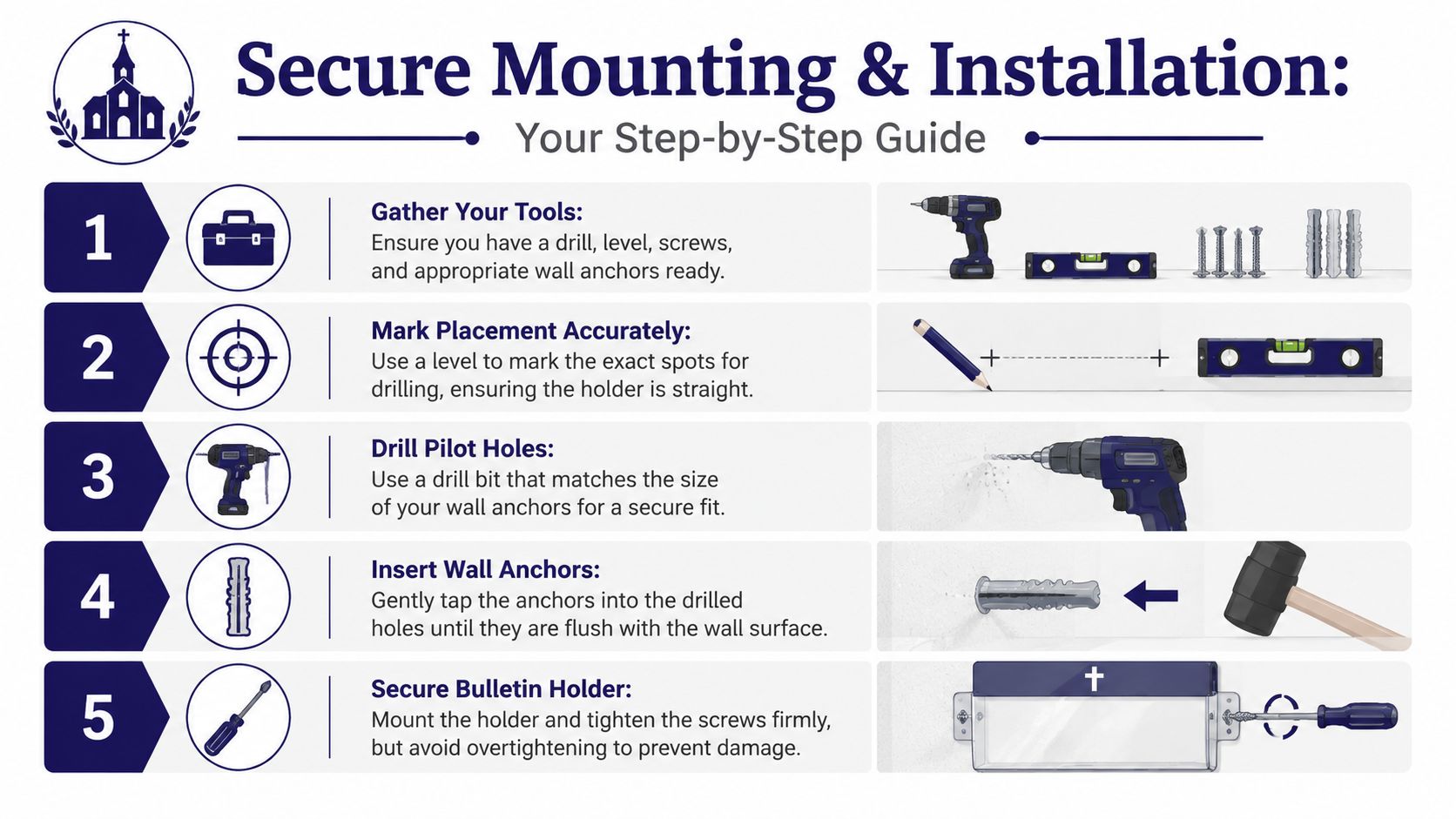
A secure install protects more than the wall. It keeps the holder square, keeps bulletins easy to grab, and preserves the clean first impression you worked to create. If your bulletin includes a QR code that sends people to sermon clips, sign-ups, or social posts prepared through ChurchSocial.ai, a crooked or loose holder makes that whole handoff feel sloppy.
Match the hardware to the wall
Start with the wall surface, then choose the fasteners.
- Drywall over studs: Fasten into studs whenever you can. This is usually the cleanest and strongest option.
- Drywall without a stud in the right spot: Use toggle anchors or another anchor rated for the actual load and repeated use.
- Plaster: Drill slowly and mark carefully. Plaster chips easily if you rush it.
- Masonry or block: Use a masonry bit and anchors made for that surface. Leftover wood or drywall screws are not a substitute.
Give yourself a safety margin. The holder may be light on day one, but over time people tug bulletins out, volunteers refill it in a hurry, and children sometimes pull on the front edge without meaning to.
If you are pairing the holder with a redesigned print piece, review these church bulletin graphics ideas before installation day. A stronger front page and a stable holder work together.
A reliable installation sequence
Most church volunteers can do this well with basic tools and one careful helper.
Confirm the final position
Check the finished height and make sure the holder sits flat against the wall.Mark with a level
Do not use the ceiling line, baseboard, or nearby trim as your guide.Drill pilot holes
Use the size recommended for the anchor or screw you selected.Set the anchors or fasten into studs
Seat anchors fully. For stud mounting, use screws long enough to bite securely.Mount the holder and test it
Pull gently forward and side to side. Any movement now will get worse with daily use.
I also recommend loading a few sample bulletins before calling the job finished. Some holders sit differently once they carry real weight.
For churches that need supplementary mounting hardware or replacement support pieces, it may help to find professional wall brackets at XTREME EDEALS and compare bracket styles before installation day.
Common installation mistakes
The failures I see most often come from rushing the last ten percent of the job.
- Using random screws from the supply closet: Fasteners need to match the wall type and the holder.
- Skipping pilot holes: That leads to stripped screws, cracked plaster, and mounting points that drift off mark.
- Overtightening acrylic or composite holders: The face may look fine at first, then crack weeks later.
- Forgetting refill clearance: Volunteers need enough room to restock bulletins without scraping knuckles or bending the stack.
One office habit helps later. Keep a small envelope or labeled zip bag with spare screws, anchor details, and the install date. The next volunteer who has to remove, repair, or remount that holder will save a lot of time, and your communication setup stays consistent in print and online.
Integrating Bulletins With Your Digital Ministry
Sunday morning proves this point every week. One person picks up a bulletin on the way into worship, then scans a code later that afternoon to register a child for VBS, watch the sermon, or follow the church on social media. The printed piece started the interaction. Digital ministry carried it forward.
A bulletin holder supports more than paper distribution when the bulletin inside it gives people one clear next step. That matters because church communication rarely succeeds by asking people to remember five announcements from the lobby. It works better when print and digital each handle the job they do best. The bulletin gets attention in the building. Your online channels handle follow-up during the week.
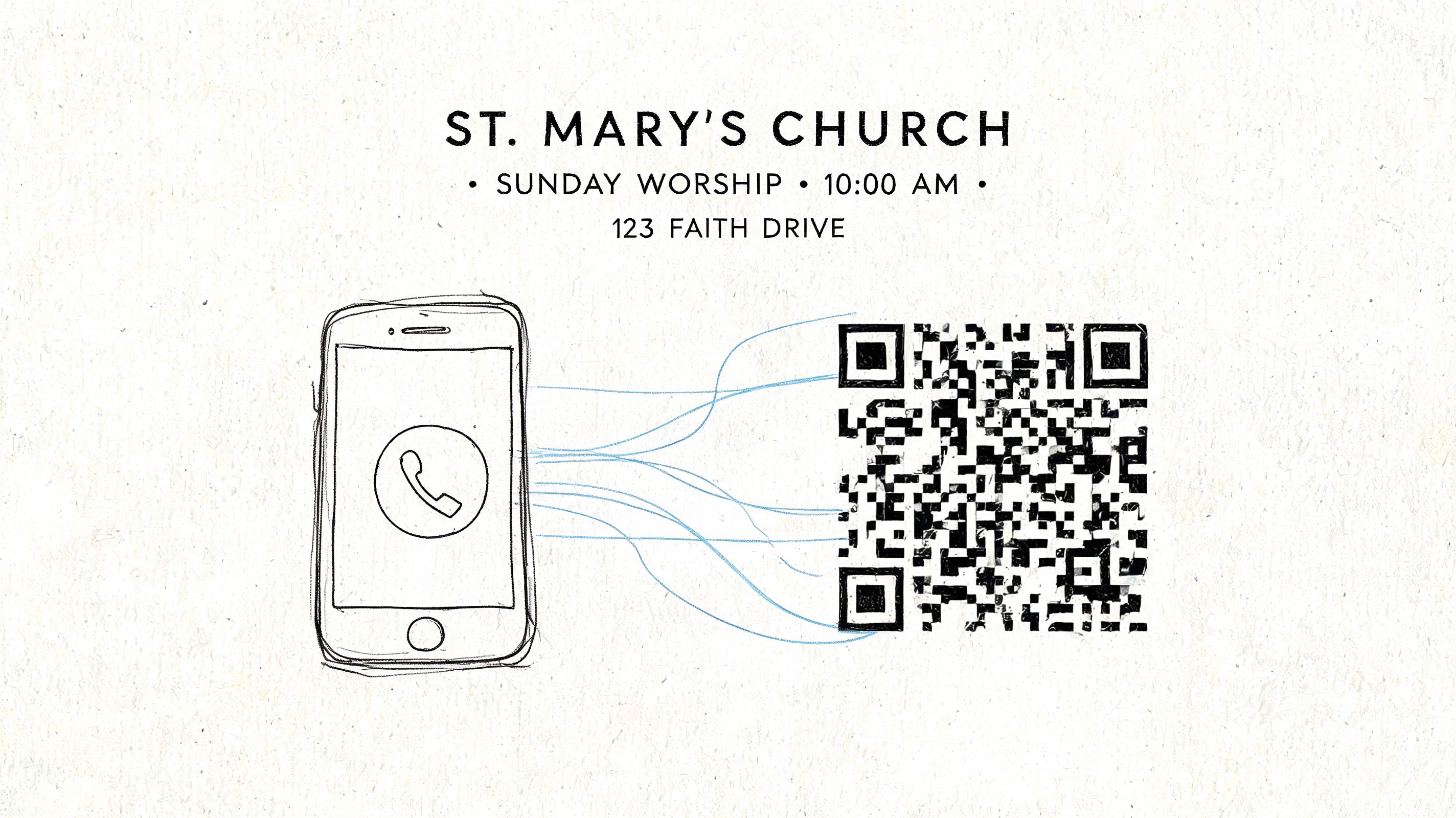
Use QR codes with a clear purpose
The strongest bulletin QR codes lead to one destination, not a menu of options. If the code tries to do everything, many people will skip it.
Useful destinations include:
- This week's event page
- A sermon clip or sermon archive
- Volunteer sign-up forms
- Online giving
- Your church's main social profile or link hub
I recommend matching each QR code to the bulletin's top priority. If the month is built around Easter outreach, send people to the Easter page. If your volunteer schedule is thin, send them to the sign-up form. Clear intent gets better results than stuffing every ministry link onto one printed page.
Design the print piece as a digital handoff
Placement and wording matter. A QR code buried under clip art, service notes, and three unrelated announcements will not get scanned. Put it beside one direct invitation such as "Watch last week's message," "Register for the church picnic," or "See upcoming events."
If your team needs help tightening the visual side, these church bulletin graphics ideas can help you build better hierarchy and make the digital call to action easier to spot.
ChurchSocial.ai fits well here because it helps churches carry the same message from bulletin to social post without rewriting everything from scratch. That saves volunteer time and reduces the common problem of one event being described three different ways across print, Facebook, and Instagram.
There is a useful lesson from outside church work too. Trade show teams spend a lot of time getting people from a physical display to a digital action. This guide to memorable trade show exhibits has practical ideas on visibility, message order, and call-to-action placement that apply surprisingly well in a church lobby.
Your bulletin does not need to carry every detail. It needs to send people to the right next step.
Keep the message consistent across print and social
The breakdown usually happens after the bulletin is printed. The bulletin says one thing, the website says it slightly differently, and social media uses another image and another title. People hesitate when they are not sure those promotions refer to the same event.
Use one event name, one main graphic, and one destination link for each ministry push. Then use ChurchSocial.ai to turn that same bulletin content into social captions, event promos, and follow-up posts. The holder serves the Sunday handoff. Your digital channels keep the conversation active through the week.
Maintenance, Troubleshooting, and Budgeting Tips
Once the holder is up, the goal is simple. Keep it clean, keep it stocked, and don't let minor issues linger until they become replacement issues.
Basic upkeep that prevents headaches
A few recurring habits make church bulletin holders last longer:
- Clean acrylic gently: Use a soft cloth and a cleaner safe for clear surfaces.
- Dust wood regularly: Foyer dust builds faster than most offices because doors keep opening.
- Check screws and hinges: Seasonal building movement can loosen hardware over time.
- Rotate old bulletins out promptly: Stale papers make the holder look abandoned.
If your team also creates visual content for the bulletin, social posts, or event screens, it helps to keep a shared library of usable artwork. This collection of free church bulletin image ideas can help volunteers avoid last-minute design scrambling.
Quick fixes for common problems
When bulletins jam or curl, the holder usually isn't the only culprit. Paper reacts to room conditions and handling.
- Bulletins bend at the opening: Reduce the stack height and straighten copies before loading.
- Pages curl or stick together: Store backup copies in a drier office area until needed.
- Door or flap feels stressed: Stop overfilling and check whether inserts are making the stack too thick.
- Holder looks empty too quickly: Split inventory between two refill times instead of one large morning load.
Budget without overbuying
Most churches do best when they buy for durability, not novelty. A basic, sturdy holder that fits your current bulletin format is usually smarter than a decorative model with awkward dimensions.
If funds are tight, prioritize these in order:
- Correct size
- Reliable mounting
- Material that fits your space
- Appearance upgrades
Churches also save money by standardizing. If you use the same holder model across entrances, replacement parts, installation methods, and volunteer instructions stay simpler.
A church bulletin still does important work on Sunday. ChurchSocial.ai helps you carry that communication through the rest of the week. With ChurchSocial.ai, churches can turn sermon transcripts into social posts and blogs, create sermon reels, build event graphics with templates, and manage everything in a simple drag-and-drop calendar that also connects with Planning Center and other church calendars. If your print bulletin is the handoff, ChurchSocial.ai helps you keep the conversation going online without putting more strain on a small volunteer team.