Is your church's growth stalling while your team keeps working harder? That tension is familiar in churches of every size. You preach faithfully, volunteers serve when they can, and the week still ends with the same question, why isn't the message reaching more people?
The answer is usually not one dramatic failure. It's a stack of church growth barriers that slow momentum, weaken visibility, and exhaust the people doing the work. In The Unstuck Church Report Q1 2026, 48% of churches growing by 10% or more said space issues were their primary growth barrier, which shows that growth often breaks at the point of capacity, not just outreach (Unstuck Church Report Q1 2026). Older church-growth writing said the same thing in different language, by pointing to predictable attendance plateaus and staffing ratios around 100 to 150 people per pastoral staff member (Ministry Magazine, 2002).
That is why a modern digital system matters. ChurchSocial.ai gives churches one place to turn sermons, events, and ministry moments into posts, clips, blogs, graphics, and scheduled content without adding a complicated workflow. If your church wants visibility, consistency, and a simpler way to manage social media, you need a platform built for church communication, not a generic tool.
1. Limited Time and Resources for Content Creation
The first barrier is simple, and it hits hard. Churches run out of time. Volunteers juggle other commitments, staff already wear too many hats, and social media becomes the task that gets pushed to “next week” until the feed goes quiet.
That silence matters. Churches can't build awareness if they post irregularly, and they can't build trust if people see an abandoned page. A church that only posts when someone has extra time is depending on luck, not leadership.
ChurchSocial.ai solves that by turning one sermon into a month of usable content. Sermon clips, AI-generated posts, AI-generated blogs, and scheduled graphics give you a repeatable pipeline instead of a weekly scramble. Start with the highest-value content first, the sermon. Then use the sermon transcript to produce social posts and blog content that can feed your website, email list, and social channels.
Practical rule: If your church can record one sermon, it can produce multiple weeks of content from that sermon without rebuilding the message from scratch.
A smart workflow looks like this, batch the clips monthly, load them into the calendar, and assign one volunteer as the social media captain instead of scattering the job across five people. Use the visual calendar to plan four to six weeks ahead, so leaders stop making last-minute decisions every Sunday night.
For a practical workflow on repurposing, see how to repurpose church content.
Use repetition to build momentum
Consistency matters more than ambition. A small church with one dependable volunteer can stay visible every week when the system is simple, and a mid-sized church can stop wasting staff time on one-off posts. That's the point, reduce friction, then let the content system do the heavy lifting.
2. Lack of Visual Design Skills and Brand Consistency
A lot of churches don't have a design problem, they have a confidence problem. Volunteers know the church needs good visuals, but they're not trained designers, so posts end up with mismatched fonts, random colors, and layouts that change every week. That weakens recognition and makes the church feel less trustworthy online.
Brand consistency fixes that. When people see the same colors, typography, and visual style over time, they learn to recognize the church faster. They may not consciously say it, but they notice when the page looks organized and when it looks improvised.
ChurchSocial.ai helps churches create branded images without design experience using templates, an editor, and a brand kit. Lock in a few simple brand rules, then reuse them. Keep your colors tight, your fonts limited, and your layouts predictable. The goal is not artistic variety, it's repeatable identity.
ChurchSocial.ai's branding guidance is especially useful if your team is building a visual system from scratch.
A church does not need a graphic designer for every post. It needs one person who protects the brand and stops visual drift.
Use seasonal templates for Christmas, Easter, and local events, then keep the same featured image ratio across posts. If your church has multiple ministries, give one person the role of brand keeper so the whole team publishes from the same playbook. That keeps the main account and ministry accounts from looking like separate organizations.
Make the church look like one church
A polished feed does more than look nice. It tells visitors that your church cares about communication, which builds confidence before they ever walk through the door. That is why visual consistency is a growth issue, not just a design preference.
3. Ineffective Content Strategy and Message Clarity
Many churches post good content in bad order. One day it's a sermon clip, the next day it's an event reminder, then a random photo, then silence. The problem isn't effort, it's message clarity. Without a clear content strategy, people can't tell what the church stands for or why they should keep paying attention.
A clear strategy makes the church easier to understand. It also keeps the communication team from reinventing the wheel every week. Your social media should tell a coherent story about discipleship, worship, community, outreach, and what life in the church looks like.
A disciplined content structure helps. One church in the brief used 4-week content themes and saw stronger engagement, and a multi-site network with unified strategy reported more first-time guest visits from social. Those results make sense because themed content reduces randomness and helps followers know what to expect.
Build a content rhythm leaders can sustain
Define four to six core themes and rotate them. Keep the balance centered on your mission, not on whatever event feels urgent that week. Churches do better when they treat content like ministry communication, not as last-minute promotion.
- Discipleship content: Short teaching ideas, sermon takeaways, Bible insights.
- Community content: Member stories, service moments, and testimonies.
- Worship content: Clips that show the tone and spiritual feel of the church.
- Outreach content: Event promotion, invite language, and local service opportunities.
Use ChurchSocial.ai's calendar to plan monthly themes during staff meetings. That lets pastors, communicators, and volunteers work from the same structure, and it gives the church a clearer voice across Facebook, Instagram, TikTok, and YouTube. If you want people to remember your church, stop sounding scattered.
4. Inconsistent Posting Schedule and Low Audience Reach
Sporadic posting hurts reach. Followers stop expecting content, algorithms read inconsistency as inactivity, and the church disappears from the feed. That's one of the most avoidable church growth barriers because it comes from process, not talent.
You do not need a huge volume of content to fix this. You need a stable rhythm. Churches grow more visible when they post on a schedule that staff and volunteers can keep, even during busy seasons.
ChurchSocial.ai gives churches a unified calendar, automated publishing, and content templates that make consistency realistic. The platform is built for churches that need to plan ahead and still react quickly when ministry changes. That matters when volunteer turnover or event overload would normally break the posting schedule.
The easiest way to stabilize posting is to assign a simple weekly recipe. Monday can be a sermon insight, Tuesday an event spotlight, Wednesday a community story, Thursday a worship preview, and Friday a reflection or invitation. Repeat the pattern until the church no longer depends on inspiration to stay active.
Use the analytics in the platform to learn when your audience responds best, then schedule around those times. A church that posts on time every week looks alive. A church that posts randomly looks forgotten.
Direct rule: Consistency beats volume. A church that posts steadily will usually outperform a church that posts a lot for two weeks and then disappears.
Batch content monthly, keep a two-week buffer, and stop making same-day decisions the default. Your team will waste less energy, and your audience will see a church that knows how to show up.
5. Poor Sermon Leverage and Wasted Teaching Content
Most churches invest serious effort into sermon preparation, then let that teaching die on Sunday afternoon. That's a waste of the most valuable content the church produces. Sermons already contain theology, application, testimony, and pastoral voice. They should not live only in the room where they were preached.
ChurchSocial.ai is especially useful here because it turns sermons into clips, posts, blogs, and discussion prompts. That means the same message can keep working all week. The preacher prepares once, and the church communicates many times from that one faithful teaching moment.
A strong repurposing system starts with two or three core takeaways from the sermon. From there, create clips for social platforms, a blog post for the website, and discussion content for small groups or email. That approach keeps the message alive beyond Sunday and gives non-attenders a way to encounter the teaching before they visit.
The image of a pulpit speaking to digital devices is not a gimmick, it is the reality of modern church communication. If people are checking a church online before they visit, the sermon clip often becomes the first impression.

Turn Sunday into a week-long teaching touchpoint
Post the strongest clips Tuesday through Thursday, not just on Sunday. That stretches the life of the sermon and gives the church more than one chance to be seen. Use YouTube playlists for sermon series, then push clips to Facebook, Instagram, and TikTok with platform-specific wording so the same message fits each audience.
Churches do not need more sermon ideas. They need better sermon effectiveness.
6. Difficulty Tracking Results and Proving ROI
A lot of church leaders support social media in theory, then lose confidence when nobody can show what it is doing. That creates a quiet barrier inside the church, because the team can't prove value, so they can't defend time, tools, or budget.
ChurchSocial.ai helps close that gap with analytics that make reporting easier. When leaders can see reach, engagement patterns, and posting performance in one place, the conversation changes from “Is this worth it?” to “What should we do more of?” The product is built for that exact kind of reporting and planning.
Use simple metrics and report them consistently. Baseline the current numbers before you change the strategy, then compare progress month to month. You do not need a giant dashboard. You need a few numbers the leadership team can understand and act on.
The most helpful reports are the ones that connect social activity to ministry outcomes. Track engagement, reach, and website traffic from social links. Then ask new visitors how they heard about the church so your team can compare self-reported answers with platform data. That gives you a much clearer picture of what is working.
For a deeper reporting approach, see how to measure church social media ROI.
Leaders trust what they can see. If your reporting is simple and regular, social media stops feeling like a guess.
This is also where internal confidence grows. When pastors can show that social content is extending the reach of the church, they stop treating communication as a side task and start treating it as ministry infrastructure.
7. Limited Multi-Platform Management and Channel Fragmentation
Churches rarely fail because they are absent from every platform. They fail because their presence is fractured. One person handles Facebook, another tries Instagram, someone else posts to TikTok when they remember, and no one is sure what the church is saying overall. That fragmentation wastes time and weakens the message.
ChurchSocial.ai gives churches a single place to manage Facebook, Instagram, TikTok, YouTube, and more through a unified visual calendar. That matters because each platform serves a different audience and needs a different voice. Facebook works well for community updates and older demographics, Instagram leans visual, TikTok rewards short-form energy, and YouTube is strong for teaching content.
The answer is not to treat every platform the same. It is to keep the core message consistent while adapting the caption, format, and pacing. A sermon clip can become a reverent Facebook post, a conversational TikTok caption, and a teaching-focused YouTube title without changing the message itself.
Coordinate the team without multiplying the workload
Assign platform champions if you have the team for it, but keep everyone inside one shared calendar. That prevents duplicate work and stops ministry accounts from drifting in different directions. Churches with multiple campuses or ministry pages especially need this structure because brand confusion grows fast when each location posts independently.
- Facebook: Community updates, event info, and family-centered communication.
- Instagram: Branded visuals, stories, and short-form inspiration.
- TikTok: Sermon clips and quick attention-grabbing teaching moments.
- YouTube: Full sermons, clip playlists, and longer teaching series.
A unified system lets one team manage many channels without multiplying chaos. That is how churches stay visible without hiring a larger communication staff.
8. Insufficient Community Engagement and Two-Way Conversation
Broadcasting is not the same as building community. Many churches treat social media like a bulletin board, but people do not follow churches just to receive announcements. They follow because they want connection, encouragement, and a sense that someone is listening.
ChurchSocial.ai supports that kind of communication because it helps churches publish content consistently enough to make conversation possible. Once the church is posting regularly, engagement can grow through comments, questions, live streams, prayer prompts, and member features. Social media becomes relational instead of one-directional.
A church that wants stronger engagement needs to ask better questions. Not every caption should be an invitation to attend. Some should invite response, reflection, and testimony. That is how followers become participants instead of passive viewers.
Use the church's feed to spotlight people, ministries, and answers to prayer. Feature members often enough that they feel seen. When people see themselves reflected in the church's online presence, they are more likely to engage and share the content with their own networks.
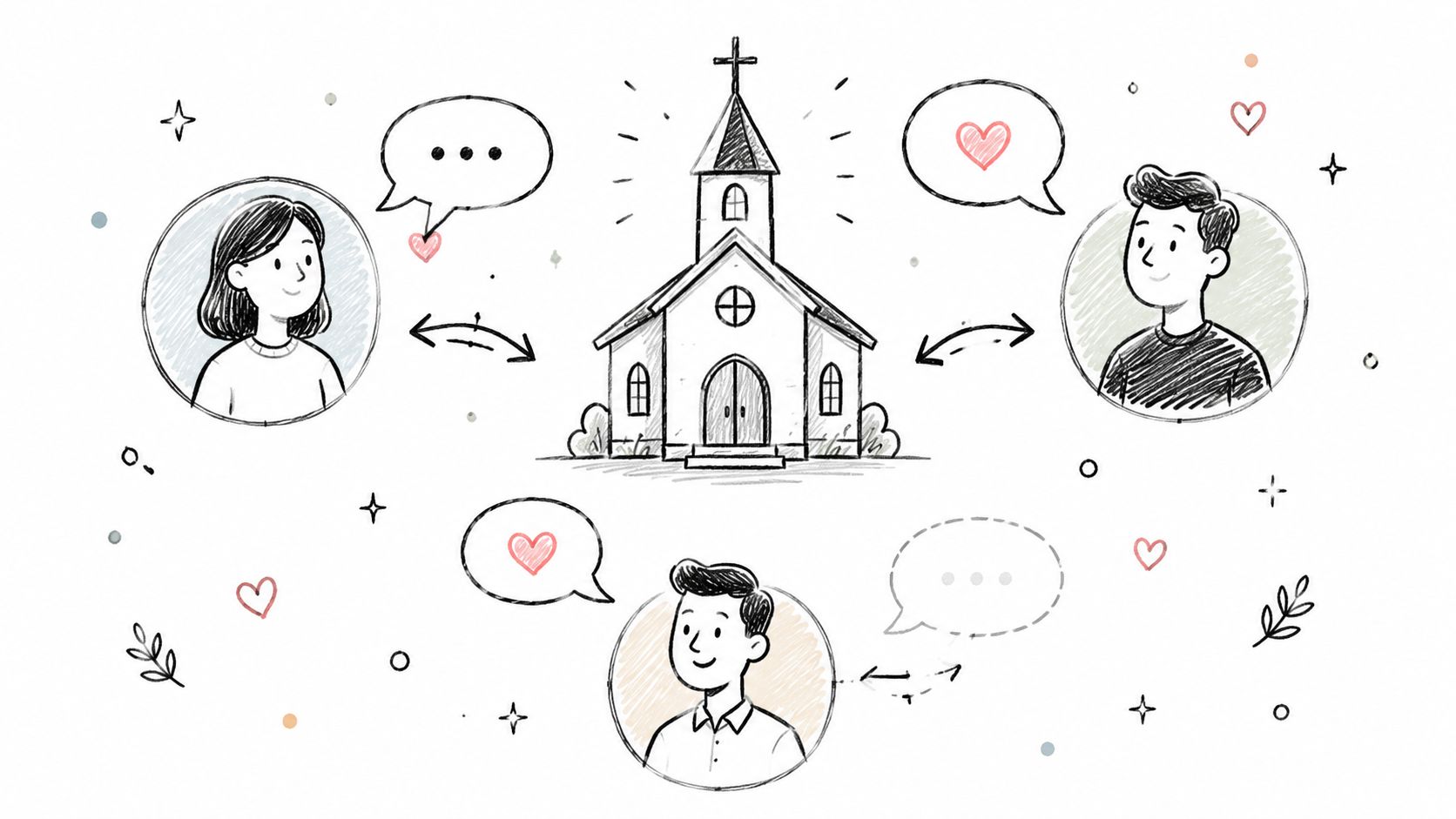
Ask for conversation, not just attendance. A post that invites prayer, testimony, or honest reflection usually does more for belonging than another generic reminder.
Live Q&A, prayer moments, and comment responses also matter. If your team can respond quickly and consistently, people feel noticed. That is how a church page starts to feel like a real community instead of a broadcast feed.
8-Point Church Growth Barriers Comparison
| Challenge | 🔄 Implementation Complexity | ⚡ Resource Requirements | 📊 Expected Outcomes | 💡 Ideal Use Cases | ⭐ Key Advantages |
|---|---|---|---|---|---|
| Limited Time and Resources for Content Creation | Low–Medium: quick automation setup (Week 1–2) | Low ongoing; initial volunteer time for setup | Higher posting frequency; saved staff hours | Small churches with few dedicated staff/volunteers | Automation, templates, centralized calendar |
| Lack of Visual Design Skills and Brand Consistency | Low: ready-made templates, brand kit (Day 1) | Low–Medium: minimal training to use editor | Professional, consistent visual identity | Churches without design expertise or multiple ministries | Drag‑and‑drop templates; enforced brand kit |
| Ineffective Content Strategy and Message Clarity | Medium: requires strategy planning (Week 1–2) | Medium: time for theme planning and coordination | Clearer messaging; improved engagement and reach | Churches posting randomly or without themes | Thematic calendar, AI post suggestions |
| Inconsistent Posting Schedule and Low Audience Reach | Low–Medium: scheduling tools; set routines (Week 1) | Medium: content supply needed for daily posts | Better algorithmic reach; steady follower growth | Churches struggling to post consistently | Auto‑scheduling, content reserve, optimal timing |
| Poor Sermon Leverage and Wasted Teaching Content | Low–Medium: upload workflow + clip automation | Low after setup; requires sermon recordings | Multiplied teaching reach; new visitor acquisition | Churches producing regular sermons seeking reuse | Auto clip creation, transcription, blog generation |
| Difficulty Tracking Results and Proving ROI | Low: analytics available from first post | Low–Medium: time for monitoring & reporting | Actionable insights; justification for budget | Leaders needing measurable impact and reports | Built‑in dashboards, custom reports, attribution |
| Limited Multi-Platform Management and Channel Fragmentation | Medium: unify platforms and customize per channel | Medium: coordination + platform champions | Consistent messaging; reduced duplicated effort | Multi-account churches or multi-site networks | One‑click publishing, platform formatting, unified calendar |
| Insufficient Community Engagement and Two‑Way Conversation | Low–Medium: set protocols and alerts (Week 1) | Medium–High: ongoing responsiveness required | Increased engagement; stronger community advocacy | Churches focused on belonging and discipleship | Engagement alerts, discussion prompts, interactive templates |
From Barrier to Breakthrough Your Growth Starts Here
These church growth barriers are not proof that your church has run out of potential. They are signs that your systems have outgrown your current process. When time is tight, design is inconsistent, content is unclear, posting is irregular, sermons are underused, reporting is weak, platforms are fragmented, and engagement is shallow, the church needs a better operating model.
That is where a platform like ChurchSocial.ai fits naturally. It helps churches plan content, turn sermons into clips and posts, create branded visuals, manage a unified calendar, and connect social communication to real ministry workflow. It also integrates with Planning Center and other church calendars, so event content can be created and scheduled without constant manual coordination.
The leaders who break through these barriers are the ones who stop trying to do everything by hand. They choose a system that supports the people they already have, reduces the weekly scramble, and keeps the message moving beyond Sunday. If your church is ready to turn social media into a steady growth tool instead of another burden, visit ChurchSocial.ai and start building a simpler, more consistent communication system today.