What makes a church summer program stick after the event is over?
A full calendar can fill rooms, but attendance alone does not create connection. Churches see better long-term results when each program has a matching communication plan: clear registration steps, volunteer coordination, parent reminders, follow-up content, and social posts that keep the conversation going after people leave campus.
Summer gives churches unusual openings with kids, students, parents, and neighbors who may not engage as easily during the rest of the year. That creates both opportunity and pressure. Staff capacity is limited. Volunteers need direction. Families need repeated, simple communication. A good idea can still underperform if promotion starts late or lives in three disconnected tools.
That is the angle of this guide. Each summer program below includes both the ministry strategy and the promotion system behind it, with a practical focus on how to use ChurchSocial.ai to save time and keep quality high. Instead of treating social media like an afterthought, build it into the program itself. Plan the event, the content, the reminders, the follow-up, and the next invitation as one workflow.
ChurchSocial.ai supports that process well. Churches can turn sermon transcripts into social posts and blog drafts, create reels and graphics, organize campaigns in a drag-and-drop calendar, and keep event communication aligned with Planning Center and other church calendars. If your team needs a stronger foundation before building summer campaigns, these church social media strategy basics for churches will help.
The strongest summer programs do more than create a busy June and July. They give people a clear next step and give your team a repeatable way to stay in front of them.
1. Vacation Bible School (VBS) with Social Media Integration
VBS still works because it gives families a clear, short commitment and a high-energy environment kids remember. The mistake isn't running VBS. The mistake is promoting it like a bulletin announcement.
A better approach starts early and stays consistent. Story and Stone recommends that small churches trying to reach the 95% of people who don't attend their church should choose two platforms and post exactly 3 times per week on each. For VBS, that cadence is practical. Start six weeks out, then increase the urgency in the final days with reminders, supply previews, volunteer spotlights, and simple registration posts.
What actually works for VBS promotion
Use ChurchSocial.ai to build one visual system for the full week. Create branded announcement graphics in the template library, load every post into the drag-and-drop calendar, and connect Planning Center so volunteer deadlines and registration updates don't fall through the cracks. If your church already preaches into the theme of discipleship at home, turn that sermon transcript into parent-facing posts and short blog content.
- Post the same core message in different formats: One registration graphic, one short reel, and one carousel with dates, ages, and pickup details will usually outperform a single polished post.
- Build around the parent questions: Address drop-off time, allergies, safety, and what kids should bring. Clear posts reduce inbox traffic.
- Cover the week in layers: Morning schedule reminder, afternoon activity highlight, evening recap. That rhythm keeps current families engaged and shows future families what they missed.
Practical rule: Don't wait for “best photos” during VBS week. Publish same-day moments while excitement is still live.
ChurchSocial.ai also helps churches repurpose lesson content. If your VBS leaders teach from prepared notes or transcripts, the AI tools can turn those into daily captions, parent follow-up prompts, and recap blogs. For broader planning habits, the framework in five keys to church social media is a strong companion to a VBS launch.
2. Youth Mission Trips and Outreach Projects
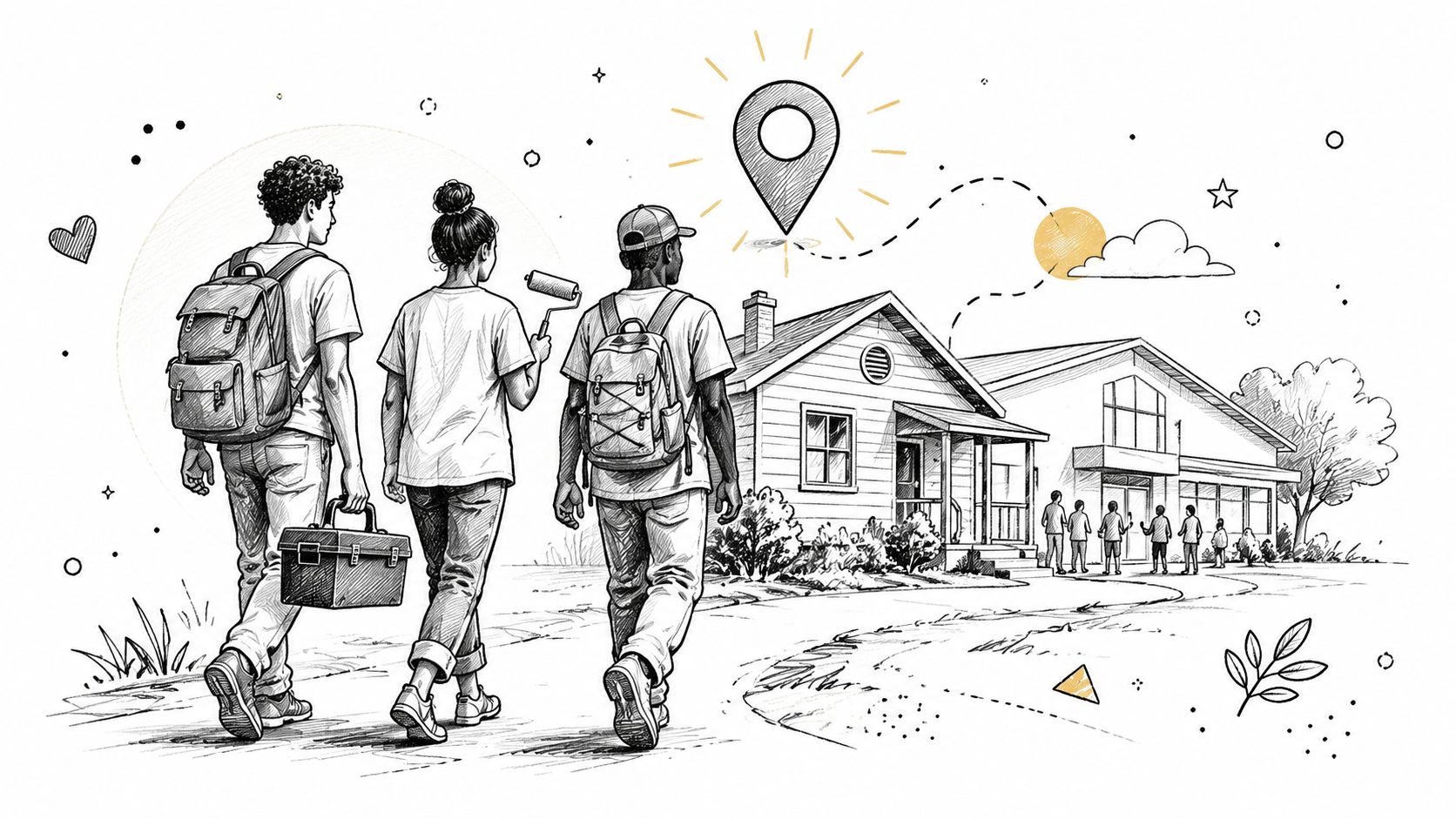
Mission trips produce some of the strongest storytelling in all church summer programs because the arc is built in. Preparation, departure, service, reflection, return. You don't need hype. You need documentation with discipline.
That means assigning roles before the van leaves the parking lot. One student captures short vertical video. One adult gathers written reflections. One leader sends a nightly summary. Then your communications volunteer can turn all of it into posts without chasing files across six group texts.
Build the content plan before the trip starts
ChurchSocial.ai is useful here because it reduces the editing burden on the back end. Leader devotionals can become short reels. Journal reflections can become prayer-request posts, photo captions, and a recap blog. Planning Center integration also helps if you're managing fundraising milestones, packing reminders, or team assignments.
A strong mission-trip social plan usually includes these content blocks:
- Pre-trip commissioning posts: Introduce the team, the purpose, and specific prayer points.
- Daily field updates: Share work progress, prayer needs, and one lesson the students are learning.
- Post-trip testimony content: Publish reflections after people have had a few days to process.
Mission-trip content shouldn't center the church's brand first. It should center the people being served, the humility of the team, and the work God is doing in the students.
There's also a practical outreach benefit. Families who won't sign up for a Bible study will often engage mission content because service is concrete and visible. If your church needs more ideas for community-facing ministry, this roundup of church outreach ideas for small churches is useful. And if you plan to share nightly devotionals or team updates online, it helps to tighten your setup with a guide to church streaming equipment.
3. Summer Camps and Retreat Programs
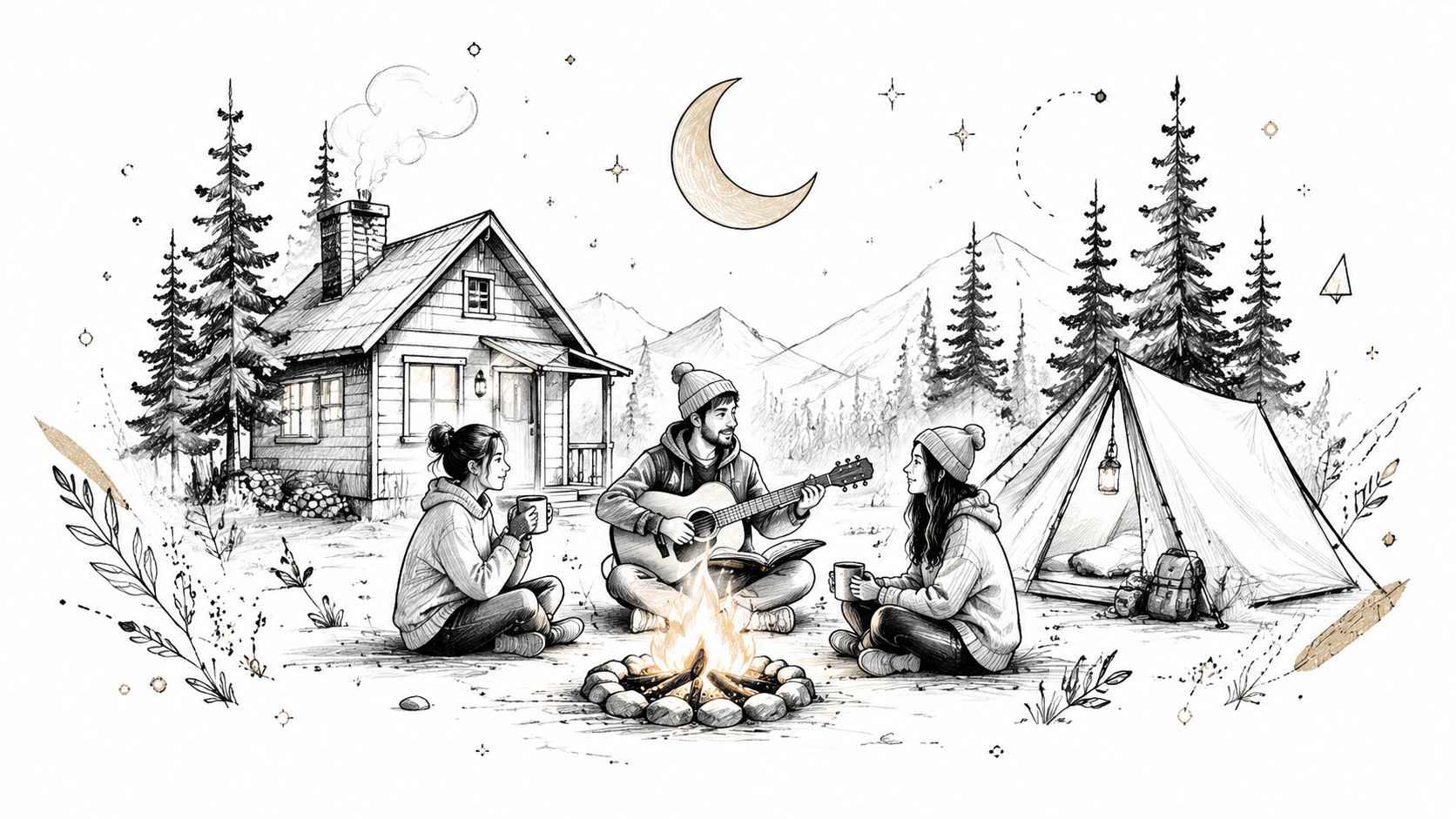
What happens after months of camp promotion if your church goes quiet once the bus leaves the parking lot?
Camp and retreat programs still matter because they create space for attention, relationships, and spiritual conversations that are harder to sustain in a normal weekly schedule. The communication challenge is just as real. Churches often put all their energy into registration, then share very little during the event and almost nothing once students return home. That pattern wastes momentum with parents, misses community visibility, and shortens the ministry impact.
The better approach is to treat camp like a structured content campaign with three phases: pre-camp, live camp week, and post-camp follow-up. ChurchSocial.ai helps teams keep that whole sequence in one place so the work does not pile up on one staff member late at night. You can schedule deadline posts, build branded graphics, turn teaching notes into short captions, and queue parent-facing updates before camp even starts.
Build the promotion plan before camp week starts
Strong camp content does two jobs at once. It fills spots and prepares families. Then it keeps the story going after students come home.
Before camp, focus on clarity. Parents need dates, cost, deposit deadlines, packing expectations, leader introductions, and a plain explanation of what students will experience. During camp, post moments that show place and purpose. Cabin signs, prayer journals, worship spaces, activity setups, and handwritten note walls usually communicate better than a stream of random phone photos. After camp, shift quickly to reflection. Testimony clips, takeaway quotes from students, and one practical next step for families help the experience stick.
A simple workflow works well:
- Before camp: Publish registration deadlines, theme posts, leader spotlights, and practical parent reminders.
- During camp: Share daily recap content with scenery, activities, prayer moments, and one clear spiritual takeaway.
- After camp: Schedule a week of follow-up posts with testimonies, small-group discussion prompts, and next-step invitations for students.
That last phase gets overlooked. Many students come home from camp emotionally full, physically tired, and unsure how to carry the experience into normal life. Premier NexGen addresses that re-entry challenge in its advice on helping students handle the post-summer transition after camp. Your social plan should support that window with content that points students back to youth group, Scripture habits, and conversations at home.
There is also a real operations trade-off here. Overnight programs create more moving parts than a one-day event. Forms, roommate requests, payments, medication notes, departure instructions, and deadline reminders can easily get scattered across email threads and text chains. Churches that want a cleaner system usually benefit from using church event management software for registrations, reminders, and camp logistics.
The churches that do camp promotion well are not posting more for the sake of posting more. They are building a repeatable system that saves staff time, gives parents confidence, and turns one week away into months of visible discipleship.
4. Community Service Days and Environmental Stewardship Projects
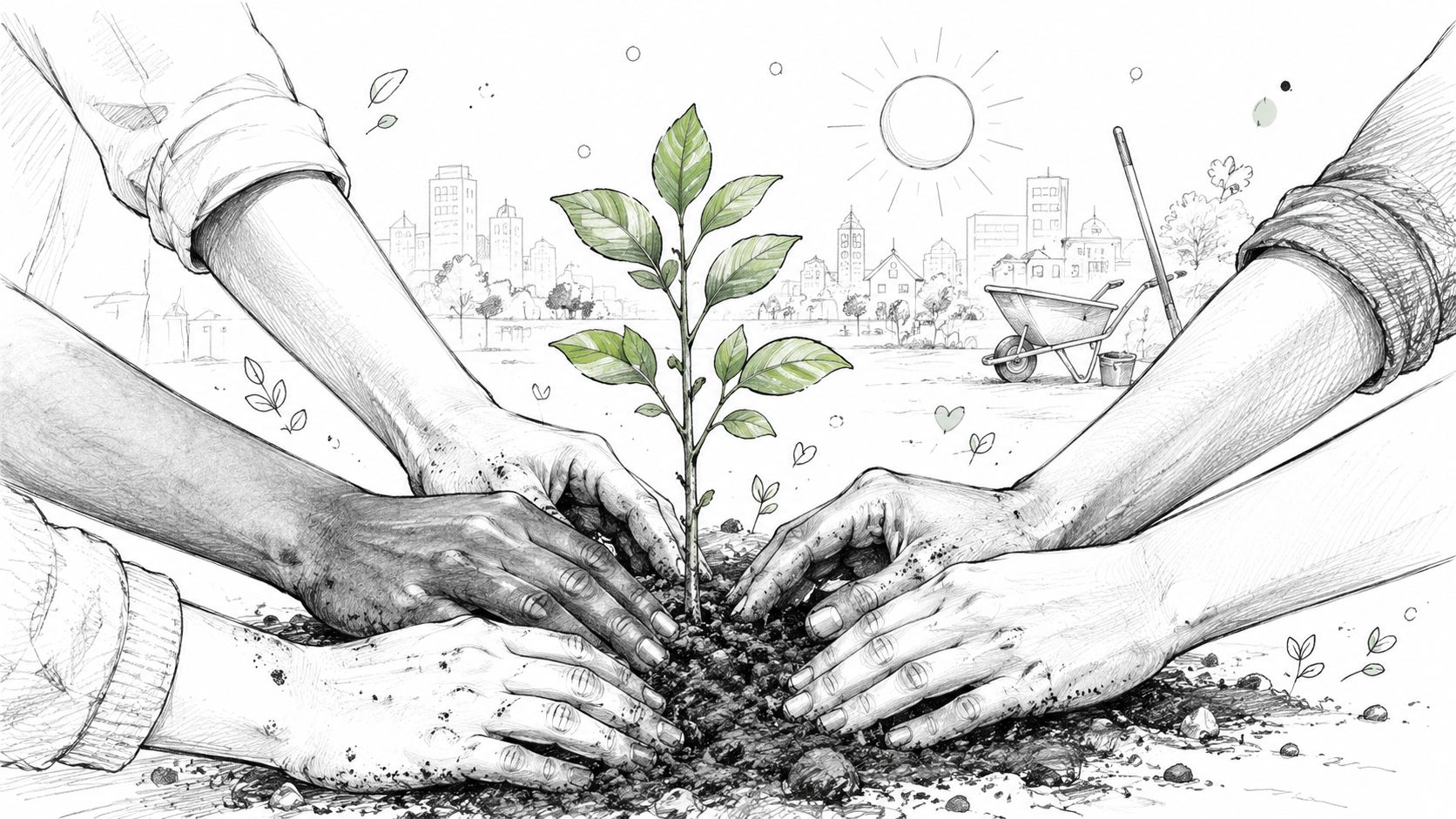
Not every summer win needs overnight housing, buses, or a curriculum box. Community service days are often the most repeatable church summer programs because they scale up or down without losing purpose.
They also create a public witness that's easy for neighbors to understand. A park cleanup, pantry partnership, home-repair Saturday, or tree-planting project tells the community, “We're here to serve,” without requiring anyone to decode church language.
Keep the project simple and the message concrete
The most effective service-day posts answer one question fast. What problem are we helping solve? “Join us Saturday” is weak. “We're cleaning the elementary school playground before families return” is clear.
ChurchSocial.ai can handle the whole promo cycle. Build announcement graphics around the need, schedule volunteer asks two to three weeks out, then create post-event carousels that show tools, materials, cleaned spaces, planted areas, and supply stations. Visuals should lean toward action, scenery, and project details rather than posed people photos whenever possible.
A service day becomes easier to share when the task is visible. Trash bags, paint supplies, rakes, mulch, canned goods, and work gloves communicate effort quickly.
There's also an inclusion angle many churches skip. MinistrySpark specifically calls out the need to design programs with underserved groups in mind, including children in shelters or those with special needs, and notes that mainstream church camp content rarely gives actionable guidance for that audience. If your summer service strategy doesn't account for access, transportation, sensory needs, or trusted community partnerships, you're probably serving the easiest audience to reach, not the one that most needs care.
5. Adult Education and Spiritual Formation Classes
Summer classes tend to underperform when churches market them like semester-long obligations. Adults don't want another heavy commitment in June. They will show up for a clear, timely topic with an easy on-ramp.
That's why short-run formats usually work better than vague “summer discipleship opportunities.” A four-week Bible overview, a parenting-in-summer rhythms class, or a prayer workshop gives adults enough structure without sounding like homework.
Turn one teaching hour into a week of content
ChurchSocial.ai is especially useful for educational ministry because teaching already generates raw material. Sermon and class transcripts can become key takeaways, reflection prompts, blogs, and short clips. You're not inventing content. You're extracting it.
Use the calendar to schedule the class series well before summer starts. Then create a repeatable weekly rhythm:
- Early week: Publish the topic and why it matters.
- Midweek: Post one discussion question or key Scripture.
- After class: Share a recap quote, takeaway carousel, or short video clip.
The content style matters. Story-driven nonprofit content tends to outperform purely informational posts, and recommendations for sustainable growth point churches toward posting 3 to 5 times per week, with heavier posting for maximum growth. For adult classes, that doesn't mean flooding feeds with lecture notes. It means pairing the teaching with lived application. A marriage class can feature one practical habit. A prayer class can share a journaling prompt. A theology class can ask one clear question people can answer in comments.
When churches do this well, summer education stops feeling like a low-attendance backup plan and starts feeling like a discipleship lane adults can enter.
6. Family Fun Events and Recreational Programs
What gets a new family to say yes before they are ready to visit a worship service?
Often, it is something simple. A movie night in the parking lot. A water day after church. A picnic at the park. A board game night where parents do not have to wonder if they will fit in. Family fun events work because they lower the social pressure while still giving people a real experience of your church.
That is why I do not treat these as filler on the summer calendar. They are front-door events. If the goal is community reach, these programs often outperform more formal church summer programs because the ask is lighter and the next step is easier to explain.
Make the event easy to attend, then make it easy to share
Promotion rises or falls on clarity. Families want to know start time, location, parking, check-in expectations, food plan, weather backup, and whether younger siblings are included. If those details are missing, attendance drops. If they are repeated clearly across every post, registration and walk-up confidence both improve.
ChurchSocial.ai helps churches run that process without rebuilding each campaign from scratch. Use one branded template for the whole summer series, then swap the event title, date, and photo. Pull event details from the church calendar so the information stays consistent across graphics, captions, and reminders. That matters more than clever copy.
The best social plan for this category is simple and repeatable. Post the invitation early. Share one reminder two to three days before the event. Add a day-of post with setup photos or a quick weather update. After the event, publish a recap carousel that shows the environment, not just the crowd.
That last part matters. Churches often post family events as if every image needs smiling close-ups. In practice, wider shots usually do a better job. A lawn full of picnic blankets, a dunk tank, a line at the snow cone table, or kids gathered around a screen tells parents what the event feels like. It also reduces privacy concerns and gives your team more usable content.
There is also a real ministry trade-off here. Families want affordable summer options, and churches feel that pressure quickly. Free or low-cost recreational events remove one barrier without creating the staffing load of a full camp program. They are easier to invite people to, easier to repeat, and easier to promote consistently across social media.
ChurchSocial.ai gives you a practical way to keep that promotion going all summer. Build the event once, then turn it into the full content set. Invite graphic. Registration caption. Volunteer reminder. Story slide. Day-of update. Recap post. That saves time, but it also raises quality because the series looks connected from week to week.
A scattered event can still be fun. A clear event gets repeat attendance.
7. Discipleship and Leadership Development Intensives
Leadership intensives work when the expectations are high and the scope is tight. They fail when churches call a loose collection of meetings a “leadership track” and hope the title creates momentum.
Summer is a strong time for this format because school-year noise drops. You can gather a smaller group for focused formation, mentoring, reading, ministry labs, or preaching workshops without competing with the full fall ministry machine.
Show the church what leadership formation looks like
A lot of churches run excellent leader development programs that no one sees. That's a mistake. Visible formation builds trust and invites future participants.
Use ChurchSocial.ai to package the process. Mentor sessions can become short principle clips. Curriculum notes can become discussion posts. Cohort projects can become blog-style case studies and carousel recaps. If you profile participants, keep the emphasis on calling, growth, and ministry focus rather than polished self-promotion.
“We're investing in future leaders” is too abstract. Show the room, the books, the whiteboard, the assignments, the prayer notes, and the ministry practice.
There's also a long-game growth lesson here. Pro Church Tools notes that a 1.5% monthly follower growth rate translates to roughly 20% yearly growth, and 4% monthly growth is tied to a 10X growth goal over a typical 12 to 18 month period. Leadership content often helps because it gives your church a repeatable category beyond event promotion. It trains your people and signals substance to people who are deciding whether your church takes discipleship seriously.
8. Faith-Based Fitness and Wellness Programs
What would it look like for your church to help people care for their bodies, manage stress, and build steady habits without turning ministry into a fitness brand?
This category works when it is clearly pastoral. People join a walking group, beginner run club, stretch-and-pray class, or simple nutrition workshop because they want support and consistency. They usually do not need an intense program. They need a reason to show up, a group that notices when they miss, and a church that connects physical habits to stewardship, rest, and community.
Keep the format modest. Summer is full of travel, irregular schedules, and heat. A six-week morning walking group or one weekly wellness gathering is easier to staff and easier to promote than a packed calendar with too many options. In my experience, churches get better participation from clear, repeatable rhythms than from ambitious programming that fades by week three.
Lead with stewardship, not image
Your promotion should match that posture. Use ChurchSocial.ai to create a full set of content around the program, not just a registration graphic. Build invitation posts with meeting times and locations. Turn the leader's plan into weekly carousel posts with practical tips, Scripture, and simple next steps. Create short recap videos from phone footage, then schedule midweek encouragement posts that keep the group visible without sounding salesy.
The visuals matter here. Show walking paths, water bottles, prayer journals, stretching mats, group check-ins, and friendly conversation. Skip imagery that feels performance-driven or exclusive. If the photos make people think, “I need to already be in shape to join,” the campaign is working against you.
This is also one of the clearest places to use a two-track promotion plan. Offer easy online signup and reminder posts, then support it with lobby invitations, personal texts, and announcements from trusted leaders. Fitness and wellness programs often grow through relationships first. Social content helps people understand the tone before they commit.
ChurchSocial.ai can save a lot of staff time once the program starts. Use it to turn a pastor's sermon on discipline, Sabbath, stewardship, or rest into captions, short videos, and email copy that reinforce the same message across the week. That keeps the ministry connected to your church's teaching instead of feeling like a separate summer side project.
8-Point Comparison: Church Summer Programs
| Program | Implementation Complexity 🔄 | Resource Requirements ⚡ | Expected Outcomes 📊 | Ideal Use Cases 💡 | Key Advantages ⭐ |
|---|---|---|---|---|---|
| Vacation Bible School (VBS) with Social Media Integration | High, week-long logistics, multi-age coordination, volunteer training | High, curriculum, supplies, many volunteers, daily content creation | Strong family engagement; abundant daily social content and measurable registrations | Children's ministry outreach; social-first promotion to families | Proven format; high content volume for social platforms |
| Youth Mission Trips and Outreach Projects | Very High, travel planning, safety, partner coordination | Very High, travel costs, fundraising, logistics, liability management | Powerful transformational stories; high donor and congregation engagement | Immersive youth discipleship; impact storytelling and fundraising | Deep spiritual formation; highly shareable before-and-after narratives |
| Summer Camps and Retreat Programs | Very High, facilities, lodging, extended volunteer management | Very High, venue, meals, transportation, trained staff | Intensive spiritual growth; sustained daily content and alumni networks | Residential discipleship, leadership camps, family retreats | Deep bonding and long-term retention; rich multimedia content |
| Community Service Days and Environmental Stewardship Projects | Low–Medium, partner coordination and volunteer scheduling | Low–Medium, tools, permits, volunteer photographers | Visible community impact; authentic, feel‑good content for local audiences | Quick outreach, neighborhood engagement, visible service projects | Low barrier to participate; strengthens community partnerships |
| Adult Education and Spiritual Formation Classes | Medium, curriculum selection, qualified facilitators, regular sessions | Medium, teacher time, materials, small-group coordination | Deeper biblical knowledge; consistent mid-week engagement and long-form content | Bible literacy, spiritual disciplines, seekers and small groups | Durable content; builds leadership pipeline and authority |
| Family Fun Events and Recreational Programs | Low, simple event planning and hospitality | Low–Medium, space, equipment, food, volunteer hosts | High reach to newcomers; joyful, shareable social content | Casual outreach to families, community-building, low-barrier entry | Easy to replicate; strong word-of-mouth and positive brand image |
| Discipleship and Leadership Development Intensives | High, selection processes, curriculum, mentor coordination | Medium–High, qualified mentors, cohort support, materials | Leadership pipeline; testimonial and authority-building content | Emerging leader training, staff development, credentialing cohorts | Produces trained leaders; positions church as a thought leader |
| Faith-Based Fitness and Wellness Programs | Medium, requires dual expertise (fitness + spiritual formation) | Medium, facilities, instructors, equipment, liability forms | Transformation and motivational content; new demographic engagement | Wellness outreach, health-focused discipleship, community challenges | Holistic discipleship; attracts health-conscious participants and partners |
Turn Your Summer Plans into Year-Round Engagement
How do you keep summer ministry from becoming a spike in activity that disappears by August?
The answer is planning the next step before the first event starts. VBS should feed your fall kids ministry. Mission trips should surface students who are ready for more responsibility. Camps should lead to small groups, parent conversations, and pastoral follow-up. Family events should give first-time guests an easy second invitation, not a dead end.
Churches usually lose momentum for a simple reason. The ministry plan and the communication plan get built separately. By the time photos are collected, captions are drafted, and follow-up emails are written, the room has moved on. Summer ministry runs fast, so your content workflow has to keep pace if you want attendance, stories, and decisions to carry into the next season.
ChurchSocial.ai helps teams do that without adding another complicated process. Staff can turn sermon transcripts into posts and blog drafts, create reels from message clips, build branded graphics for event recaps, and schedule everything in one calendar. If your church already runs on Planning Center or another church calendar, the integrations reduce duplicate work and keep promotions tied to the actual ministry schedule.
That matters most for lean teams.
In many churches, the same few people are covering check-in, writing announcements, taking photos, and trying to post before the event is over. The actual constraint is rarely ideas. It is time, follow-through, and having a repeatable system. A church-specific tool improves consistency because it is built around worship services, ministry events, and volunteer-heavy workflows, not generic brand campaigns.
There is also a practical outreach case for treating summer as a long-term strategy. Families are already looking for meaningful, affordable, and trusted activities during these months. Churches can meet that need with lower-cost options, local relationships, and a clearer pastoral connection than many community organizations can offer. If you're also coordinating in-person turnout, it helps to track religious gathering attendance so follow-up is based on actual participation instead of rough estimates.
Use a simple system. For each summer program, plan four things in advance: the invitation, the live coverage, the recap, and the next-step ask. That is where year-round engagement starts. Not with one strong event, but with a sequence people can follow.
Summer can be one of the clearest ministry seasons on your calendar. Choose a few programs your team can execute well. Build the social plan at the same time you build the event plan. Then keep telling the story after the event ends so people know exactly where to go next.
ChurchSocial.ai gives church teams one place to plan, create, schedule, and stay consistent. You can turn sermons into reels, transcripts into posts and blogs, event details into branded graphics, and a crowded ministry calendar into a publishing workflow your team can maintain. If you want your church summer programs to bring in more families without adding more stress, start building your next campaign in ChurchSocial.ai.