You wrote the post. You picked the photo. You added the event details. Maybe you even stayed up late after rehearsal or kids ministry to get it done. Then Facebook shows that the post reached hardly anyone.
That frustration is common in church communications. It can feel personal, like the message wasn’t important enough or the platform is working against you. Most of the time, neither is true. The issue is usually strategy, format, timing, and consistency.
If you want to learn how to increase organic reach on Facebook, stop thinking like a broadcaster and start thinking like a shepherd. Facebook rewards content that creates interaction, keeps people on the platform, and leads to meaningful responses. Churches already have the raw material for that kind of content. Sermons, testimonies, service moments, prayer prompts, ministry updates, and event invitations all have the potential to travel further than a plain announcement post.
Why Your Church's Facebook Posts Aren't Being Seen
A lot of church teams still treat Facebook like a bulletin board. They post a service graphic, a registration link, and a reminder about Wednesday night, then wonder why reach keeps shrinking. The problem isn’t that church content can’t perform. The problem is that Facebook doesn't distribute every post equally.
Facebook rewards response, not effort
A thoughtful post can still underperform if it doesn't invite a real interaction. A polished graphic can still stall if it looks like an ad. A link to your website can still get buried if Facebook assumes people will leave the platform instead of stay and engage.
That matters for ministry. When a church post gets weak distribution, fewer people see prayer requests, event invites, sermon moments, and opportunities for connection. Low reach isn't just a marketing issue. It's a missed touchpoint.
Many churches also have a workflow problem. The person running social is often wearing five other hats. They post when they remember, reuse the same format, and don't have time to study what worked. If that sounds familiar, start with a simple review of what's already happening using a church social media audit process.
What usually hurts reach
These patterns show up over and over in church accounts:
- Too many low-value posts. Frequent reminders with little context can train followers to scroll past.
- Too many outbound links. If every post asks people to click away, Facebook has less reason to push it.
- No invitation to respond. Statements inform people, but questions and prompts start conversations.
- Inconsistent scheduling. Posting randomly makes it harder to build predictable engagement habits.
- One-format publishing. If every post is a flyer, the feed gets stale fast.
Practical rule: If your post could have lived on a church lobby TV with no edits, it's probably not yet shaped for Facebook.
The shift that changes everything
The churches that grow organic reach usually make one mindset change. They stop asking, "What do we need to announce?" and start asking, "What would help our people respond?"
That sounds small, but it changes the entire content plan. A sermon recap becomes a question. An event post becomes a personal invitation. A testimony becomes a short video clip. A scripture graphic becomes a prayer prompt.
Facebook reach isn't random. It's responsive to the kind of online community you build.
Decoding the Facebook Feed for Modern Ministry
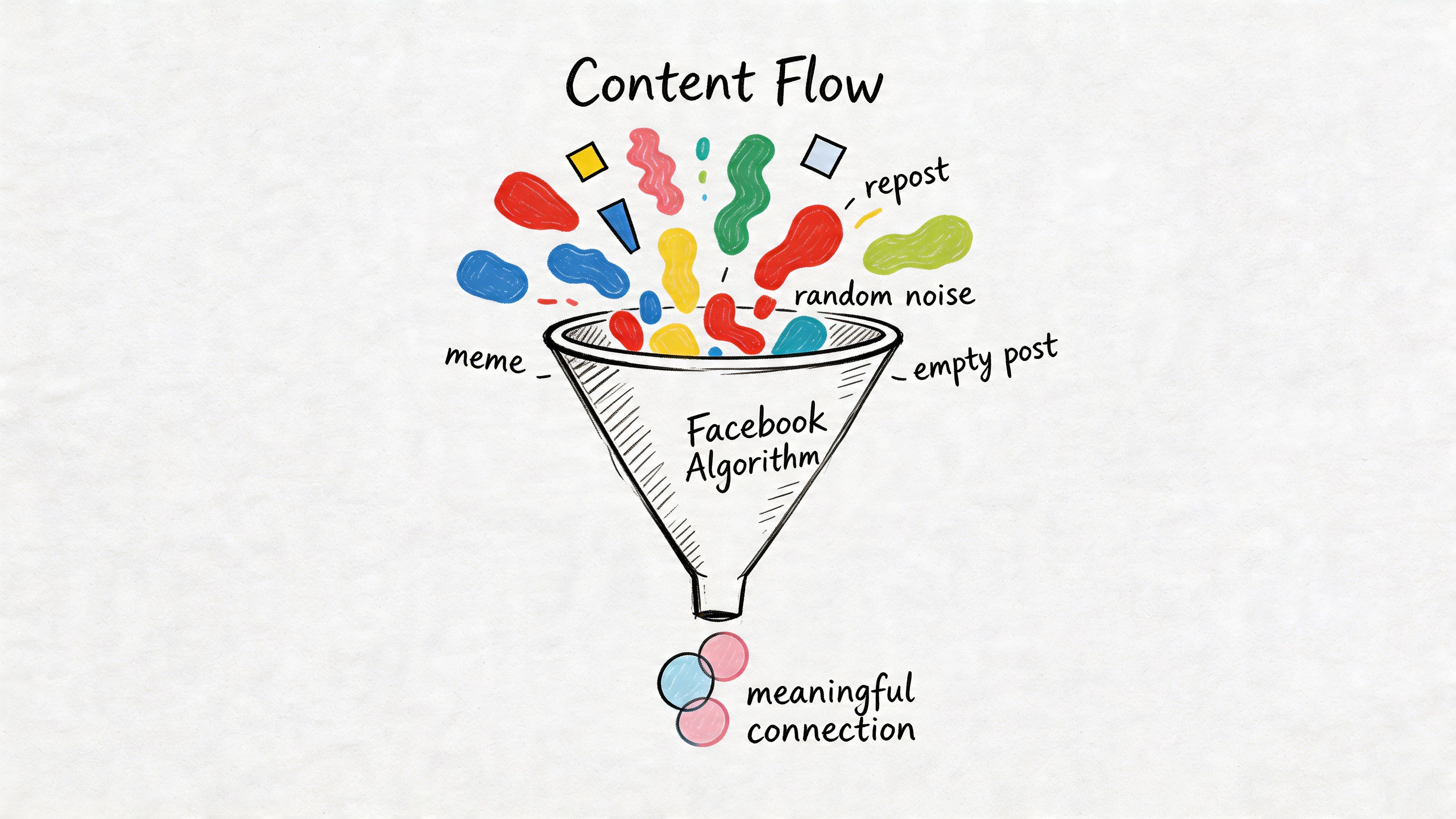
The Facebook feed isn't a mystery box. It sorts content based on signs that people find a post relevant, interesting, and worth interacting with. For churches, that's good news, because ministry content works best when it creates connection.
What Facebook is looking for
Think about the difference between these two posts:
- A service time graphic with no caption beyond "Join us Sunday at 10."
- A short post that says, "This Sunday's message is about trusting God when life feels unclear. What's one verse that has anchored you in a hard season?"
The second post gives people something to do. It invites reflection, comments, and conversation. Facebook notices that kind of activity.
Comments tend to matter more than passive reactions because they signal stronger interest. A long comment about a sermon takeaway is a better indicator of relevance than a quick like on a generic announcement.
Why less can outperform more
Many church teams assume more posting means more chances to be seen. In practice, weak posts can drag down overall performance. One case study recommends reducing output to 1 to 2 high-value posts per day, and reported a 150% year-over-year increase in organic impressions, with 9/10 top posts coming from optimized periods. The same analysis notes that Facebook groups under 10,000 members can achieve 0.52% engagement rates, compared with a 0.18% page average when conversational communities are built well, according to this Facebook organic engagement case study.
That tracks with what many church teams experience. The page starts doing better when they stop dumping every announcement into the feed and start selecting the few posts most likely to matter.
Here’s a simple comparison:
| Approach | What it looks like | Likely result |
|---|---|---|
| Volume-first posting | Every event, every reminder, every flyer goes out | Followers skim, engagement drops |
| Value-first posting | A smaller number of posts with clear purpose | Stronger interactions, better distribution |
| Conversation-first posting | Questions, testimony prompts, sermon reflection | More comments, more community signals |
Feed logic that helps churches
Facebook tends to reward three things churches can do well:
- Relevance. Posts tied to real needs, prayer, encouragement, and local church life.
- Engagement depth. Not just reactions, but comments, replies, and shares.
- Format fit. Content that feels native to the platform instead of imported from somewhere else.
If your church often posts website links, it's worth reviewing practical guidance on how to share links on Facebook without killing your reach. The core lesson is simple. Facebook favors posts that keep attention on Facebook.
A church doesn't need to outsmart the feed. It needs to give the feed better evidence that people care.
How this changes your weekly planning
Before writing captions, decide what signal each post should send.
- Need comments? Ask a specific question tied to the sermon or season.
- Need shares? Post something useful enough to pass along, like encouragement or a short clip.
- Need awareness? Make the message easy to understand without requiring a click.
When you understand those signals, Facebook feels less technical. It's not about chasing hacks. It's about matching your ministry content to the way people interact online.
Crafting Content That Resonates with Your Congregation
Churches usually don't have a content problem. They have a packaging problem. Every week, the church produces messages, stories, scriptures, worship moments, volunteer wins, student ministry updates, and event opportunities. The challenge is turning those into posts people will actually stop for.
The fastest path to stronger reach is to stop relying on one type of post. Text-only updates can work, but they shouldn't carry the entire strategy.

Turn one sermon into a full week of content
A single sermon can become multiple posts without feeling repetitive. Many churches often leave value on the table. They preach for half an hour on Sunday, then post one quote card and move on.
A better approach looks like this:
- Short sermon clip for the feed. Pull one emotionally clear moment, such as a line about fear, forgiveness, or trust.
- Discussion post. Use the sermon theme to ask a practical question people can answer in the comments.
- Devotional caption. Rework one sermon point into weekday encouragement.
- Carousel or graphic series. Break a message into a few digestible slides.
- Small group follow-up. Share a reflection prompt leaders can reuse.
If you need help thinking through that workflow, these content repurposing strategies for creators and teams are useful because they reinforce a principle churches need badly. One message can support several formats without becoming stale.
Four content types churches should prioritize
Sermon clips that carry one clear idea
Short clips work when they don't try to summarize the whole sermon. Pick one point. One emotion. One challenge.
A strong church clip often includes:
- A direct takeaway. "You don't need all the answers to take the next faithful step."
- A strong opening sentence. The first line has to earn attention.
- A caption with a response prompt. Ask how people are applying it this week.
Native video is especially useful for church content. It feels personal, immediate, and easy to consume.
Posts that invite reflection, not just agreement
A lot of church captions are written like mini press releases. They announce. They don't invite. The better option is to create room for people to respond from experience.
Examples:
- What part of Sunday's message stayed with you?
- Where have you seen God's faithfulness this week?
- What's one verse you're holding onto right now?
These don't need to be complicated. They need to be sincere and specific.
Ministry insight: The best-performing church posts often feel like pastoral follow-up, not promotion.
Branded graphics that clarify, not decorate
A graphic should help the viewer understand something quickly. It shouldn't exist only because every church account posts graphics.
Use graphics for:
- sermon series themes
- event reminders
- scripture reflections
- volunteer appreciation
- ministry milestones
Avoid clutter. If the image needs a paragraph of explanation in tiny text, it won't work in the feed. Keep it readable and connected to one message.
Community posts that feature the church family
People respond to people they know. Testimonies, baptisms, mission updates, kids ministry moments, and volunteer highlights all reinforce that the church is active and relational.
User-generated content can be especially powerful. Member stories and testimonials often feel more trustworthy than polished institutional messaging. The key is to share them with permission, context, and a clear pastoral tone.
What to write when you're stuck
Here are practical post angles that usually work better than generic announcements:
| Weak post idea | Stronger version |
|---|---|
| "Great sermon today." | "Sunday's message asked a hard question. What does trusting God look like when the outcome is unclear?" |
| "Join us Wednesday night." | "If your week has felt heavy, Wednesday night is a good time to pause, pray, and be with your church family." |
| "New series starts Sunday." | "We're starting a new series this Sunday on hope in difficult seasons. Who are you inviting?" |
These kinds of shifts matter because they move from information to meaning.
For more examples of post formats and church-specific ideas, this guide on how to create engaging social media content for churches is worth reading.
A practical weekly mix
A sustainable church Facebook rhythm often includes a blend like this:
- One sermon-based video clip
- One discussion prompt
- One event or ministry reminder
- One community story or testimony
- One scripture or devotional encouragement
That mix keeps the page from sounding repetitive. It also serves different parts of the congregation. Some people respond to teaching. Some respond to belonging. Some respond to practical next steps.
If you're trying to figure out how to increase organic reach on Facebook, start by making each post do one job well. Don't cram sermon recap, event promotion, and donation ask into the same caption. One post. One purpose. One clear reason to respond.
Building a Sustainable Social Media Rhythm
Many church teams don't struggle because they lack ideas. They struggle because the posting rhythm depends on memory, spare moments, and last-minute effort. That approach usually produces inconsistent reach and exhausted volunteers.
A better system starts with timing, then builds around repeatable planning.

Post when your people are actually online
Generic posting advice isn't enough for churches because every congregation behaves differently. A commuter church, a rural church, and a young families church will have different patterns. That's why Facebook Insights matters.
Posting during peak audience activity can boost Facebook organic reach by up to 32%, and native video can generate 478% more shares than external links. Posts that spark conversation can also add up to 50% more reach, according to this breakdown of proven Facebook organic reach tactics.
The practical takeaway is straightforward. Find the windows when your congregation is most active, then schedule your best content there.
Build a calendar you can keep
A church doesn't need a complicated publishing machine. It needs a rhythm someone can sustain in a normal ministry week.
Try this monthly workflow:
- Review the ministry calendar. Note sermon series, events, holidays, sign-ups, and volunteer moments.
- Choose your anchor content. Usually that means Sunday sermon content and upcoming events.
- Draft in batches. Write captions and gather media in one sitting.
- Schedule ahead. Leave room for timely posts, but don't rely on same-day publishing.
- Check comments daily. Publishing is only half the job.
A visual planning process helps. If you need a model, this article on building a church social media content calendar gives a practical starting point.
Schedule your strongest posts first. Fill the gaps second.
Quality beats constant activity
One of the biggest mistakes churches make is assuming silence is the enemy, so they keep posting anything they have. That often lowers the average quality of the feed.
Here's a healthier filter:
- Post it now if the content is timely, useful, or likely to spark response.
- Reshape it if the message matters but the format is weak.
- Skip it if it's only being posted to stay busy.
A simple church week might include one sermon clip, one discussion post, one event reminder, and one community highlight. That's enough for many churches if the content is strong and timed well.
Use your ministry schedule as the engine
Church social content gets easier when it flows from existing ministry rhythms instead of being invented from scratch. Your Planning Center events, sermon schedule, volunteer moments, and seasonal calendar already tell you what to post.
Use those as your source material:
- Upcoming events become invitations and reminder posts.
- Sermon plans become clips, previews, and follow-up reflections.
- Church milestones become celebration posts.
- Recurring ministries become predictable weekly content.
That approach prevents the blank-page problem. It also helps a solo volunteer stay organized without needing a full communications team.
Fostering Digital Discipleship Through Engagement
Reach matters, but reach alone doesn't build a church community online. A post seen by many people but answered by no one is still a weak ministry touchpoint. The opportunity lies in turning attention into interaction, then interaction into ongoing connection.
That is where Facebook can still serve churches well.

Write for conversation
Some church posts die because they end where they should begin. The caption says something true, but it doesn't open a door.
Compare these approaches:
- "God is faithful."
- "Where have you seen God's faithfulness this week?"
The second version gives the congregation a reason to participate. It also creates a better environment for ministry because people start sharing what they're carrying, what they're grateful for, and what they need prayer for.
Good engagement prompts for churches often include:
- Reflection questions tied to the sermon
- Prayer invitations that are broad enough for public comments
- Testimony prompts that encourage brief sharing
- Poll-style questions about ministry life, habits, or upcoming participation
Respond like a pastor, not a brand
A comment section shouldn't feel abandoned. When someone leaves a thoughtful comment and no one from the church replies, the moment closes too quickly.
Responding does two things. It shows the person they were heard, and it extends the conversation signal around the post. Even a short reply matters if it's personal and sincere.
Try responses like:
- "Thanks for sharing that. We'll be praying for you this week."
- "That line stood out to a lot of people on Sunday."
- "We're grateful you were with us."
Every comment is a small pastoral moment.
Use Groups for deeper connection
Pages are public-facing. Groups are relational. That's why churches should think carefully about where deeper engagement belongs.
A Facebook page is useful for visibility, sermon clips, and broad community awareness. A Facebook Group can support prayer, volunteer coordination, class discussion, or follow-up conversation around Sunday teaching.
A simple way to connect the two:
- Post a sermon clip on the page
- Ask a broad reflection question in the caption
- Invite people into the church group for deeper discussion or prayer
That creates a healthy path from public content to more personal community. It also helps the church move beyond broadcast habits.
Engagement that feels natural
Churches don't need gimmicks. Forced prompts often feel shallow and can train people to ignore the page. Better engagement comes from content that matches real church life.
Here are prompts that tend to feel natural:
- Before Sunday. "Who are you inviting this weekend?"
- After Sunday. "What point from today's message are you still thinking about?"
- Midweek. "How can we pray for you today?"
- During a ministry season. "What has God been teaching you lately?"
Those are simple questions, but they invite real ministry movement. That's the kind of engagement worth pursuing.
Measuring Your Ministry's Impact and Refining Your Plan
If you're putting time into Facebook, you need a simple way to tell whether the effort is helping. That doesn't require complicated reporting. It requires paying attention to a few signals that reveal what your congregation responds to.
The goal isn't to chase vanity metrics. The goal is to listen.
The few metrics that matter most
Start with these three:
| Metric | What it tells you | Why it matters |
|---|---|---|
| Reach | How many people saw the post | Shows whether Facebook distributed it |
| Engagement | Who reacted, commented, shared, or clicked | Shows whether the post connected |
| Shares | Who passed it along to someone else | Shows whether people found it useful or meaningful |
Reach without engagement usually means the topic or format didn't land. Strong engagement with modest reach can still be valuable because it shows the content resonated with the right people. Shares are especially helpful because they often signal ministry value. People share what they think others need.
Read the patterns, not just the numbers
One post doesn't define the strategy. Look for recurring patterns across several weeks.
Ask:
- Which format keeps getting attention? Video, graphics, questions, or testimonies?
- Which topics draw comments? Prayer, parenting, anxiety, hope, local outreach?
- Which posts get ignored? Repetitive announcements, crowded graphics, unclear captions?
Those patterns tell you what to make more of and what to stop forcing.
For example, if sermon clips consistently attract replies and shares, produce more of them. If event graphics get little response, rewrite the captions to make them more invitational. If a simple prayer prompt creates thoughtful comments, build that into your weekly rhythm.
A simple review habit for church teams
Use a short monthly review instead of staring at analytics every day.
Try this checklist:
- Keep the post types that consistently invite response
- Adjust weak posts that had a good topic but poor format
- Remove recurring content that never connects
- Test one new approach each month
The data isn't there to impress your team. It's there to help you serve people better.
Let the congregation teach you
The strongest church social strategy is usually shaped by attentive observation. Your people are already telling you what helps them through their response patterns. They comment on posts that meet a real need. They share posts that speak into real life. They ignore posts that feel like clutter.
If you want to know how to increase organic reach on Facebook over time, measure what creates genuine ministry interaction, then build from there. Growth usually comes from repetition of what already serves people well.
Frequently Asked Questions About Facebook Reach for Churches
Do small churches even have a chance with organic reach
Yes. Small churches often have an advantage because people know each other, which makes comments and shares feel more natural. Organic reach grows when the content reflects real community life, not when the church tries to mimic a large-brand marketing style.
A smaller church should lean into local stories, pastoral warmth, and practical encouragement. Those are strengths, not limitations.
What if we don't have time to post every day
You don't need to post constantly to build momentum. A smaller number of purposeful posts is often healthier than a daily stream of rushed content.
If your team is stretched, focus on a manageable rhythm:
- One sermon-related post
- One community or testimony post
- One event or invitation post
- One midweek engagement post
That kind of plan is realistic for a volunteer or a staff member with limited time.
What if nobody on our team is a designer or video editor
That doesn't disqualify your church from doing this well. Most churches don't need cinema-level production. They need clarity, consistency, and content that feels human.
Start with simple formats:
- a clean sermon clip
- a readable scripture graphic
- a strong caption with one clear question
- a ministry photo with context
Skill matters less than relevance. The best church posts are often the ones that feel timely, useful, and grounded in real congregational life.
If your church wants a simpler way to plan, create, schedule, and manage Facebook content without building everything from scratch, ChurchSocial.ai is built for exactly that. It helps churches turn sermons into reels, generate captions and blog content from transcripts, design graphics with ready-made templates, and organize everything in a drag-and-drop calendar that fits real ministry life.