Your building already communicates before anyone hears a sermon. The platform, the lobby, the altar, the wall behind the pulpit, even the way you stage candles or plants all tell people what kind of church you are. The gap is that many churches still treat decorating as an in-room task only, when it can also support outreach all week long.
That matters because church spaces have always carried spiritual and communal meaning. Since the 4th century, congregations and local leaders have invested time, money, and personal prestige into church building and decoration, and Baroque church design later became a major expression of Catholic worship through dramatic visual impact and ornate interiors, especially after the Church of the Gesù helped define that shift between 1568 and 1584, as summarized in Wikipedia's overview of church architecture. The lesson for modern churches is simple. Visual design has long been part of ministry, not a side issue.
Today, that same visual ministry also lives on Instagram, Facebook, TikTok, YouTube, and your website. A well-decorated sanctuary doesn't just serve the people in the room. It gives your team better photos, cleaner video backgrounds, stronger announcement graphics, and more recognizable branding across every channel.
The best decorating ideas for churches do both jobs at once. They make the room feel intentional, and they make content creation easier for volunteers. When you pair those choices with ChurchSocial.ai, you can turn decor into scheduled posts, reels, carousels, event promos, and sermon content without building a complicated production workflow.
1. Seasonal Altar and Chancel Decorations
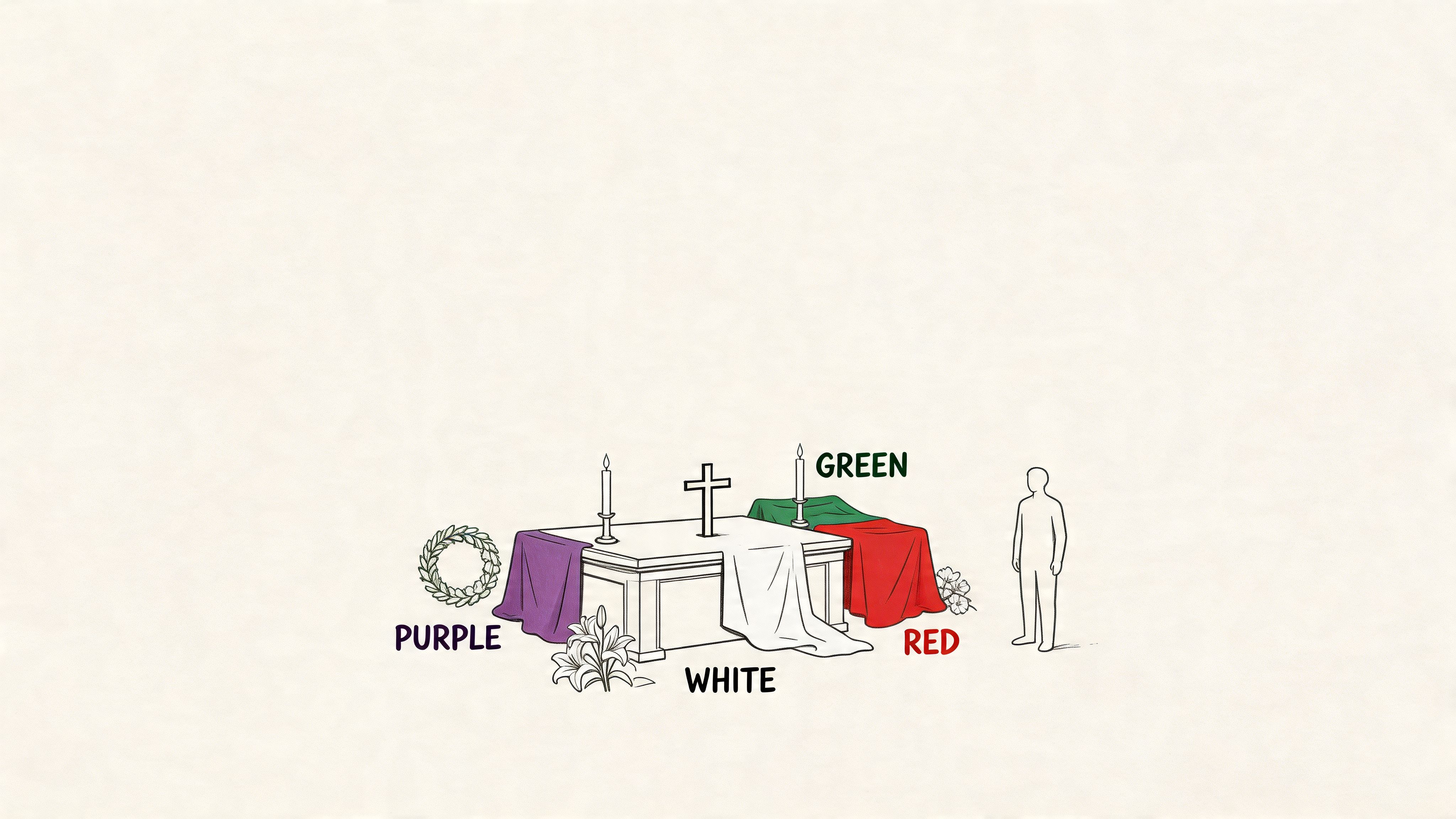
If you only change one area of the room through the year, change the altar and chancel. It's the visual center of many worship spaces, which means it shows up in almost every sermon clip, livestream angle, and ministry photo.
Seasonal cloths, candles, floral groupings, branches, banners, and modest symbolic elements often work better than trying to rebuild the whole platform every few months. Churches that go too broad usually create clutter. Churches that focus on one clear focal zone usually get a stronger result both in person and on camera.
Build around the church calendar
Search interest for church altar decoration reached a Google Trends index of 79 in April 2025, the strongest seasonal spike among church decoration categories, according to Accio's summary of church decoration demand. That's a strong reminder to prepare Easter visuals early, not the week before.
Use that seasonality to plan ministry and media together. Set your Advent, Christmas, Lent, Easter, and Pentecost looks ahead of time, then load matching posts into your ChurchSocial.ai calendar so the room and the feed stay aligned.
Practical rule: Design one altar look for the room, then test whether it still reads clearly in a cropped vertical phone photo.
A few patterns work consistently:
- Use fabric with purpose: Liturgical color changes are simple, affordable, and highly visible in photos.
- Group decor in odd numbers: Flowers, candle clusters, or pedestal elements usually look more natural on camera when grouped intentionally.
- Leave breathing room: Empty space around the communion table or central cross keeps the composition from feeling crowded.
A before-and-after carousel is often one of the easiest wins here. Photograph the unstyled platform, the volunteer setup process, and the finished result. Then turn that sequence into a polished post with ChurchSocial.ai templates.
If you're planning for Christmas specifically, ideas from this guide to church stage design for Christmas can help you create something that feels seasonal without becoming visually noisy.
2. Statement Wall Murals and Backdrop Art
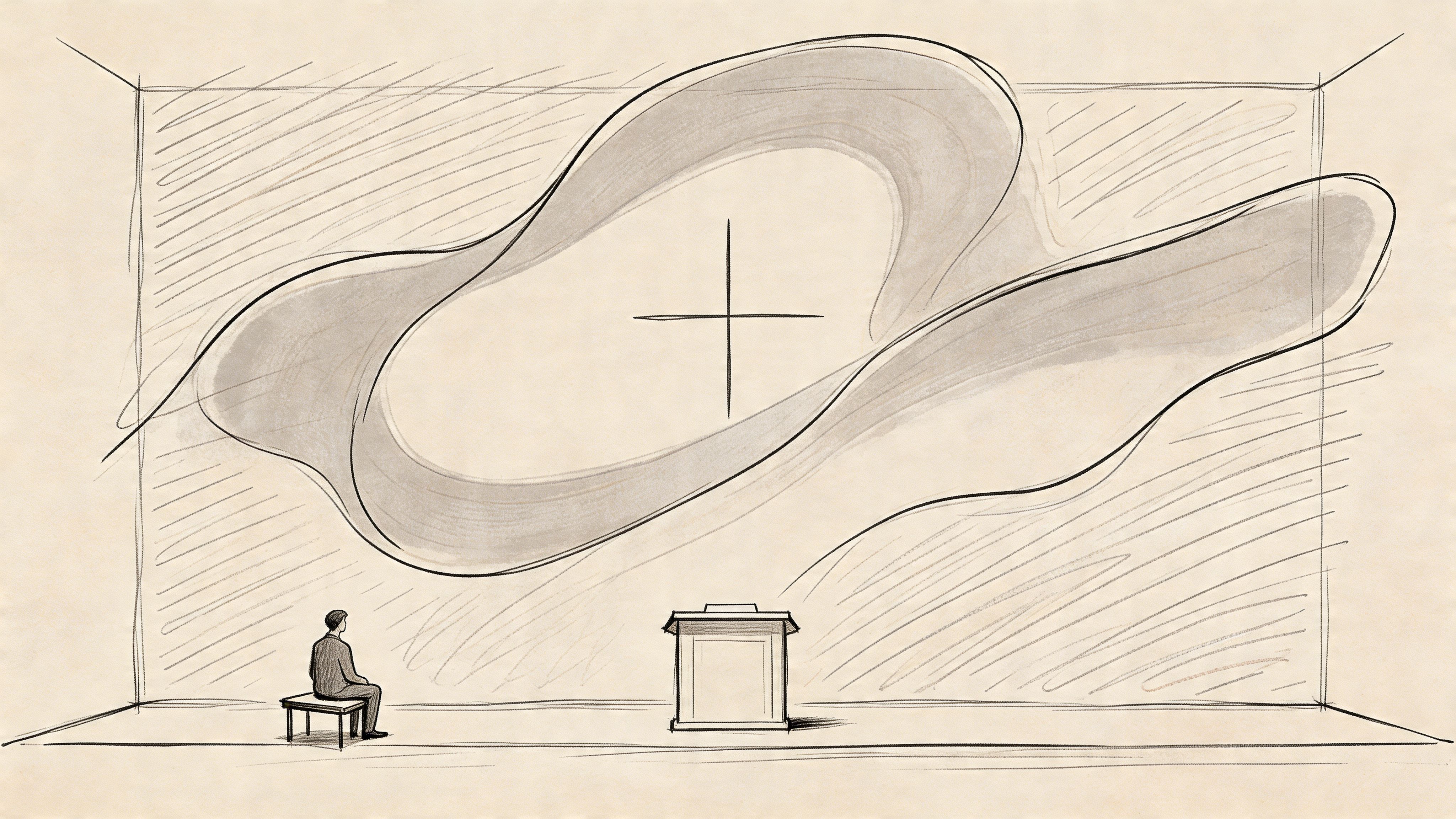
A statement wall gives your church a visual signature. It might be a painted mural, a wood-slat backdrop, layered panels, a branded scripture installation, or something more dimensional like oversized foam flower wall art in the right ministry setting.
What doesn't work is copying a conference-stage look that only functions under professional lighting. Your wall has to survive normal Sundays, phone cameras, youth group photos, and close-up sermon clips.
Design for both wide shots and vertical video
The best backdrop art has one dominant idea. That's true whether your church leans traditional or modern. Busy murals with too many tiny details often disappear on livestreams and look messy behind speakers.
A better approach is to choose one of these directions:
- Abstract and textural: Painted gradients, layered wood, acoustic panels, or subtle geometric forms
- Mission-driven: A visual tied to your church's name, local neighborhood, or ministry theme
- Scripture-based: One verse, used sparingly and placed where it reads naturally in the room
A strong backdrop should still look intentional when cropped to a vertical sermon reel.
The wall brings together decorating and social strategy. Once the wall is installed, use it repeatedly. Record sermon clips in the same framing. Film welcome videos there. Capture volunteer interviews in front of it. ChurchSocial.ai can turn those sermons into reels and help you keep the visual identity consistent from week to week.
If you need inspiration that fits ministry environments better than generic event styling, this roundup of church stage decor ideas is a good starting point.
3. Strategic Lighting Design and LED Systems
Good lighting fixes problems that decor alone can't. It shapes attention, improves video quality, and helps every other design choice look more intentional.
Many churches buy decorative elements first and only think about lighting later. In practice, the order should often be reversed. A modest stage with solid lighting usually looks better than an elaborate stage with flat, uneven illumination.
Light for faces first, decor second
If the sermon video matters, make the speaker visible and consistent. Colored uplights and LED accents can add atmosphere, but they shouldn't turn skin tones strange or leave the platform in shadows.
The most reliable setup usually includes a clean front wash, controlled stage color, and a few accents on architectural features or walls. Programmable LED systems help, but simplicity beats complexity if your volunteer team changes often.
A few trade-offs are worth stating plainly:
- More colors aren't always better: Constant color changes can feel distracting in worship and chaotic on camera.
- Cheap LEDs can flicker on video: Test with the phones and cameras you use.
- Preset scenes save Sundays: Build a small library for worship, preaching, prayer, baptisms, and special events.
If your team is rethinking the platform as a whole, these stage ideas for church can help you pair lighting with backdrop choices instead of treating them separately.
The digital upside is obvious. Better lighting gives ChurchSocial.ai better raw material for sermon reels, quote graphics, and announcement clips. Your editors won't have to rescue dark footage, and your church's content will look more consistent without adding production complexity.
4. Interactive Faith-Based Art Installations
Some of the best church decoration isn't static. It's participatory. Prayer walls, written confessions during Lent, gratitude boards, candle-lighting stations, testimony displays, and collaborative art pieces invite people to do something, not just look at something.
That changes the atmosphere in the room. It also creates authentic content because members are interacting with the display in meaningful ways rather than posing beside a generic backdrop.
Give people a clear action
Interactive installations fail when the instructions are vague. If you set up a prayer wall, tell people exactly what to do. If you're inviting written thanksgiving notes, make the prompt visible, provide the materials, and keep the layout neat as it grows.
Small churches should keep these simple. A string-and-card prayer display, a wooden cross people can place written requests around, or a seasonal board near the lobby often works better than a complicated build requiring constant supervision.
Ministry note: The installation should support reflection first. The social content comes after that, not before.
There is also a real content opportunity here. An underserved area in church decorating is adapting physical decor for social media, especially for smaller churches without design experience. A 2025 Church Communications Group report cited in a video discussion about church design and content gaps says 68% of small churches with fewer than 200 attendees struggle with visual social content, and only 22% use decor photos effectively. The same source says that gap leads to 40% lower engagement rates.
That means your installation shouldn't end in the room. Photograph its progress. Capture close-up details without showing faces when possible. Turn prayers, themes, or volunteer stories into blog posts and social captions with ChurchSocial.ai. A living installation gives you content over days or weeks, not just one post.
5. Entrance and Lobby Welcome Environments
The lobby carries more outreach weight than many sanctuaries. It's where first-time guests decide whether the church feels clear, warm, and organized. It's also one of the easiest places to create repeatable visual content.
Good entrance decor doesn't have to be expensive. It has to remove confusion and create a clean welcome. Seasonal florals, a branded sign, directional pieces, a kids check-in marker, and one intentional photo spot can do a lot.
Treat the lobby like a communications zone
Most churches overload the entrance with paper, competing signs, folding tables, and announcements taped wherever space is available. That doesn't feel welcoming in person, and it photographs badly.
A better lobby setup usually includes one clear welcome feature, one central information point, and one area that changes with the season or sermon focus. This is also the place to keep your design language consistent with your online graphics.
Use these standards:
- Limit sign styles: Too many fonts, colors, and formats make the church feel disorganized.
- Create one photo-friendly corner: A clean wall, branded sign, plant grouping, or seasonal display gives you a reliable spot for volunteer photos and announcement videos.
- Refresh on a rhythm: Monthly or seasonal changes are enough to keep the space fresh without exhausting your team.
ChurchSocial.ai becomes practical, not theoretical. Build matching welcome graphics, event promos, and carousel posts from the same design direction you use in the lobby. If your church uses Planning Center and a church calendar, pulling event themes into your content workflow gets much easier when the physical signage and digital posts are reinforcing each other.
6. Thematic Series Decoration Packages
A sermon series feels stronger when the room, the screens, the printed materials, and the social posts all point in the same direction. That's why thematic series packages work so well. They create repetition, and repetition builds recognition.
This doesn't mean every series needs a full scenic build. Sometimes a color shift, one physical prop family, a stage texture, and matching title graphics are enough. The key is consistency across the full run of the series.
Keep the package tight
Churches often overbuild the first week and run out of energy by week three. A better system is to choose a small visual kit that can last. Think banners, panels, fabric drops, projection backgrounds, table pieces, or symbolic objects that can be rearranged without losing the theme.
Series decor works best when each element has more than one job. A backdrop can support the sermon and the podcast thumbnail. A prop can live on stage and also appear in your invite graphic. A color palette can carry through slides, Instagram posts, and small group materials.
A simple planning framework helps:
- Pick one anchor image: Something memorable enough to appear on every post
- Choose one physical focal point: A repeated shape, object, or texture on stage
- Set a fixed shot style: Similar framing for reels and announcements throughout the series
ChurchSocial.ai is especially useful here because you can create the graphics package, schedule the full series calendar, and repurpose each week's sermon transcript into posts or blog content without rebuilding the workflow each Sunday.
7. Nature-Inspired and Living Elements Decor
Plants, branches, wood, stone, and seasonal florals soften a church space fast. They can make older buildings feel cared for and newer buildings feel less sterile. For many congregations, they're also one of the most approachable decorating ideas for churches because they don't require a full scenic team.
Natural decor does come with maintenance. Dead leaves, dry arrangements, and mismatched pots create the opposite effect. If your team can't maintain a large living install, use fewer elements and style them well.
Organic doesn't mean random
The strongest nature-inspired decor is intentional. Repetition matters here too. Matching planters, a controlled palette of greenery, and materials that connect with your architecture usually work better than grabbing whatever plants happen to be available that week.
This style is especially effective for devotional video, prayer content, and calm announcement backgrounds. Even one well-styled corner with wood tones and greenery can become a recurring filming location for pastors and ministry leaders.
Use natural decor where light is already good. A beautiful plant in a dark corner won't help the room or the camera.
For social media, don't just post the finished display once. Capture detail shots of leaves, candles, wood textures, and floral arrangements. Those images work well for scripture posts, event invitations, and quiet midweek content. ChurchSocial.ai's templates make it easy to build a set of branded graphics from one decor session instead of scrambling for new visuals every week.
8. Projection Mapping and Digital Storytelling Displays
Projection can change a room faster than almost any physical decor method. It lets you adapt for sermon series, holidays, prayer nights, and special events without rebuilding the stage each time.
But projection only helps when it's designed for the actual space. Poorly aligned visuals, washed-out screens, or overactive motion graphics can make a service feel less focused, not more.
Use motion with restraint
A still or slowly moving background often serves worship better than constant animation. Your projection should support speaking, music, and scripture, not compete with them.
Churches that use projection well usually make a few disciplined choices. They build content sized for their exact surfaces. They test for camera capture, not just in-room appearance. And they keep backup files and simple fallback looks ready in case something breaks.
If you're comparing tools and techniques, understanding what a gobo projector does can help you think more broadly about light-based visual storytelling, especially for temporary installations or event-specific moments.
Projection also creates a strong digital bridge. A sermon series opener can become a reel background. Animated scripture can appear in a story post. Announcement loops can become snippets for social clips. With ChurchSocial.ai, those visual assets don't have to stay in the sanctuary. They can become part of a repeatable publishing rhythm for every platform.
8-Point Church Decoration Comparison
| Design Option | 🔄 Implementation Complexity | Resource Requirements | 📊 Expected Outcomes | Ideal Use Cases | 💡 Tips / ⭐ Key Advantages |
|---|---|---|---|---|---|
| Seasonal Altar and Chancel Decorations | Medium, recurring seasonal planning and volunteer coordination | Moderate, flowers, fabrics, candles, storage; ongoing maintenance costs | Enhanced liturgical connection; increased seasonal attendance and shareable visuals | Major liturgical seasons (Advent, Lent, Easter); holiday services; photo content | 💡 Plan yearly calendar and templates. ⭐ Strong symbolism, volunteer engagement, repeatable content |
| Statement Wall Murals and Backdrop Art | High, planning, approvals, artist collaboration; semi-permanent | High, professional artist or skilled team; $1k–$20k+; facility approvals | Distinctive identity; long-lasting backdrop that boosts video/photo quality | Branding, permanent focal points, media-forward churches | 💡 Photograph from multiple angles; use for sermon clips. ⭐ Recognizable, durable visual identity |
| Strategic Lighting Design and LED Systems | High, technical design, programming, operator training | High, $5k–$50k+, control systems, trained operators | Cinematic atmosphere; greatly improved streaming/recording quality ⚡ | Dynamic worship services, large venues, streaming-focused ministries | 💡 Create lighting presets and train volunteers. ⭐ Flexible moods, high production impact |
| Interactive Faith-Based Art Installations | Medium, facilitation and ongoing management; evolving over time | Low–Medium, materials and volunteer facilitation; modest budget options | Strong community engagement; user-generated content and memorable experiences | Community-building events, participatory sermon series, outreach campaigns | 💡 Use a hashtag and document participation. ⭐ High engagement, low-cost social reach |
| Entrance and Lobby Welcome Environments | Low–Medium, design and regular updates; straightforward implementation | Moderate, signage, displays, digital screens; maintenance time | Improved first impressions and visitor flow; multiple photo opportunities | Guest welcome, hospitality, information hubs | 💡 Update displays monthly for fresh content. ⭐ Immediate credibility and photo-ready spaces |
| Thematic Series Decoration Packages | Medium, advance planning and cross-team coordination for series continuity | Moderate, design templates, printed/digital assets, storage for multi-week use | Consistent visual branding across a series; simplified content production and recognition | Multi-week sermon series, campaign-driven messaging | 💡 Build reusable templates and a series hashtag. ⭐ Reinforces message and eases volunteer workflow |
| Nature-Inspired and Living Elements Decor | Medium, installation plus ongoing plant care and environmental controls | Moderate, plants, planters, possible water features; maintenance plan required | Calming, sustainable atmosphere; strong nature-themed content and improved air quality | Contemplative services, eco-conscious congregations, photo-focused worship spaces | 💡 Time-lapse plant content and care stories perform well. ⭐ Natural beauty, sustainability messaging |
| Projection Mapping and Digital Storytelling Displays | Very High, advanced tech, content design, synchronization with services | Very High, $10k–$100k+ hardware/software, specialists, continuous content creation | Cinematic, highly flexible visuals; broadcast-quality streaming and high engagement ⚡ | Large productions, immersive storytelling, streaming-first churches | 💡 Maintain backups and a reusable content library. ⭐ Ultimate visual flexibility and high production value |
From Sanctuary to Social Feed Start Decorating Today
Church decor isn't extra polish for churches that already have everything else figured out. It's one of the clearest ways to shape how people experience your ministry, both in the room and online. The physical environment tells people whether your church is thoughtful, prepared, welcoming, and aligned.
That's been true throughout church history. It's still true now. The difference is that today your sanctuary, lobby, signage, and stage design also live on camera. Every floral arrangement, banner, mural, light cue, and backdrop can either help or hinder your content.
The strongest decorating ideas for churches aren't the most expensive ones. They're the ones your team can repeat, maintain, photograph well, and connect to actual ministry moments. A simple seasonal altar design with good lighting and a clean photo plan often produces more useful content than a complicated install no one documents properly.
This is also where many churches get stuck. They decorate the space, but they don't build a system for capturing and publishing what they created. Photos stay on volunteers' phones. Sermon clips never get cut. Event visuals aren't reused. The room looks good for a weekend, then the opportunity disappears.
ChurchSocial.ai closes that gap. You can turn sermon footage into reels, create posts and blogs from sermon transcripts, build branded carousels and graphics from your decor photos, and lay everything out on a drag-and-drop calendar that your team can manage. If your church uses Planning Center or other calendar tools, that workflow gets even smoother because events and content planning stop living in separate places.
Start with one zone. The altar. The lobby. A backdrop wall. A nature corner for announcements. Pick the area that appears most often in photos or video and improve that first. Then make a simple content plan around it. Shoot wide photos, close details, short clips, and one before-and-after sequence. Schedule the posts while the decor is still fresh.
Your building is already saying something. Make sure it supports your message on Sunday and the rest of the week.
If you want a simpler way to turn church decor, sermons, events, and weekly ministry moments into consistent social content, try ChurchSocial.ai. It gives churches one place to create sermon reels, design graphics, write posts from transcripts, and schedule everything on an easy visual calendar.