Sunday is already moving fast. A volunteer is trying to post a sermon recap, the pastor wants last week's notes shared again, and someone is staring at a login screen that won't cooperate. If that sounds familiar, the fix usually starts with understanding what the Sermons Com login opens, then working through the account and browser issues in the right order.
What the Sermons Com Login Is and Who Uses It
A church login page can look like a small step, but it often sits at the center of a larger Sunday workflow. In many church teams, login access decides who can publish a sermon, edit a media file, or respond to a support issue, and who can only view the public side. That is why role-based access matters, especially when pastors, admins, and volunteers all work in the same content system in different ways.
For a Sunday volunteer, the login may open a transcript, an audio file, or a dashboard where the week's sermon content is stored. For a pastor, it may be the place to review what is ready to go live. For a communications lead, it often serves as the control panel for uploads, publishing, and support requests.
Practical rule: one shared password creates confusion fast. Separate user identities make it much easier to know who changed what, and who should be able to change it again.
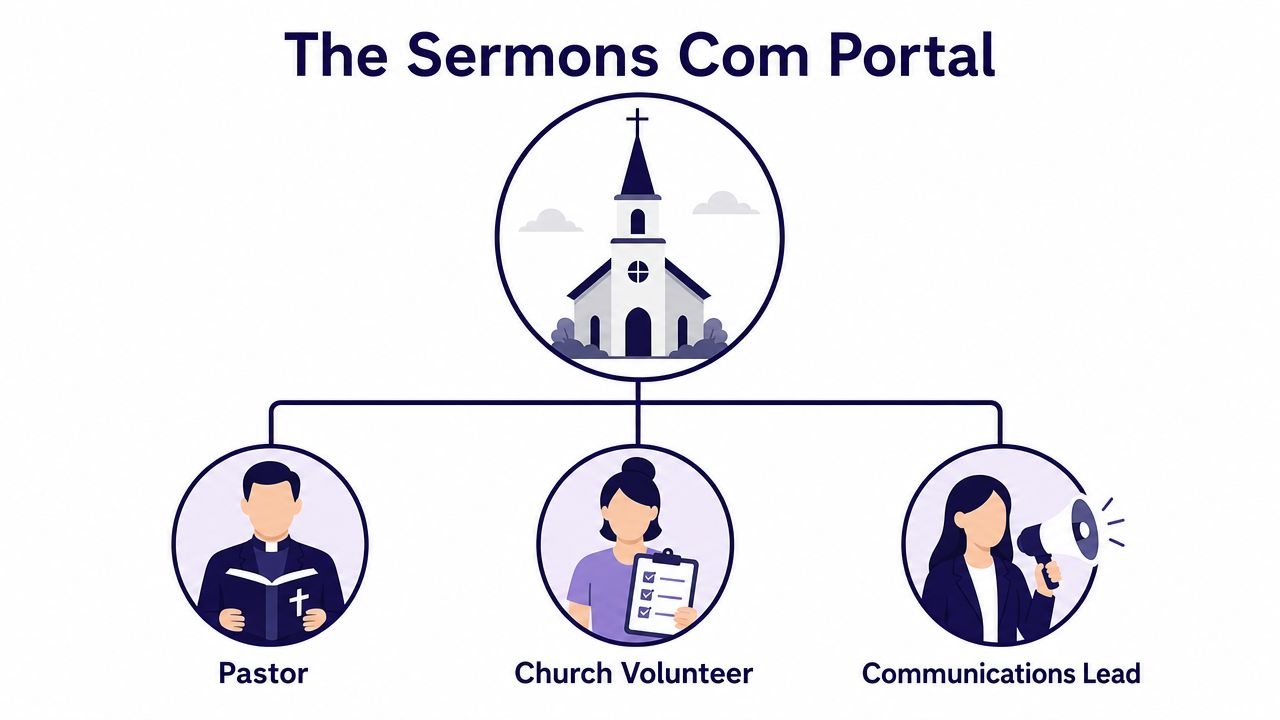
| Common Sermon Account Roles | Primary Login Need | Typical Permissions |
|---|---|---|
| Pastor | Review and approve sermon content | View, approve, and sometimes publish |
| Church Volunteer | Upload or prepare content | Limited upload and editing access |
| Communications Lead | Manage publishing workflow | Broader content, scheduling, and support access |
A good way to read the Sermons Com login is as a doorway, not the destination. It opens the path to sermon content that can keep moving after Sunday, where one transcript can later become a recap post, a clip, or a graphic. Churches that also use ChurchSocial.ai's sermon-sharing workflow often treat that login as the first step in turning the same message into reels, posts, and graphics.
Signing In to Sermons Com the First Time
The first sign-in usually feels straightforward until a browser fills in the wrong details for you. Open the site in a browser you trust, look for the sign-in link, and make sure the page matches the platform you meant to use. A wrong URL can look almost right at a glance, which is why people sometimes think the account is broken when the core issue is just a bad page.
Type the email tied to the account, then enter the password carefully. If autofill drops in an old email address, a work email instead of a personal one, or a saved password from a different church tool, stop and replace it before you try again. On mobile, this can be harder because the keyboard and password manager often make the fields look smaller than they really are.
A healthy sign-in usually ends with a dashboard, not another login prompt. If you're sent right back to the form, something in the browser session probably didn't stick.
If you're returning to the site later, cached credentials can make things stranger, not easier. Saved passwords are helpful when they're current, but they can also keep pulling in an old account after a staff change or volunteer handoff. On desktop, you'll usually spot this faster because the browser shows the saved login more clearly than a phone does.
Once you're in, the screen should feel like a working dashboard, not a dead end. You're looking for visible account content, recent activity, or whatever tools the church uses to manage sermon material. If all you see is a blank loop back to the homepage, don't assume the password is wrong yet. Check the browser first.
Resetting a Forgotten Password or Username
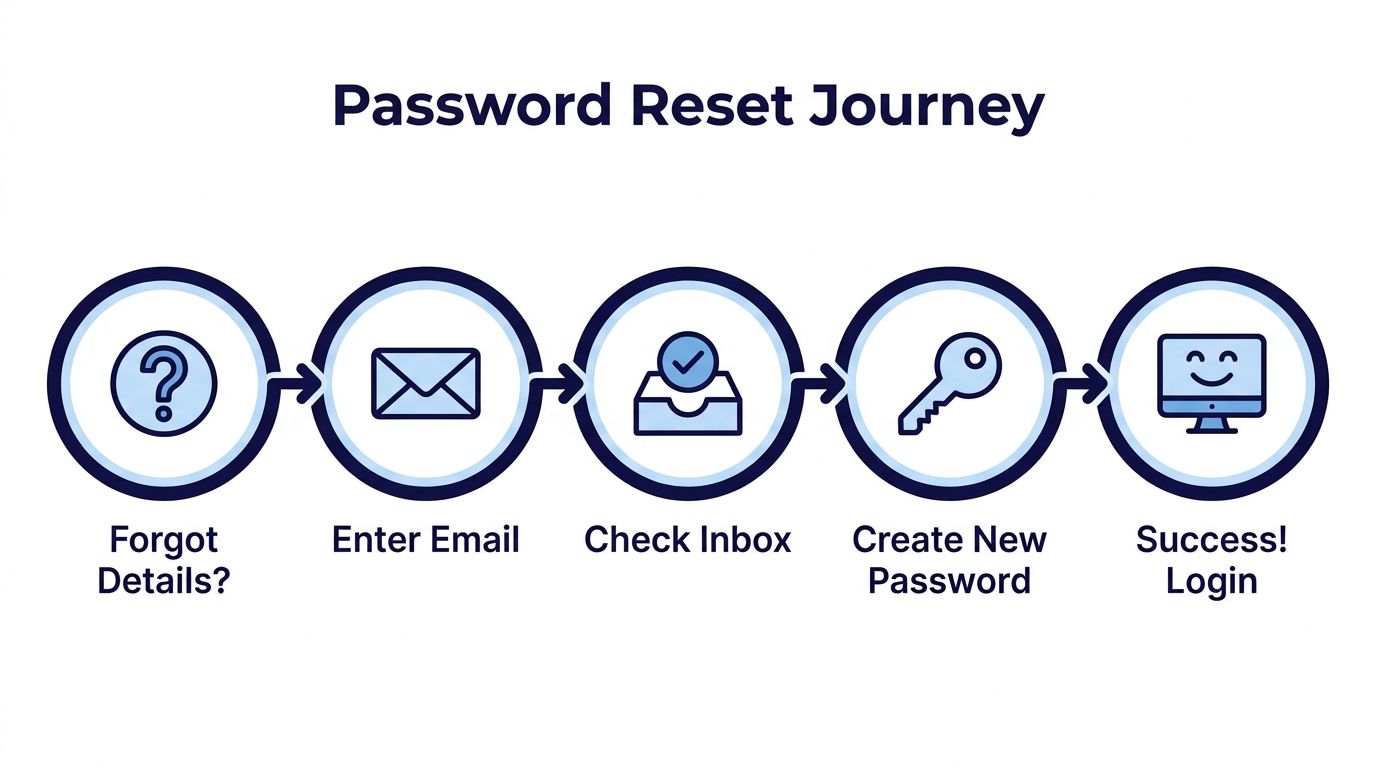
When someone can't get in, the missing password is usually the first thing to check. The standard recovery flow for a church account is simple: click the “forgot your password” link, request the reset message, open the email, create a new password, and save the change. Sermons4Kids describes that same basic pattern, using the account email and password on the login page, then the reset link if the password isn't remembered (Sermons4Kids login instructions).
The hard part is when the reset email never shows up. Start with spam, junk, promotions, and any church filtering rules that might catch automated mail before it reaches the inbox. If the email on file is no longer accessible, the person who owns the account usually needs help from platform support rather than another reset attempt.
SermonCentral gives one clear support path with a phone line at (866) 899-4426 and weekday support hours from Monday through Friday, 9:30 a.m. to 6:00 p.m. Eastern Time (SermonCentral sign-in welcome page). Sermon.net also lists info@sermon.net as a support email and provides phone numbers tied to the service, which gives churches another verified contact route when self-service recovery stalls (sermon.net support listing).
Practical rule: if a reset email never arrives, don't keep clicking the link over and over. Confirm the inbox first, then use the support contact that matches the service you're actually trying to reach.
If the username itself is forgotten, look for the email that originally created the account, a welcome message, or an old team handoff note. In many churches, the core problem isn't the password, it's that nobody remembers which address was used when the account was set up.
Diagnosing the Most Common Sermons Com Login Errors
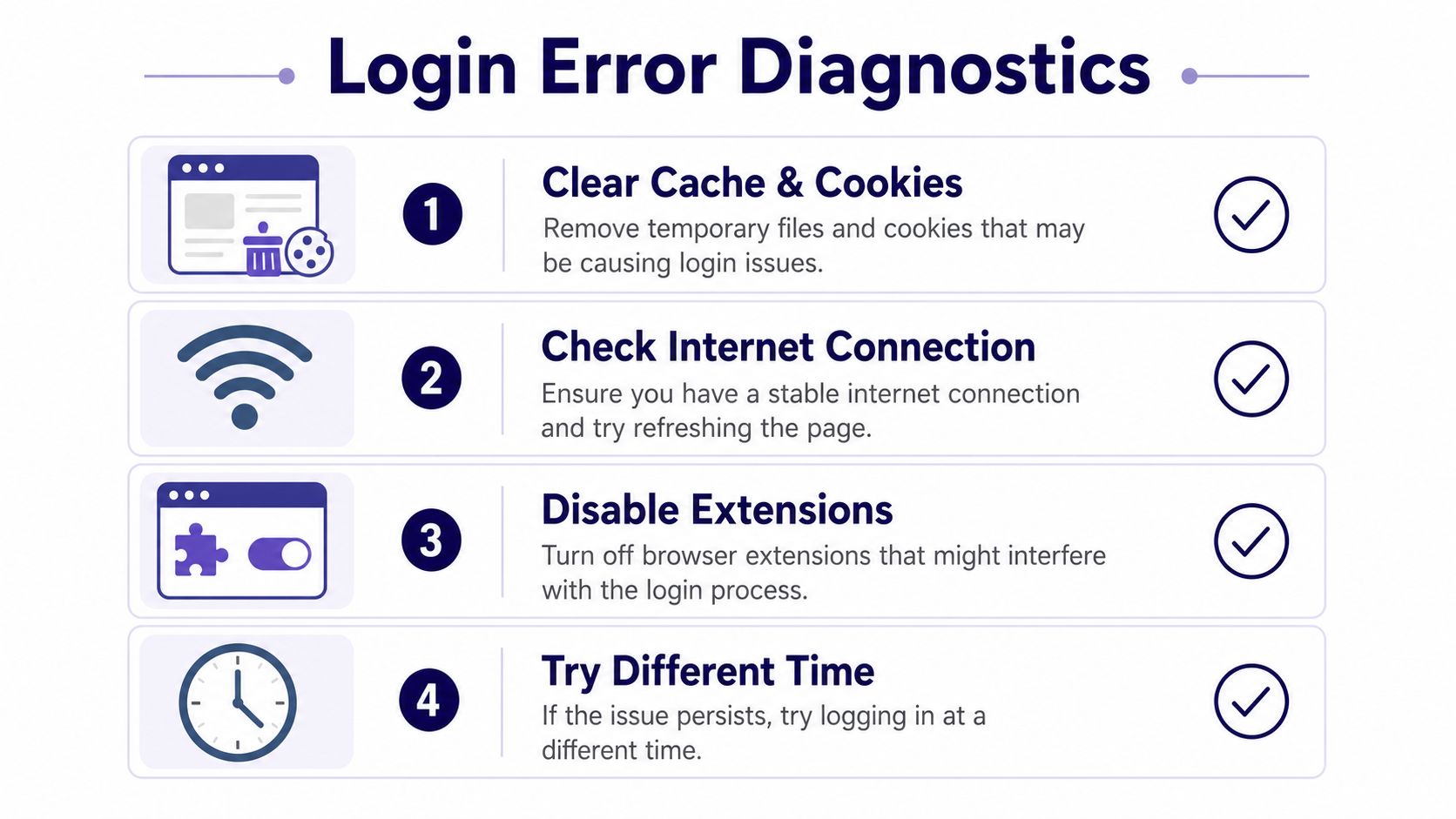
A failed login often looks like an account problem even when it isn't. Cookies, JavaScript, cache, extensions, wrong URLs, and repeated failed attempts can all make the page behave badly. Troubleshooting guidance from WhatIsMyBrowser recommends checking those browser-side causes, and also trying another device or network so you can separate an account issue from an environmental one (WhatIsMyBrowser login troubleshooting guide).
If the page stays blank after you submit the form, the browser may be blocking something the site needs. If you get an invalid credentials message on a password you know should work, stale cache or an autofill conflict may be the problem. If the page spins forever, that often points to a browser setting, extension, or unstable connection rather than a dead account.
A quick diagnostic pattern
- Blank page or broken form: clear cache and cookies first, then reload the page in a fresh tab.
- Wrong password message on a known-good login: type the email and password manually, since autofill can misfire.
- Infinite loading spinner or redirect loop: try another browser, then another device if the first one still fails.
- Works on one network but not another: the issue is probably environmental, not tied to the account itself.
Church teams run into this more often because volunteer computers can be old, shared, or full of browser add-ons. A browser extension that blocks scripts can be enough to stop the login form from finishing. Too many failed attempts can also trigger a temporary lock, so it helps to pause and verify the details instead of firing off repeated tries.
The best next move is usually simple. Test the login on a second device, or on another network such as a phone hotspot. If it works there, the account is probably fine and the first device needs cleanup.
Securing Your Church Account After You Sign In
After the login works, the next step is protecting the account so the right people can use it without creating extra risk. A church setup is easier to manage when access follows the job, so one person handles uploads, another approves content, and a volunteer sees only the screens needed for that task. That kind of role-based workflow keeps shared logins from turning into a free-for-all, and it reduces the chance that one person can accidentally touch everything.
A password should not do the whole job by itself. Turn on multi-factor authentication where the platform offers it, then set a password that is hard to guess but still practical for the team that has to use it. If your church keeps passwords in an approved manager, that is safer than writing them on a sticky note or saving them in a shared spreadsheet. Use the same care for account handling that you would use for any other sensitive ministry record, and review ChurchSocial.ai's privacy overview if your team wants a simple reference point for that process.
Different roles need different doors. A volunteer who uploads a recap graphic should not be able to delete the archive. A communications director may need scheduling control. A senior pastor may only need review access before anything goes live.
Offboarding should be part of normal church administration, not something you remember only after someone leaves. Remove access when a volunteer steps away, rotate any shared credentials that still exist, and check active sessions so an old login does not remain open on another device. If your church uses shared equipment, this review matters even more, because a session left open on a borrowed laptop can be as risky as handing out the password itself.
The safest setup is simple. Give each person only the access that matches the task in front of them, then check those permissions again when the role changes.
From Sermons Com to ChurchSocial.ai for Repurposing Content
A sermon login is only the first door. Once you are inside Sermons Com, the transcript can move into a second workspace where the message gets reused for the week. ChurchSocial.ai takes that transcript and turns it into AI-generated reels, social posts, blog drafts, and graphics, so the Sunday sermon keeps doing its work after the service is over. For a broader view of that content pipeline, see the Storyloft platform introduction.
A church team usually runs into friction when sermon series, events, and service dates live in different places. ChurchSocial.ai connects with Planning Center and other church calendars, and its drag-and-drop visual calendar lets a volunteer line up a week of content without bouncing between separate tools. The platform also includes graphic templates and an editor, so the same sermon can become a clip, a caption, and a branded image without sending the work to a separate design step. For churches looking for a practical next step, a guide to AI-powered content repurposing explains how one transcript can feed several channels without extra handoff.
A clean handoff matters for volunteers who are still learning the workflow. The login opens the sermon file, then ChurchSocial.ai helps that file become the next round of communication. That keeps the message moving from the pulpit to the feed, while giving the team one place to shape what gets reused and where it goes.
Putting It All Together This Week
A confident Sermons Com login is only the first screen in the workflow. Once the right volunteer gets in, the next job is to keep the account easy to recover, easy to trust, and easy to hand off without confusion. Start with the correct username and password, set password recovery before anyone is locked out, check the browser and network if the page refuses to load, and turn on MFA plus role-based permissions as soon as the account is assigned.
For a church team, that login works like the front door to a room where the sermon file is already waiting to be used again. The next planning conversation can start with the Storyloft platform introduction and a simple question, what parts of Sunday's message should become this week's posts, clips, or graphics?
ChurchSocial.ai helps churches take a sermon transcript and shape it into reels, posts, blogs, and graphics without asking one volunteer to rebuild everything from scratch. If your team wants a cleaner way to move from sermon login to weekly publishing, see how the calendar, templates, and sermon tools can fit your workflow.