Somewhere on your church team, a volunteer is probably staring at Instagram insights right now and thinking, “Why did that quick youth camp Reel do well, but the sermon graphic we worked hard on barely moved?”
That frustration is normal. You put heart into the message, choose a photo, write a caption, post it, and then the results feel random. One post gets replies and shares. Another seems to disappear. It can feel like Instagram is hiding your content behind a locked door.
It usually isn't random. It's a system.
Understanding Instagram algorithm basics matters because Instagram is deciding what to show, where to show it, and which people are most likely to care. Once your team understands that, social media stops feeling like guesswork and starts feeling like ministry with a plan. Your posts can support outreach, discipleship, event awareness, and daily community care.
Churches already think this way in other areas. You don't communicate Sunday service updates the same way you invite new families or follow up with prayer requests. If you're working on broader spiritual community communication tactics, Instagram fits into that bigger picture. It's not separate from ministry. It's one more place people listen, respond, and decide whether to lean in.
A lot of teams also struggle because they treat captions like an afterthought. If your words need work, this guide on writing engaging Instagram captions for churches is a helpful next step.
Your Guide to Instagram for Ministry
The big shift is this. Instagram is not a mysterious enemy. It's a sorting system.
When your church posts a baptism photo, a sermon clip, and a volunteer reminder, Instagram doesn't treat all three the same way. It looks at the format, the viewer's habits, prior interactions, and the part of the app where the content appears. That's why one person on your team may love Stories while another swears only Reels work. They may both be right, depending on the ministry goal.
Practical rule: Stop asking, “How do we beat the algorithm?” Start asking, “What kind of ministry moment is this post meant to create?”
That question changes everything.
If a post is meant to encourage members, you'll build it differently than a post meant to introduce your church to someone new. If the goal is prayer engagement, you'll measure replies and conversations. If the goal is discovery, you'll care more about whether people keep watching and share it with others.
Church teams don't need to become engineers. They need a simple framework that turns Instagram from a weekly burden into a repeatable communications habit. Once you know what each part of Instagram is designed to do, you can post with more peace, more clarity, and a lot less second-guessing.
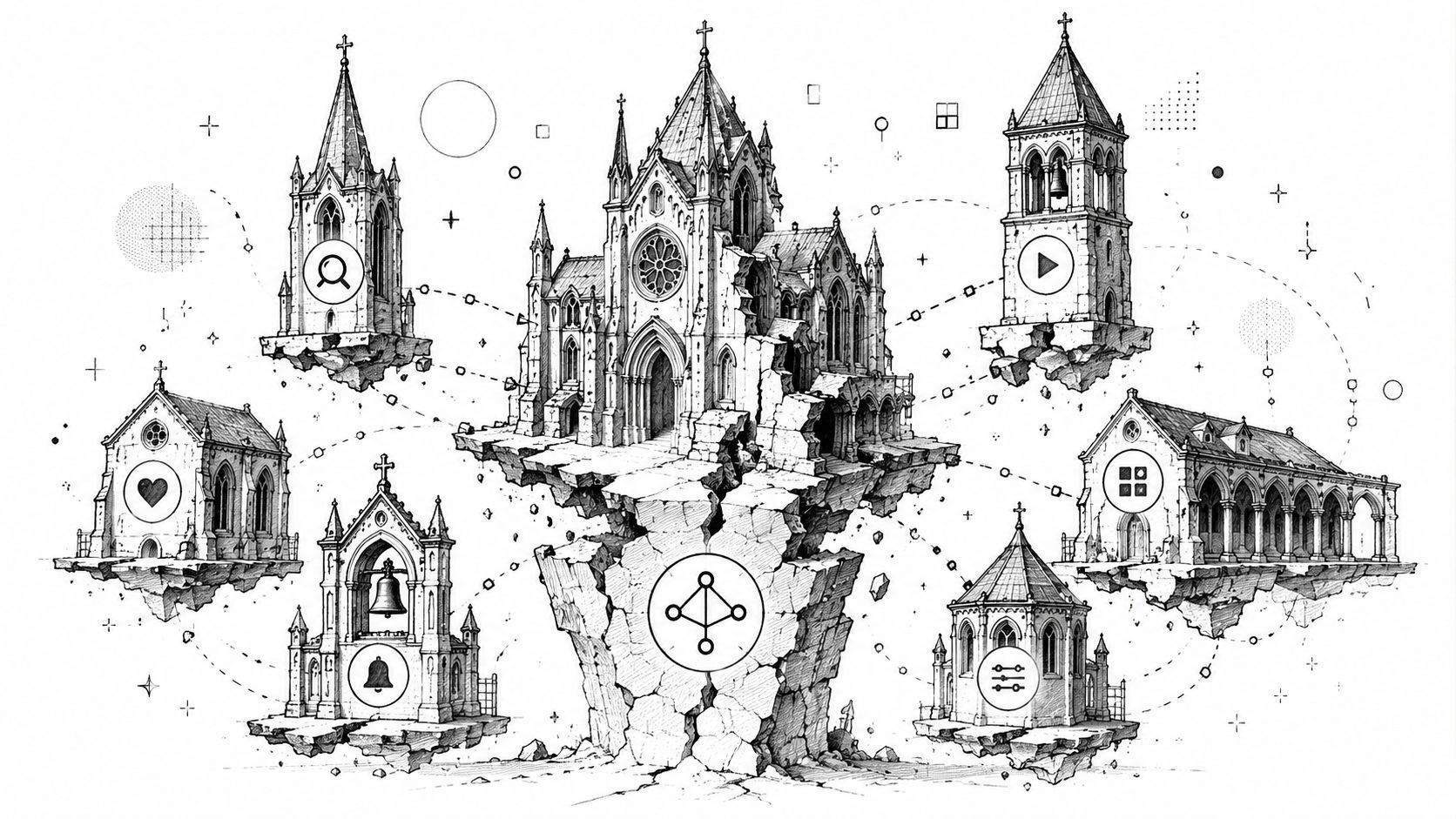
From One Algorithm to Many Systems
Many still talk about “the Instagram algorithm” like it's one giant machine. That's the first thing to unlearn.
Instagram has said it uses “a variety of algorithms, classifiers, and processes, each with its own purpose,” rather than one universal formula, as explained in Buffer's overview of how Instagram's algorithms work. That matters because your church isn't dealing with one scoreboard. You're dealing with several systems inside the same app.
Think like a church staff team
A local church already understands specialized teams.
Your welcome team helps guests feel seen. Your small groups team helps members build relationships. Your outreach team connects with people outside the church. Same church, different assignments.
Instagram works in a similar way:
- Feed often serves ongoing connection and familiar content
- Stories help with close, timely interaction
- Reels lean toward discovery and attention
- Explore helps people find content related to what they already like
If your team posts the same exact idea in every format and expects the same outcome, confusion follows.
Why churches get mixed results
A sermon clip may do well as a Reel because it grabs attention quickly and reaches people who don't follow your church yet. That same clip, posted as a standard Feed item without much context, may not connect the same way. A volunteer appreciation photo may strengthen relationships in Feed or Stories, but it may not travel far beyond current followers.
That doesn't mean one post is good and the other is bad. It means each surface is solving a different problem.
Let's look at it this way:
| Instagram surface | What it tends to help with | Best ministry use |
|---|---|---|
| Feed | Ongoing connection | Reinforce identity and key messages |
| Stories | Timely interaction | Daily touchpoints and conversation |
| Reels | Discovery | Outreach and first impressions |
| Explore | Interest-based discovery | Reaching curious non-followers |
If your volunteers need a broader primer on platform logic, this article on understanding social media algorithms for churches gives a useful foundation.
The practical takeaway is simple. Don't judge your entire Instagram presence as one blended result. Evaluate each surface according to what it was built to do.
Matching Instagram Surfaces to Ministry Goals
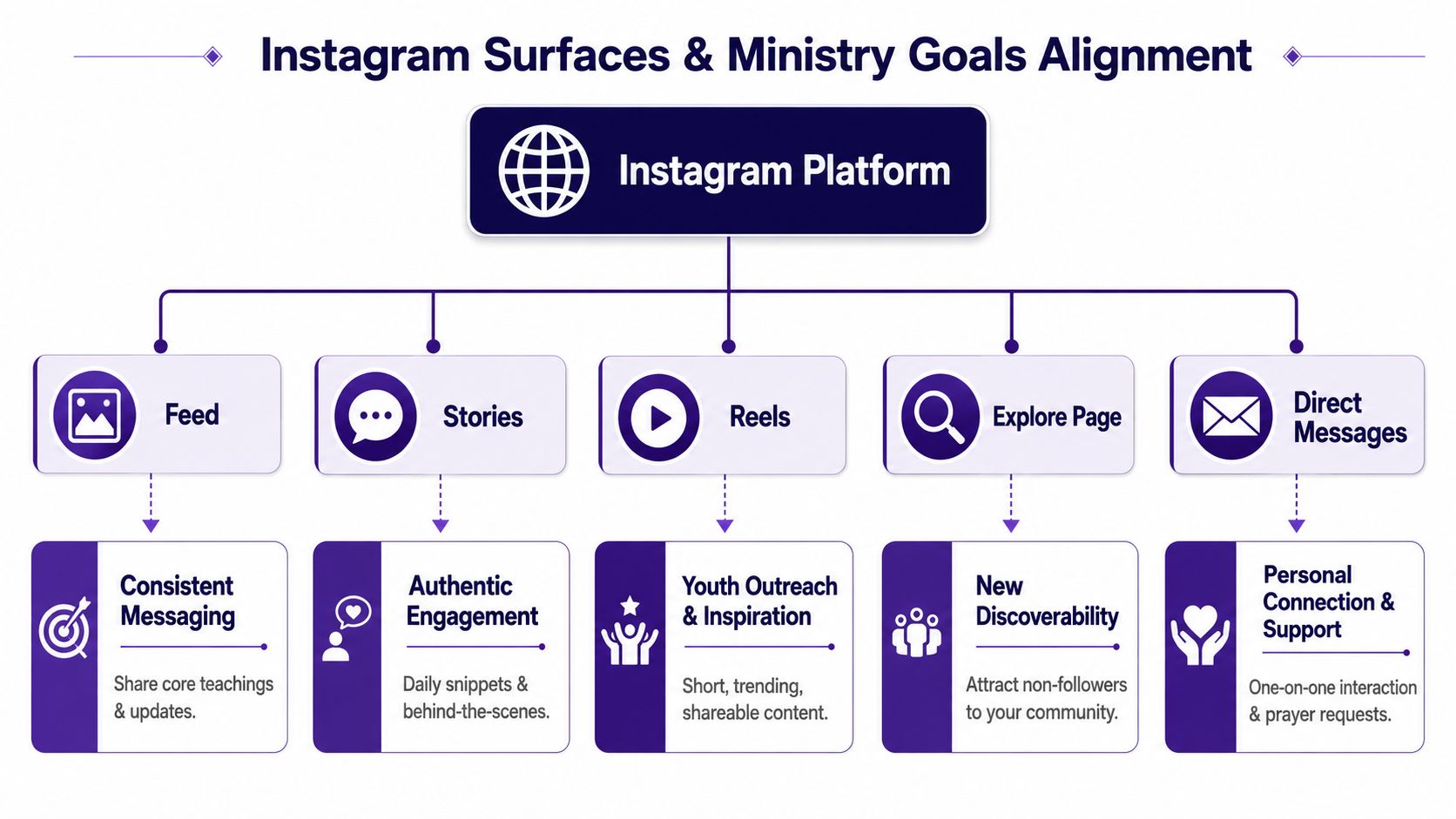
Once you stop treating Instagram as one channel, strategy gets much easier. Each surface can support a different kind of ministry work.
Hootsuite's explanation of Instagram notes that the platform uses separate AI ranking systems for Feed, Stories, Explore, and Reels, and that each one pays attention to different signals such as relationship strength, recency, watch time, and engagement history in its guide to the Instagram algorithm in 2026. For a church team, that means every format should have a purpose before it has a design.
Feed for community memory
Feed is where many churches should place their most stable messages. Think sermon quote carousels, event photos, ministry highlights, baptism celebrations, and recurring discipleship themes.
Feed works well when you want people to recognize your church's voice over time. It helps you say, “This is who we are.”
Use Feed when you want to share:
- Core teaching themes people may revisit later
- Church-wide updates that deserve a longer shelf life
- Visual testimony moments that reinforce belonging
A Feed post is less about urgency and more about consistency.
Stories for daily pastoral touchpoints
Stories are great for closeness. They feel current, casual, and conversational.
That makes Stories useful for ministry moments that don't need polished permanence. A morning prayer prompt, a behind-the-scenes look at worship rehearsal, a quick reminder about youth night, or a question sticker asking, “How can we pray for you today?” all fit here.
Stories are often strongest when they feel human and timely.
Stories are where your church can sound like a person, not a bulletin.
Reels for outreach and first impressions
Reels are your church's front porch for people who don't know you yet. On Reels, short sermon moments, testimony clips, event recap videos, and encouraging Bible-based thoughts can travel farther than your current follower base.
Reels work best when they answer one of these questions quickly:
- Why should I stop scrolling?
- Why should I care?
- Why would I send this to someone else?
That's why a short clip on anxiety, forgiveness, prayer, parenting, or hope can often do more ministry work than a generic announcement video.
If your team is deciding between short video and swipe content, this comparison of Reel vs carousel for church content can help you choose the right format.
Explore for discovery by interest
Explore is less about people who already know your church and more about people who have shown interest in similar content. That means posts tied to clear themes, helpful teaching, and recognizable topics have a better chance of meeting curious viewers where they already are.
A church doesn't control Explore directly. But it can publish content that fits discoverable interests such as Scripture encouragement, prayer, family life, worship, healing, or local community involvement.
Direct messages for care
Direct messages aren't just a feature. They're ministry space.
When someone replies to a Story, shares a Reel privately, or asks for prayer in a DM, that's not secondary engagement. That's often the genuine moment of connection. Churches sometimes chase public reactions and miss that private conversations may be where trust begins.
The Four Key Signals That Fuel Your Reach
Most volunteers don't need a long list of technical terms. They need a simple mental model.
A helpful way to think about Instagram is through four signals your team can act on: user behavior, content information, interaction history, and recency. Put together, these explain why some posts spread and others stall.
User behavior
Instagram watches what people do.
If someone regularly watches sermon clips, saves prayer posts, shares encouraging videos, or replies to Stories from your church, the platform learns from that. It starts expecting that person may want more of that kind of content.
For your team, this means the question isn't just “Did people like it?” It's “What did they do with it?”
Content information
Instagram also looks at what kind of content you posted and how people respond to that format.
A Reel, carousel, Story, or photo post each create different opportunities for response. A short preaching clip may earn repeat views. A carousel on “3 Scriptures for anxious days” may get saved. An event reminder in Stories may get replies.
Different content carries different value signals.
Interaction history
This one is easy to miss. If people already engage with your church, Instagram tends to treat that relationship as meaningful.
That's why a member who often responds to your Stories may see your updates more regularly than someone who never interacts. Over time, your church builds digital familiarity. It's similar to real ministry. Ongoing connection makes future connection easier.
Recency
Timing still matters in a common-sense way. Fresh content often gets an earlier chance to be seen and acted on.
But recency alone won't rescue weak content. A post that no one watches, saves, or shares won't become strong just because it was published recently.
Sprout Social's overview says Instagram now prioritizes Views as a unified measurement and puts more weight on sends, shares, saves, and watch time than raw likes. It also describes private sharing, especially through DMs, as a major distribution signal in its guide to the current Instagram algorithm.
That's a major shift for churches.
If a sermon clip makes someone think, “I need to send this to a friend,” Instagram treats that as a stronger signal than a quick like.
This changes how you plan content:
- Teach for saves with practical Scripture carousels, prayer lists, or notes people want to revisit
- Create for shares with short Reels that speak to common struggles, hope, or invitations
- Hold attention with clear openings and focused video clips
- Invite response through Stories and DMs, where real ministry often happens personally
Likes still have a place. They're just not the clearest picture of impact anymore.
Actionable Instagram Strategies for Your Church
Monday arrives. Sunday's message was strong, people responded, and your team wants that ministry moment to keep serving people all week. Then the usual questions start. What should we post? Who can edit the video? Do we need a graphic? Which post belongs in Reels, Stories, or the Feed?
A simple ministry framework helps. Instead of treating Instagram like one big content bucket, match each piece of content to the purpose it serves. One sermon can support outreach, discipleship, and community building if you place it in the right format.
Start with one message and assign each piece a ministry job
A sermon is not one post. It is a week of raw material.

Here is a practical way to break it down:
- Create one short Reel for outreach. Pull a clip that speaks to a real need such as anxiety, forgiveness, purpose, or prayer.
- Build one carousel for discipleship. Turn a teaching point into a few clear slides people can revisit during the week.
- Post Stories for conversation. Use a poll, question box, or prayer prompt connected to Sunday's message.
- Share one Feed post for community. Use a photo from the weekend that helps people see church life and feel included.
That structure keeps your content connected without making every post sound the same. It also helps volunteers know why each post exists.
Plan for the response you want
A church social team does better work when it asks one question before writing a caption or opening Canva. What do we hope people do with this?
That question clears up a lot of confusion.
- A teaching carousel should give people something worth saving
- A testimony clip should give people something worth sending to a friend
- A Story should invite a quick reply, poll tap, or prayer request
- A community photo should remind people that church is a place to belong
Instagram works a lot like Sunday ministry rhythms. You would not use the same approach for a welcome moment, a sermon, and a small group discussion. Each one has a different goal, so each one uses a different format. Social content works the same way.
Remove production friction for volunteers
Many church teams do not struggle with ideas. They struggle with time, handoffs, and follow-through.
One volunteer has the sermon notes. Another has the event details. Someone else was supposed to make the graphic. By Thursday, the team is rushing. A platform like ChurchSocial.ai can fit naturally into this workflow by helping generate and schedule content from existing sermons, reducing production friction.
That matters because consistency usually breaks down in the process, not in the intention.
Keep the weekly plan realistic
Your church does not need a studio-level production schedule. It needs a repeatable rhythm your team can maintain.
A healthy weekly mix often looks like this:
- One Reel from a sermon clip, testimony, or pastor encouragement
- One carousel with teaching, next steps, or event information
- Several Stories during the week for reminders, prayer prompts, volunteer highlights, or behind-the-scenes moments
If your team wants better short-form video ideas, this guide on mastering Instagram Reels for brands offers useful concepts you can adapt for ministry use.
Put the calendar where everyone can see it
A visible plan helps volunteers serve with confidence.
Use a shared calendar that shows what is scheduled, what is waiting for approval, and what still needs a caption or design. If your church already tracks events in Planning Center or another ministry calendar, bring those dates into your content plan early. Youth night, baptisms, mission Sunday, and women's gatherings should shape your posts before the week gets crowded.
That kind of rhythm gives your team breathing room. It also helps Instagram content support real ministry instead of becoming one more last-minute task.
Common Instagram Myths Debunked
Bad Instagram advice spreads fast, especially in church volunteer circles where everyone is trying to be helpful. A few myths cause more confusion than anything else.
Myth one: there's one secret algorithm to crack
There isn't one master switch. Instagram uses different systems across different surfaces, so a post can underperform in one place and still work in another. Low reach doesn't always mean something is wrong with your whole account.
It may mean the content didn't fit that surface well.
Myth two: likes are the main thing that matters
Likes are easy to see, so teams overvalue them. But a post with modest visible engagement can still be useful if people save it, send it privately, or keep watching.
That's why a practical prayer carousel may still do ministry work even if it doesn't look flashy on the surface.
Myth three: if reach drops, Instagram must be punishing us
Most of the time, what feels like punishment is mismatch.
A church may post a long announcement as a Reel when it should have been a Story. Or it may publish a graphic with no obvious takeaway, so people scroll by. The platform responds to user behavior. If people don't stop, watch, save, or share, distribution usually slows.
Low reach often means low resonance, not secret punishment.
Myth four: we have to post constantly to stay relevant
Consistency matters. Constant output isn't the same thing.
A smaller church with a clear rhythm can do better than a burnt-out team posting rushed content every day. People respond to clarity, usefulness, and connection more than volume alone. A few thoughtful posts built around sermon moments, church life, and direct interaction can create a healthier presence than a flood of filler.
The healthiest church Instagram accounts usually feel intentional, not frantic.
Putting It All Together with ChurchSocial.ai
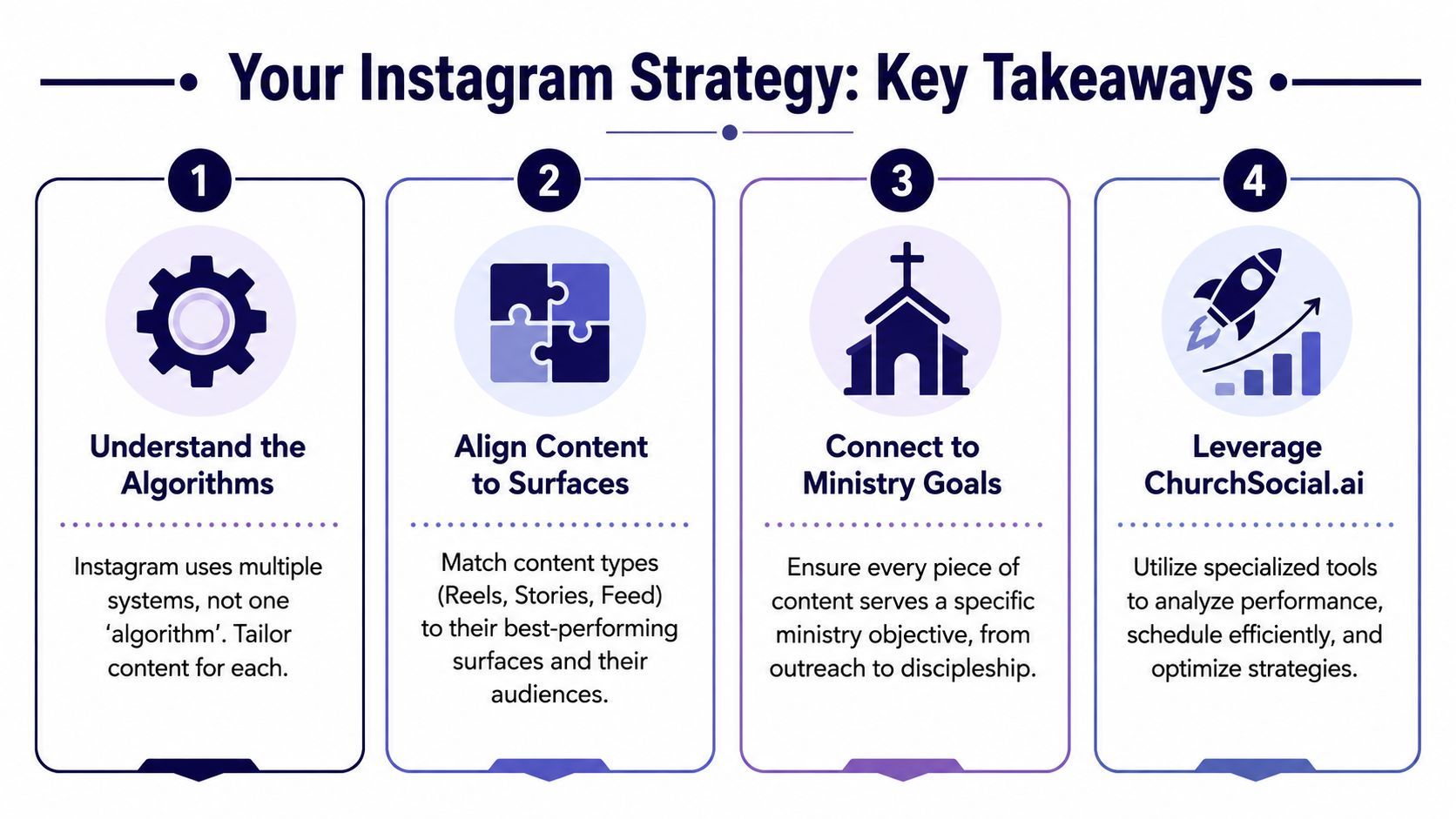
Understanding Instagram algorithm patterns gets much simpler when you stop chasing hacks and start matching content to ministry intent.
Feed can support steady communication. Stories can open conversation. Reels can extend outreach. Direct messages can become real care. When your church plans content this way, Instagram stops being one blurry task on the to-do list and becomes a set of clear ministry lanes.
Keep your measurements honest
Church teams can waste a lot of energy chasing vanity metrics.
A better review habit is to ask questions like these:
- Which posts led to replies or prayer conversations?
- Which Reels were shared or sent to others?
- Which teaching posts seemed worth saving?
- Which Stories sparked taps, reactions, or responses?
Those questions point closer to ministry impact than simple like counts.
Choose a repeatable system
Most volunteers don't fail because they lack passion. They fail because the process is too hard to repeat.
If your team is juggling sermon edits, event reminders, graphics, captions, approvals, and scheduling by hand, the workload becomes heavy fast. A purpose-built workflow helps you turn one sermon into several formats, keep your calendar organized, and publish with less scrambling during the week.
That's where ChurchSocial.ai can serve as a practical ministry operations tool. It helps churches create sermon-based social content, manage graphics, organize scheduling, and keep event communication tied to the wider church calendar. For a small team, that kind of structure can make Instagram manageable instead of draining.
The goal isn't to become obsessed with a platform. The goal is to communicate faithfully, clearly, and consistently where people already spend attention.
If your church wants a simpler way to turn sermons, events, and weekly ministry moments into organized social content, ChurchSocial.ai gives your team one place to plan, create, and schedule it. That means less scrambling for volunteers and a clearer path to using Instagram with purpose.