A church prayer request box is a specific place—whether it's a physical box in your lobby or a form on your website—where your congregation can share what's on their hearts. It’s a powerful spiritual hub, connecting the very real needs of individuals with the prayer life of the entire church.
The Enduring Power of a Church Prayer Request Box
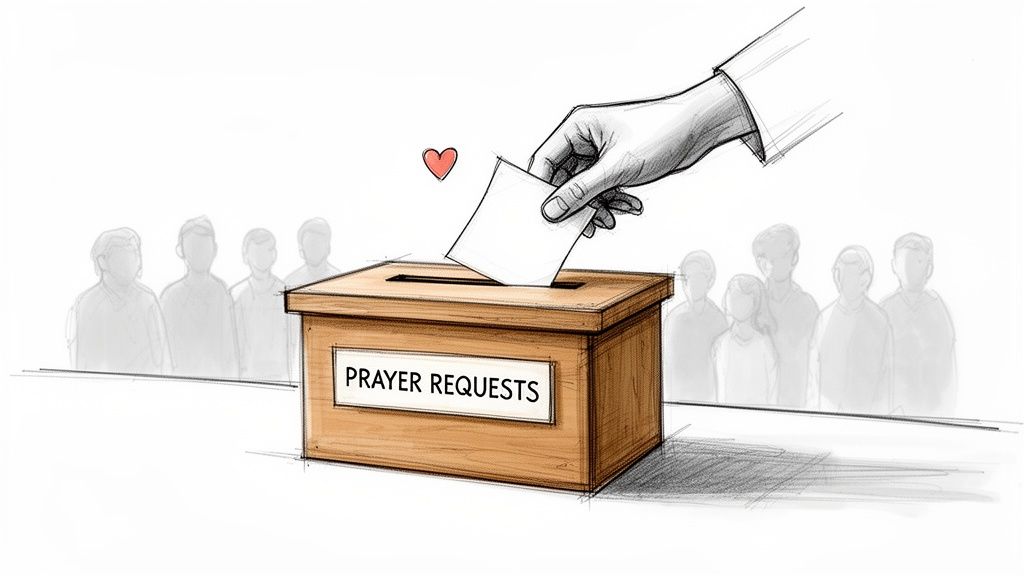
A prayer request box is so much more than just a container or a web form. Think of it as the spiritual heartbeat of your community. It’s a tangible sign that your church is a safe place for people to be vulnerable and a real conduit for God's grace. This simple tradition helps build a deep-rooted culture of care.
When someone takes a moment to write down a personal struggle or a quiet hope and slips it into that box, they're taking a step of faith. They are trusting that their voice will be heard, not just by the pastors, but by a whole community ready to lift them up. It’s a powerful reminder that no one has to walk through life's toughest moments alone.
Building Faith and Fostering Connection
The real magic happens when the congregation starts to see those prayers being answered. When you share anonymized testimonies of healing, a new job, or restored peace, it builds incredible faith. It takes prayer from being an abstract idea and makes it a real, active force in your church. That small note asking for prayer for a new job can become a powerful praise report a few weeks later, inspiring everyone.
This practice has certainly evolved, but its core mission is the same as it's always been: connecting people to God and to each other.
- Physical boxes give people a quiet, tangible way to share in the church building.
- Digital forms offer round-the-clock access for anyone at home or on the go.
No matter the format, the goal is to create a trusted, accessible space for people to share their burdens and celebrate their joys.
Amplifying Your Prayer Ministry Online
Now, imagine taking this powerful ministry beyond the four walls of your church. This is where your social media strategy can make a huge difference. A powerful sermon on the importance of prayer can be instantly turned into an engaging Reel for Instagram, encouraging your online community to share their own needs.
With ChurchSocial.ai, you can create AI-generated reels from your sermons, generate content like social posts and blogs from the sermon transcript, and use our graphic templates and editor to create and post photos and carousels. Our simple drag-and-drop calendar allows churches to easily manage and update all of their social media. It allows you to seamlessly integrate your prayer ministry into your digital outreach, ensuring the spiritual heartbeat of your church is felt online.
So, you're ready to set up a prayer request box. The first big question is: do you go with a traditional physical box or a modern digital one?
This isn't just about wood versus websites. It's about understanding who is in your church and how they connect best. There's no one-size-fits-all answer; the right choice really comes down to your unique congregation.
The Case for a Physical Prayer Box
There's something deeply meaningful about a physical prayer box. It offers a tangible, quiet moment for someone to pause, write down their burden, and physically place it in God's hands, so to speak. This simple act can be a powerful part of the prayer process.
These boxes can be anything from a rustic wooden chest that matches your sanctuary’s traditional feel to a sleek, simple design for a more contemporary space. They become a physical landmark for prayer within your church building.
The success of a physical box hinges on its location. It must be easy to find, yet private enough for someone to write a note without feeling like they're on display. Think about placing it in a quiet alcove, on a side table in the lobby, or inside a dedicated prayer room.
This approach honors tradition and creates a sacred, focused space. The main limitation, of course, is that it’s only available to people who are physically at the church when the doors are open.
Embracing Digital Prayer Options
A digital prayer request system, on the other hand, throws the doors wide open—24/7. This is much more than just an email address. A dedicated form on your website, a text-to-pray number, or a feature in your church app makes it incredibly simple for people to ask for prayer the moment they need it.
The biggest advantage here is pure accessibility. A member can submit a request late at night from their couch. A visitor who watched your service online can immediately connect with your prayer team. It ensures that distance and time are no longer barriers to receiving prayer support.
So, how do the two stack up? Here’s a quick comparison.
Physical vs Digital Prayer Request Box Comparison
| Feature | Physical Box | Digital System |
|---|---|---|
| Accessibility | Limited to church location and hours | Available 24/7 from anywhere |
| Anonymity | High; depends on handwriting and placement | High; can be easily submitted anonymously |
| Immediacy | Delayed; requires manual collection | Instant; prayers can be distributed quickly |
| Engagement | Tangible, personal, and reflective act | Convenient, fast, and broad-reaching |
Each method clearly has its own set of strengths.
The Power of a Hybrid Approach
For most churches, the best strategy isn't choosing one over the other. It's adopting a "both/and" approach that serves everyone. A hybrid model gives you the best of both worlds.
By keeping your physical box and adding a digital form, you cater to every demographic. The long-time member who treasures the tradition of a handwritten note feels seen. The college student who lives on their phone does too.
The key is making sure both options are equally promoted so everyone knows they exist. You can use a tool like ChurchSocial.ai to bridge this gap. Create some sharp social media graphics to regularly remind your online community about both your physical and digital prayer request options. This ensures your entire church family feels connected and supported.
Building a Prayer System Your Congregation Trusts
Collecting prayer requests is one thing. Building a system that your congregation genuinely trusts with their most vulnerable moments is where the real ministry happens. This process is what elevates a simple box into a powerful channel for care and community.
The foundation of this trust is deciding who handles the requests. This isn't a job for just anyone; it demands spiritual maturity and absolute discretion. Most churches I've worked with assign this to a small, dedicated group.
- Elders or Pastoral Staff: This is a natural fit. They're already in a position of spiritual leadership and have earned the trust of the congregation.
- A Dedicated Prayer Team: Forming a team of vetted, confidential volunteers can be incredibly powerful. These should be people known for their compassionate hearts and unwavering ability to maintain privacy.
No matter who you choose, every single person on that team needs to understand the sacred weight of this role. These aren't just slips of paper; they are the hopes, fears, and hurts of your people.
Creating a Secure and Confidential Workflow
Once your team is in place, you need a secure way to get the requests into their hands. The goal is simple: ensure every request is prayed for intentionally while fiercely protecting the privacy of the person who shared it.
A confidential email list or a shared, password-protected document (like a Google Doc) works well for many churches. This gives your prayer team immediate access from wherever they are. A designated administrator can add new requests as they come in, allowing the team to begin praying almost right away.
This flowchart maps out the key decisions you'll face when managing both physical and digital requests.
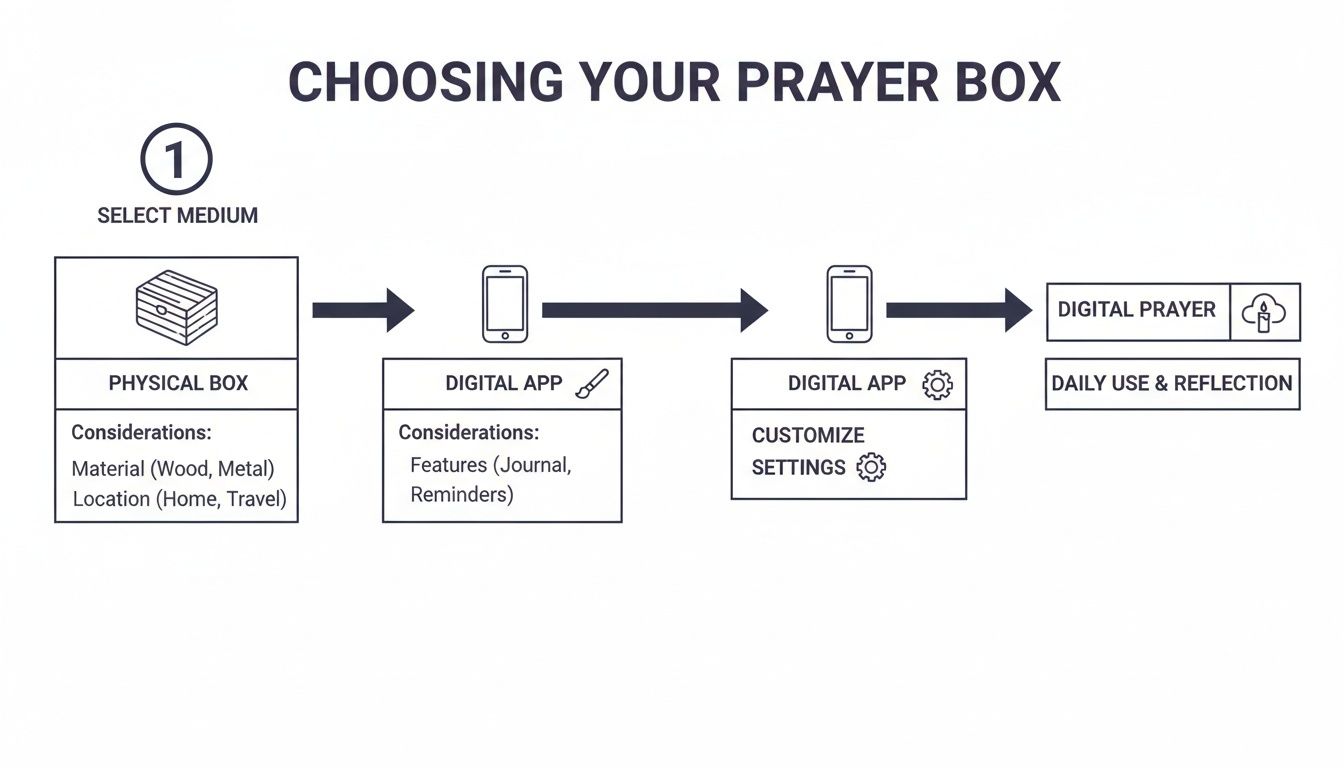
As you can see, both physical and digital inputs can flow into one organized system, making sure nothing gets lost. The key is that both paths lead to the same destination: intentional, confidential prayer. If you're looking for more ways to organize these requests visibly, check out our guide on creating a prayer request board.
Communicating Your Commitment to Privacy
Trust is earned, and clear communication is how you earn it. Your congregation needs to see and hear that their stories are safe with you. Be direct and clear on your prayer box signage and your digital submission forms.
Sample Signage Language: "Your requests are a sacred trust. Every submission is shared only with our confidential prayer team for the sole purpose of prayer. We will never share your name or details publicly without your express permission."
For online forms, a simple checkbox makes all the difference: "Check here if you would like this request to remain confidential to the prayer team." This small feature gives people control and powerfully reinforces their trust in your process. A system like this honors vulnerability and ensures everyone feels secure enough to share their needs.
Bringing Prayer Requests Into Your Digital Ministry
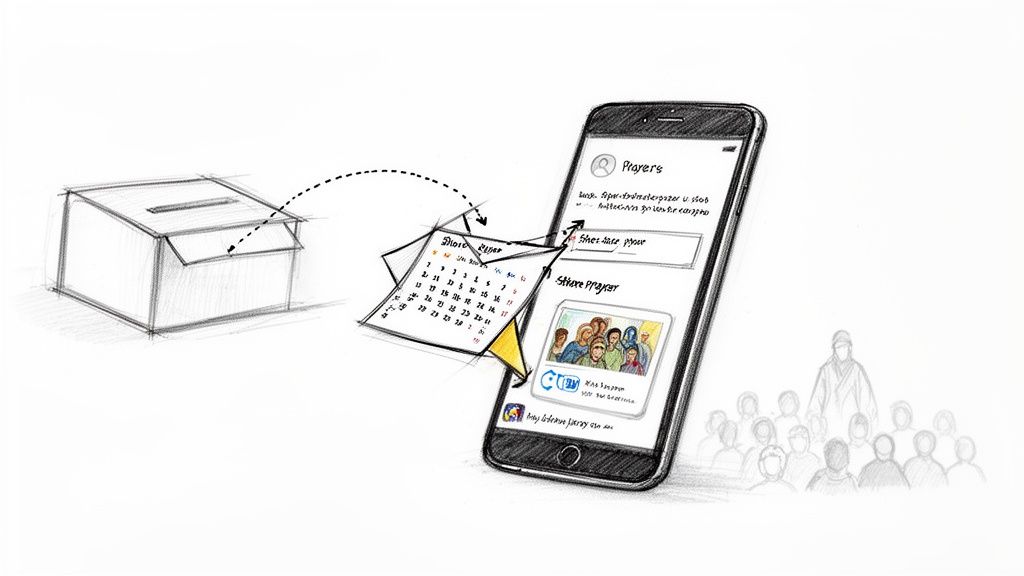
A list of prayer requests, whether handwritten or digital, holds incredible spiritual weight. But what if we could move that list from a static document into a living, breathing conversation that pulls your entire church community together online?
This is where your digital ministry can truly shine—by transforming a private act of prayer into a powerful, shared experience. It’s all about meeting people right where they are every single day, on their phones and in their social feeds. This isn't just about posting a reminder; it's about creating real connection points that invite people to share both their burdens and their praises.
From Sermon to Social Post
Think about the momentum from a powerful weekend sermon on prayer. It’s amazing in the moment, but how do you keep that fire going into the week? Instead of letting that inspiration fizzle out by Monday morning, you can use it as a launchpad for incredible online engagement.
This is where a purpose-built tool for churches can change the game. With ChurchSocial.ai, you can feed in your sermon transcript and instantly get content ideas that flow directly from your message.
- AI-Generated Reels: Turn a key takeaway from your sermon into a compelling 60-second video that points people toward your digital prayer request page.
- Social Media Posts: Pull a powerful quote or a thought-provoking question from the message to spark a discussion about prayer right in the comments.
- Blog Content: Go deeper by expanding on your sermon’s theme in a full blog post, where you can embed your prayer request form right on the page.
This approach keeps the "why" behind your prayer ministry front and center, which naturally inspires more people to get involved.
Designing a Digital Prayer Culture
Consistent, visually appealing content is your best friend for keeping prayer top-of-mind. You don't need a full-time graphic designer to make this happen. Using beautiful, ready-made templates helps create a digital space for prayer that feels both professional and welcoming.
You could, for example, launch a "Weekly Prayer Focus" on your Instagram and Facebook. Each week, share an anonymized theme—like "praying for those seeking new jobs" or "praise for answered prayers for healing"—using a branded graphic. Then, invite your community to add their own related requests. Thinking about a dedicated space for this? A digital prayer board can be a fantastic way to centralize these interactions.
With ChurchSocial.ai, our graphics editor and templates make this incredibly simple. You can create and post photos and carousels directly from the platform. Plus, our drag-and-drop calendar lets you schedule everything across all your social channels, saving your team hours. We also integrate with Planning Center and other church calendars to create content for events.
This strategy does more than just promote your prayer request box; it builds a visible culture of care online. It shows everyone that prayer isn't just a program—it's an active, vital part of who you are as a church. For those thinking even bigger, learning how to build an app without code has become an accessible way to create a dedicated digital home for your prayer ministry.
We already know our communities are hungry for this connection. A global survey from 2017–2018 found that 38% of church members worldwide attend prayer meetings weekly. By weaving prayer requests into your social strategy, you can boost this engagement even further, turning passive scrollers into active intercessors. You can dig into the data yourself in the complete prayer meeting attendance study.
Getting the Word Out and Encouraging Participation
You can have the most beautiful, thoughtful prayer request box in the world—physical or digital—but it won't mean a thing if no one uses it. Building a system people can trust is step one, but getting the word out is what actually breathes life into your prayer ministry.
A quick mention from the pulpit is a decent start, but it’s rarely enough. To really build a culture of prayer, you have to be creative and consistent. Think beyond the Sunday bulletin and make your communication as inviting as the prayer ministry itself. For some great visual ideas that can spark engagement, check out these inspiring church welcome sign ideas.
Crafting Compelling Social Media Campaigns
Your church’s social media channels are your direct line to inviting people into prayer. But simply posting, "Submit your prayer requests here," is a missed opportunity. You need to tell a story and show the real, human impact of your prayer team.
Here are a few ways to do that:
- Share a Story: With their full permission, share a short video of a church member talking about how prayer made a difference for them.
- Highlight a Theme: Use an Instagram Story to say something like, "This week, our prayer team is focusing on families walking through illness." It invites people to pray along and submit related requests without exposing anyone's privacy.
- Pull Back the Curtain: Post a photo of your prayer team meeting (without showing any requests, of course). It’s a powerful reminder that real, caring people are on the other side of that form or card.
This is exactly where a smart social tool becomes a ministry game-changer. Instead of your team staring at a blank screen, ChurchSocial.ai can instantly generate promotional posts, carousels, and captions specifically for your church's voice. It keeps your messaging consistent and, more importantly, effective.
Tapping Into a Community Ready to Pray
The amazing thing is, you’re not trying to create a desire for prayer out of thin air. It’s already deeply woven into our communities. Pew Research found that 55% of people in the U.S. pray every single day—a figure that’s higher than the global median.
By using an AI tool like ChurchSocial.ai to automatically create and schedule prayer-focused posts from your sermon clips, you can tap directly into this ready-made audience on Facebook and Instagram.
With ChurchSocial.ai, you can create AI-generated reels from your sermons, create AI-generated content from the sermon transcript like social posts, blogs, etc., you can use our graphic templates and editor to create and post photos and carousels, and our simple drag and drop calendar allows churches to easily manage and update all of their social media. This saves your team valuable time while making your prayer ministry more visible than ever.
When you consistently share these invitations, you start to actively build your church online community around the powerful, central act of prayer. You’re no longer just advertising a service; you’re cultivating an environment where sharing burdens and celebrating answered prayers becomes second nature. Your prayer box transforms from a static drop-off point into a dynamic, thriving part of your church’s daily life.
Answering Your Questions About Prayer Request Boxes
As you get a prayer box ministry rolling, you’re bound to run into some tricky situations. Let’s walk through some of the most common questions we hear from church leaders so you can handle every request with wisdom and grace.
What Should We Do with Highly Sensitive Requests?
Sooner or later, a request will come in that deals with something incredibly personal and sensitive. When this happens, the number one rule is absolute confidentiality.
These requests are not for the general prayer team. They should only be shared with a small, trusted group of spiritually mature leaders, like your senior pastor or a handful of elders. Upholding that trust is everything—it proves to your congregation that your church is a safe place to be truly vulnerable. Never share these details more widely unless you get explicit, direct permission from the person who wrote it.
How Do We Handle Anonymous Prayer Requests?
Treat every anonymous request with the same seriousness and respect you'd give any other. The person might feel too ashamed or afraid to include their name, but their need for prayer is just as real.
Think of it this way: anonymous requests are a good sign. It means you’ve created an environment where people feel safe enough to share their deepest hurts, even if they’re not ready to share their name.
Your team's role is simply to pray over these needs faithfully.
Can We Share Prayer Requests on Social Media?
Bringing prayer requests to your social media channels can be an amazing way to get your whole online community praying together, but you have to be extremely careful. The golden rule is to never share any personally identifiable information.
Instead, focus on sharing general themes or praises.
For example, you could post something like:
- “This week, let’s join together in prayer for those in our community facing financial uncertainty.”
- Or, celebrate an answered prayer by posting: “We’re praising God for a recent report of healing after surgery! Join us in giving thanks.”
This approach lets everyone participate without ever compromising someone’s privacy. A tool like ChurchSocial.ai can make this a breeze, helping you schedule posts, generate compassionate captions, or even design beautiful graphics to highlight these prayer points.
It's been known for years that a prayer request box is a vital part of helping people feel like they belong. For example, newcomers often make their first real connection through a shared request. A 2009 study from the Hartford Institute for Religion Research found that 19.1% of church attendees had been involved for less than a year, underscoring just how important those early connection points are. Explore more insights from the Hartford Institute's research.
Ready to elevate your church's digital prayer ministry? With ChurchSocial.ai, you can transform sermon clips into engaging Reels, design beautiful social media posts with our templates, and manage all your content on one simple calendar. Let us help you save time and connect with your community in meaningful new ways.