Spring exposes weak church communications fast. The lobby board still carries winter colors, Easter is approaching, and the volunteer team does not have hours to spend on a display that reaches people for a few seconds on Sunday morning.
The most effective church spring bulletin board ideas work as small ministry campaigns. A physical board gives people a visual anchor in the building. That same theme can then show up in social posts, sermon clips, blog content, email, and event promotion so the message keeps working after people leave campus.
That shift matters because spring gives churches more than a decorating opportunity. It brings together Easter, baptism, new life, outreach, family ministry, and seasonal events in a way people already understand. A well-built board can support all of that if the message is simple enough to read in passing and strong enough to repeat online. If your team also needs visual assets for posts and slides, this collection of free church bulletin images for seasonal church communications can help you keep the look consistent.
I have found that the strongest boards start with one theme, one key verse, and one clear takeaway. That discipline saves time. It also prevents a common problem in church hallways. Too many spring boards try to announce everything at once, which weakens the main message and makes digital follow-through harder.
This article approaches spring bulletin boards differently. Instead of offering a loose set of craft ideas, it lays out eight complete, theme-based concepts you can run as coordinated church campaigns. Each one is built to work on the wall and online, with practical ways to extend the message through social media using tools like ChurchSocial.ai. For the surrounding wall area, this guide to choosing and styling inspirational decals can help you keep the space cohesive without crowding the board itself.
1. Resurrection & Renewal Theme

If your spring board only gets one major push, make it this one. Resurrection and renewal is the most natural meeting point between the church calendar and spring visuals. Empty tomb imagery, light, blooming flowers, butterflies, and fresh shoots all work because they reinforce the message people are already hearing from the platform.
What works is restraint. Pick one central symbol, then support it with scripture and color. An empty tomb with soft greenery feels stronger than a cluttered mix of crosses, eggs, clouds, ribbons, and five different fonts. I've seen boards lose their impact when teams try to put the whole Easter sermon outline on the wall.
Build the board for the hallway and the feed
Use a short line people can remember by the time they reach the parking lot. Then reuse that same line on Instagram, Facebook, and your website banner. If your pastor is preaching on resurrection hope, clip that section and turn it into short-form video. ChurchSocial.ai can take sermon content and turn it into short clips, captions, and follow-up posts so the board isn't carrying the whole message by itself.
A practical visual rule is to avoid faces unless you need them. Florals, stone texture, light, and illustrated symbols usually age better and adapt across print and digital. If your team needs matching visuals, ChurchSocial.ai's guide to free church bulletin images is a useful starting point.
Practical rule: If the board can't be understood in a quick hallway glance, it's trying to do too much.
A real-world example here is the Easter campaign many churches already run every year. The mistake isn't using a resurrection theme. The mistake is limiting it to Easter Sunday. Keep the board active through the full spring window by shifting the wording from “He Is Risen” toward “Walk in New Life” or “Made New,” so the display still makes sense after the holiday weekend.
2. Growth & New Beginnings Concept
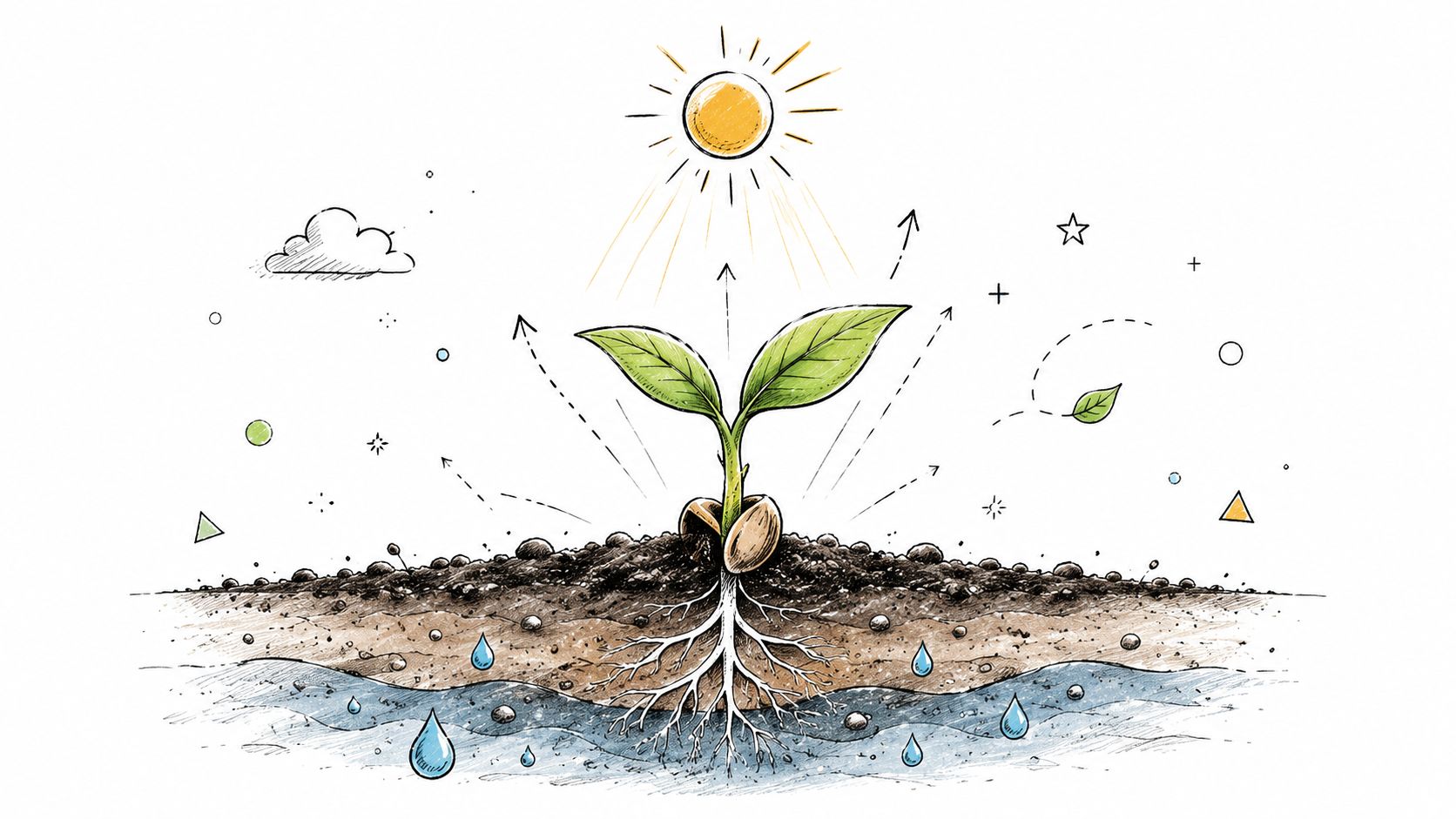
Some of the most useful church spring bulletin board ideas aren't tied only to Easter. Growth and new beginnings gives you a longer runway. It works for discipleship launches, small group signups, volunteer recruitment, baptism promotion, and new member pathways.
The visual language is simple. Seeds, roots, stems, sunlight, garden rows, and blooming branches all communicate progress without feeling childish. That matters because one underserved issue in church bulletin board advice is how to make spring boards feel inclusive for both children and adults, rather than locked into kid-centric Easter visuals, as discussed in this piece on Easter bulletin boards for church.
Make the message useful, not just pretty
This board works best when it points somewhere concrete. A phrase like “Grow Here” is fine, but “Grow in Prayer,” “Take Your Next Step,” or “Rooted in the Word” gives people a clearer next move. Then add removable elements for small groups, classes, serving teams, or seasonal studies.
Here's where digital support matters. If the board highlights new opportunities, your social calendar should echo those same invitations. ChurchSocial.ai's drag-and-drop calendar is useful for planning a steady cadence of launch posts, while the graphics tools help you create matching cards and carousels. If you want help with the visual side, their article on church bulletin graphics fits naturally with this kind of campaign.
- Use roots for depth: Place Bible study, prayer gatherings, and discipleship under the “roots” area.
- Use blooms for visible action: Feature serving teams, outreach, and upcoming spring ministries in the top section.
- Use one palette: Greens, soft neutrals, and one accent color usually look more mature than rainbow-heavy layouts.
The trade-off is that this concept can become vague fast. If every label says “growth” but nothing names an actual ministry path, people appreciate the board and still walk past it unchanged.
3. Joy & Celebration of Life Theme
A family walks in on Sunday, kids spot the bulletin board before the adults do, and the display sets the tone before anyone reaches the welcome desk. That is where a joy and celebration theme earns its place. It works well during spring outreach, churchwide gatherings, ministry relaunches, and any season when the building needs visible warmth.
The challenge is restraint. Bright colors help people notice the board, but too many colors, shapes, and fonts can make the display feel childish or cluttered. Strong celebratory boards stay organized around one clear message, one supporting verse, and a limited set of visual elements such as banners, florals, sunbursts, or confetti accents.
Best use case for this theme
Place this board where people naturally slow down. Entry halls, fellowship areas, and children's ministry check-in zones usually outperform quieter corners because the goal is energy, movement, and invitation.
This theme also works best as a campaign, not a one-off decoration. If the board says “Celebrate New Life Together,” carry that exact phrase into your event slides, Instagram posts, Facebook reminders, and short story-sized invites. Churches get better results when the physical board and digital content repeat the same idea instead of competing for attention.
A practical version might highlight a spring picnic, membership lunch, volunteer welcome night, and Easter follow-up gathering on one board. Use color blocks or simple sections so each invitation is easy to scan. Then build matching social graphics in ChurchSocial.ai and schedule them across the same two or three weeks. That keeps your printed display, lobby messaging, and online promotion working as one ministry communication plan.
Keep celebratory boards tied to a ministry outcome. Joy by itself looks nice. Joy connected to an invitation gets people to act.
One more trade-off matters here. Celebration themes attract attention quickly, but they can drift into generic positivity if every phrase sounds like a party slogan. Keep one foot in joy and one foot in purpose. Name the event, name the next step, and make sure guests know how to join in.
4. Faith & Hope Anchoring Theme
Spring brings change, but not everyone in the building experiences spring as light and easy. Some are walking through grief, transition, illness, job loss, or family strain. A faith and hope board gives you a spring message that feels steady rather than sugary.
Anchor imagery can work well here, but don't force a nautical look if that clashes with your church's style. Foundations, stones, roots, and sunrise imagery can all carry the same idea. The key is to communicate constancy in the middle of change.
A calmer board often reaches farther
This concept works best with a quieter palette. Blues, sand tones, muted green, and off-white usually help the tone land. Keep the text minimal. One verse and one supporting phrase often say enough.
The digital side should follow the same mood. Instead of event-heavy posts, use sermon clips about hope, short written prayers, and reflective graphics. Churches are increasingly balancing physical communication with digital-first outreach, and spring bulletin board roundups rarely compare those formats directly. That gap matters because churches now use online channels to extend ministry beyond the building, as noted in this discussion of free church bulletin board ideas and communication shifts.
If you have members who rarely stop at the board, the online echo becomes even more important. A short video clip from Sunday, a simple hope graphic, and a midweek prayer post can carry the same message into the week. ChurchSocial.ai is built for that kind of reuse, especially if you want to turn one sermon into multiple social pieces without adding a separate editing workflow.
5. Creation Care & Stewardship Focus
This theme won't fit every church, but when it does, it creates a spring board with real local relevance. Creation care and stewardship works well for churches with gardens, cleanup projects, food ministries, outdoor service days, or a strong teaching emphasis on caring for what God has entrusted.
The strongest version doesn't turn into a generic environmental poster. Keep it pastoral and practical. Focus on gratitude, stewardship, tending, service, and care for the spaces and people around you. Spring naturally supports that language.
Keep the visuals earthy and useful
Skip stock imagery that feels corporate. Leaves, soil, seeds, watering cans, trees, raised beds, and hand-drawn earth elements usually feel more grounded. If your church has a garden or community cleanup effort, use that as an authentic life connection rather than stretching for abstract slogans.
This is also where physical and digital coordination can directly support ministry participation. If the board promotes a cleanup day, food pantry garden effort, or neighborhood beautification project, turn that into scheduled social reminders, event graphics, and volunteer calls. ChurchSocial.ai's calendar integrations can help connect event communication with your posting plan, especially when service opportunities are already living in a church planning workflow.
- Name the action clearly: “Join Our Spring Cleanup” works better than “Care for Creation.”
- Show one pathway: Add a QR code for signup, prayer, or supply needs.
- Reuse the design online: Make the board headline the same as the social event headline.
This approach is practical because churches tend to prefer quick-install, low-effort bulletin board kits and reusable formats over custom fabrication, as reflected in Etsy's church bulletin board marketplace patterns. That same mindset helps online. Modular graphics and repeatable layouts save volunteer time.
6. New Season, New Perspective Transformation Theme
Some church spring bulletin board ideas work because they describe the season. This one works because it invites a decision. Transformation language fits baptism Sundays, testimony series, counseling ministry emphasis, rededication moments, and spring sermon series about repentance or renewal.
Butterflies can fit, but they're not your only option. Doors opening, paths turning, broken ground, before-and-after visuals, and light moving into darkness can all communicate change. If your church style is more modern, geometric design with a clear “made new” headline often feels stronger than layered craft elements.
Use testimony carefully
Transformation boards become powerful when they point to lived stories, but be selective. Don't overload the board with long testimony text. Use one short statement or a simple phrase like “God Still Changes Lives,” then let your digital content carry the longer stories.
That's where ChurchSocial.ai can help most in this campaign. Testimony clips, sermon moments on baptism, before-and-after carousels, and short devotionals all extend the message in a format people will engage. The board creates visibility in the building. Social video creates continuity beyond Sunday.
A transformation board should invite response, not just admiration.
A useful real-world scenario is baptism promotion. Put the theme on the wall, add a clear signup point, and follow it online with a short clip from the pastor explaining baptism, a carousel answering common questions, and a countdown post leading into the service. One concept. Multiple touchpoints. Much less confusion.
7. Community Connection & Outreach Emphasis

A church lobby right before service tells the truth fast. If guests walk in and see a board that clearly points to a food drive, neighborhood cleanup, foster care support, or newcomer lunch, they understand that your church serves people beyond Sunday. That makes this theme especially useful for churches that want spring decor to function like a ministry campaign, not just seasonal decoration.
Specificity matters here. “Love our community” is fine as a headline, but it rarely moves anyone to act. A better board names the opportunity, the date, and the next step. Use one outreach focus at a time and give it visible action points. Volunteer. Donate. Pray. Register.
This theme also works well across age groups. Homes, streets, gardens, handwritten prayer notes, service tools, or a simple neighborhood map usually feel more mature than standard spring craft visuals, while still staying accessible for families and student ministries. In practice, that flexibility saves work. One visual system can carry the foyer board, hallway signage, welcome slides, and social graphics without feeling disconnected.
The strongest version of this idea connects the wall display to digital follow-through. Put a QR code on the board that leads to volunteer details or event registration. Then repeat the same campaign headline online with short ministry updates, servant spotlight posts, and story graphics that answer practical questions. ChurchSocial.ai helps churches keep that message consistent across the physical board and weekly social content, which is what turns a bulletin board into a coordinated outreach push instead of a one-week display.
For added visual planning beyond the board itself, the guide to church decorating ideas that support ministry communication can help you carry the same outreach message through the rest of the building.
- Lead with one outreach action: Feature one clear ministry effort instead of stacking several unrelated announcements.
- Make response easy: Add a QR code, tear-off tab, or printed signup path people can use in under a minute.
- Build one campaign across channels: Match the board headline, announcement slide, and social posts so people recognize the same invitation wherever they see it.
8. Easter Preparation & Spiritual Disciplines Theme
A spring bulletin board can do more than announce Easter events. It can prepare people for Easter with a steady, repeatable discipleship campaign that starts in the hallway and continues through the week. This theme works especially well during Lent or in the final stretch before Holy Week, when the goal is reflection, repentance, prayer, and focused scripture reading rather than high-energy promotion.
The board itself should feel calm and intentional. A pathway, cross, open Bible, prayer journal, candles, or a restrained floral frame usually gives enough visual structure. Keep the copy tight. One invitation gets a better response than six small instructions competing for attention.
Build a board people can return to
The strongest version changes a little each week. Update one prayer prompt. Replace one scripture card. Add a simple practice such as fasting, gratitude, silence, confession, or daily Gospel reading. That rhythm gives people a reason to stop again instead of treating the board like static decor they only notice once.
Printed takeaways help here. A church can offer a small prayer card, a weekly reading guide, or a simple Lent commitment slip. A QR code can carry the same campaign into digital follow-up with sermon notes, short devotional posts, and weekday prompts for families or small groups.
This approach also solves a common ministry problem. Staff teams often build a thoughtful board, then let the message end at the wall. A better plan is to treat the board as the front door to a full theme-based campaign. Use the same title, verse, and visual style on social posts and email reminders so the congregation sees one clear invitation across physical and digital spaces.
ChurchSocial.ai supports that workflow in a practical way. Sermon points, prayer prompts, and reading-plan reminders can be adapted into short social captions, graphics, and discussion starters without rewriting the campaign from scratch each time. The result is a bulletin board that supports spiritual formation in person and keeps the church connected to the same discipline-focused message all week.
8-Point Comparison of Church Spring Bulletin Themes
| Theme | 🔄 Implementation complexity | ⚡ Resource requirements | 📊 Expected outcomes | ⭐ Key advantages | 💡 Tips |
|---|---|---|---|---|---|
| Resurrection & Renewal Theme | Moderate–High: needs theological sensitivity and creative execution | Moderate: skilled designer, scriptural input, multi‑platform assets | High seasonal engagement and deep spiritual resonance at Easter | Strong theological relevance and cross‑denominational recognition | Create sermon clips, coordinated posts, and resurrection‑focused graphics |
| Growth & New Beginnings Concept | Moderate: straightforward visuals but requires consistent messaging | Low–Moderate: templates, simple photography, scheduling | Encourages sign‑ups for new ministries and discipleship participation | Adaptable for announcements; visually clear spring metaphor | Pair with small group promos, teaser posts, and visual growth assets |
| Joy & Celebration of Life Theme | Low–Moderate: bright design needs balance to avoid triviality | Moderate: high‑quality graphics and short video content | Boosts event attendance and social media engagement | Inviting, energetic, and highly shareable | Use celebratory templates, countdowns, and short Reels/TikToks |
| Faith & Hope Anchoring Theme | Moderate: requires theological nuance and calm aesthetic | Moderate: careful copywriting, sermon tie‑ins, soothing imagery | Deep emotional engagement and pastoral comfort during transitions | Offers stability and sophisticated hope‑focused messaging | Emphasize scripture anchors, sermon clips, and consistent reinforcement |
| Creation Care & Stewardship Focus | Moderate: needs theological framing and sensitivity to politics | Moderate–High: program coordination, partnerships, action plans | Engages younger demographics and drives community partnerships | Positions church as socially responsible and action‑oriented | Promote projects, schedule Earth Day content, and partner locally |
| New Season, New Perspective Transformation Theme | Moderate: narrative visuals and testimonial integration needed | Moderate: testimonial videos, carousel graphics, storytelling assets | Inspires baptisms, recommitments, and shareable transformation stories | Strong narrative arc that motivates action and personal change | Use before/after carousels, testimonial clips, and coordinated scheduling |
| Community Connection & Outreach Emphasis | Low–Moderate: simple visuals but requires authentic local detail | Moderate: volunteer coordination, event materials, calendar sync | Increases volunteerism, visitor integration, and local impact | Drives measurable community engagement and positive reputation | Highlight specific projects, sync with Planning Center, collect testimonials |
| Easter Preparation & Spiritual Disciplines Theme | Moderate–High: sustained, reflective content across the season | Moderate–High: daily devotionals, study guides, multi‑platform content | Deepened spiritual practices and sustained Lent‑to‑Easter participation | Supports disciplined growth and season‑long theological depth | Schedule daily devotionals, repurpose sermons into study materials |
Turn Your Bulletin Board into a Digital Ministry Tool
Sunday morning is usually when the gap shows up. A family stops to read the spring bulletin board in the lobby, connects with the theme, then leaves the building and never sees that message again until next week. Churches lose momentum there, not because the board failed, but because the campaign stopped at the wall.
A bulletin board still does work that digital channels cannot. It meets people in a physical space, creates visual repetition, and reinforces what the church is already teaching in worship, children's ministry, and seasonal events. But it reaches only the people who walk past it, and only for a few seconds at a time. The stronger approach is to treat the board as the starting point of a coordinated spring campaign.
That matters with the eight themes above. Each one can become more than a display idea. A Resurrection and Renewal board can become a week of testimony posts and short sermon clips. A Growth and New Beginnings concept can support volunteer spotlights, baptism invitations, or next-steps content. A Community Connection board can point people to service opportunities with a QR code if the code leads somewhere useful, such as signups, event details, or a prayer form.
I have seen small church teams get better results when they choose one spring message and repeat it across channels instead of building a crowded board full of unrelated announcements. The board provides the visual anchor. Social posts repeat the language during the week. Sermon clips add context. Event graphics and email reminders give people a clear next step. That system is easier to maintain, and it is usually more memorable for the congregation.
Keep the production side simple. Use the same color palette, headline, and scripture across the board and your digital assets. Take one clean photo of the finished display and turn it into a Facebook post, an Instagram story, a short reel background, and a website banner. If children or volunteers contributed to the board, capture that process too. Those behind-the-scenes moments often perform better online than the finished craft alone because they show participation, not just decoration.
ChurchSocial.ai fits this workflow for churches that need one place to plan and reuse content. Teams can map posts on a calendar, create graphics from templates, repurpose sermon material into social captions or blog drafts, and pull short clips for channels like Instagram Reels. That helps staff and volunteers extend a spring bulletin board theme into a month-long communication plan without rebuilding every asset from scratch.
For a broader look at AI-assisted content workflows, this AI Photo Generator social media AI guide offers useful context. The goal is straightforward. Build a spring board for the people in the building, then reuse that same message online so it keeps serving the church all week.
If your church wants to turn one bulletin board theme into a full month of social posts, sermon clips, graphics, and scheduled event promotion, take a look at ChurchSocial.ai. It gives church staff and volunteers one place to plan content, create visuals, repurpose sermons, and keep spring communication consistent across your physical spaces and social channels.